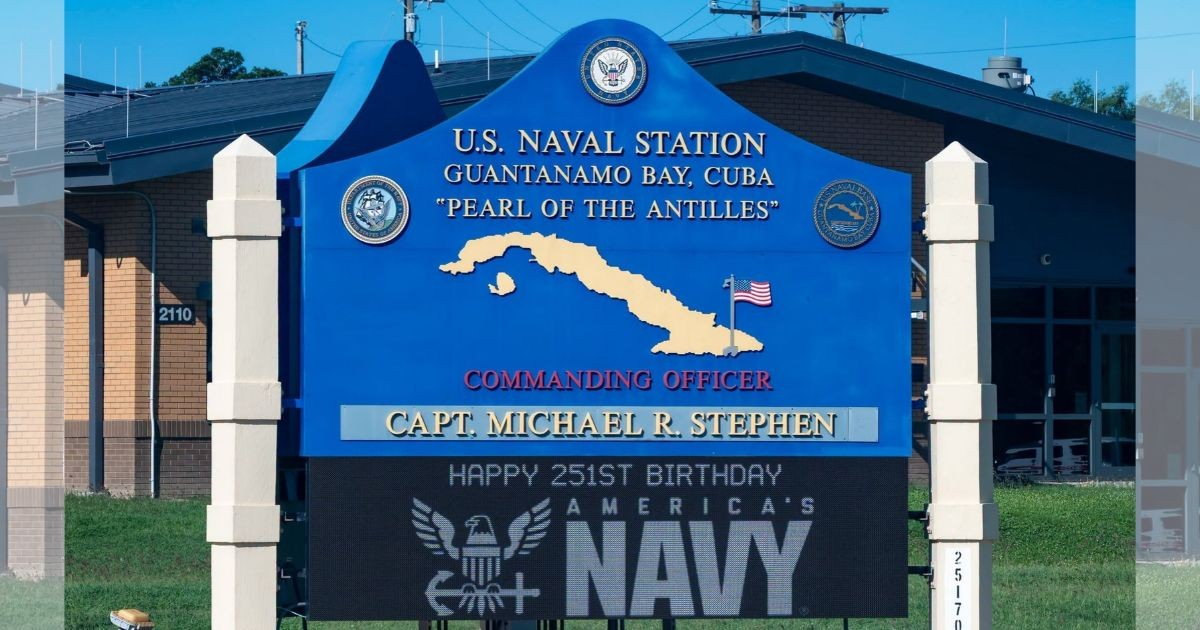
This Tuesday marks a significant milestone as the U.S. Navy celebrates its 251st anniversary. In conjunction with this event, the Guantánamo Bay Naval Base took the opportunity to emphasize its status as the oldest U.S. military installation on foreign soil, maintaining a continuous presence in Cuba since 1903.
In a message posted on its official Facebook page, the base extended congratulations to the U.S. Navy, revisiting its roots connected to the 1898 war against Spain and the subsequent leasing of Guantánamo Bay's land and waters.
"Happy 251st Birthday to the United States Navy!" the message begins, highlighting the base's enduring mission of surveillance and military support for over 120 years. "As the oldest U.S. military installation abroad, we have maintained our surveillance mission since 1903," the statement points out.
The Historic Beginnings of the U.S. Navy
The anniversary date aligns with the founding of the U.S. Navy, which dates back to October 13, 1775, when the Continental Congress authorized the establishment of a naval force during the American Revolutionary War. Official recognition of October 13 as the Navy's commemorative date came in 1972, although its historical origins stretch nearly two centuries earlier.
The Guantánamo Bay Naval Base's message reflects on the U.S. presence in the bay, beginning in 1898 when American and Cuban allied forces seized the area to serve as an advanced operations base in the battle against Spanish colonial rule.
Lease and Strategic Importance
Five years later, in 1903, the newly established Republic of Cuba agreed to lease approximately 45 square miles of land and water in Guantánamo Bay to the United States, aimed at bolstering the operations and supply of the expanding U.S. naval fleet. "In 1903, the U.S. leased 45 square miles of land and maritime territory in Guantánamo Bay from the newly independent Cuban government to support the growing U.S. Navy," the statement explains.
In its anniversary message, the base underscores its ongoing role in preparing military operations and providing logistical support to various U.S. Armed Forces units. "Guantánamo Bay Naval Base, Cuba, is a strategic U.S. military installation contributing to mission readiness and operational excellence," the publication asserts.
Comprehensive Support and Operations
The base provides facilities, security, and support for deployed units, military personnel, U.S. civilian employees, foreign nationals, and their families. It also coordinates with the Department of State, U.S. Southern Command, Fourth Fleet, and Seventh Coast Guard District.
Current functions include supporting joint military operations, hosting the Office of Military Commissions, and conducting humanitarian operations related to migrants. The Office of Military Commissions is associated with the military tribunal system established to handle certain cases related to terrorism and armed conflicts. The base also houses the infamous detention center opened in 2002 following the September 11, 2001, attacks.
The Controversial Presence
The anniversary communication also highlights the base's community, which includes more than 5,000 individuals, comprising both U.S. personnel and foreign nationals. The base is described as a vital component of U.S. security missions and humanitarian assistance in the Western Hemisphere. "We are committed to supporting a diverse community of over 5,000 service members, staff, and foreign nationals," the message states.
The base's existence stems from an agreement tied to the Platt Amendment, which was incorporated into the early 20th-century framework of relations between the two countries, marking one of the most contentious chapters in Cuban-American history.
The installation remains under U.S. control, although Cuba retains ultimate sovereignty over the leased territory, while the United States exercises jurisdiction and authority over the area according to historical agreements governing its presence. The Cuban government deems the U.S. presence in Guantánamo as illegitimate and has repeatedly demanded its return. Washington, however, maintains the legal framework allowing the base's continued operation.
In recent history, the base has played a role in receiving and housing migrants. In February 2025, the U.S. deployed Marines to Guantánamo to support expanding facilities for immigration operations, as part of measures advanced by Donald Trump's administration.
Guantánamo's strategic importance has gained a new dimension during 2026, amid tensions between Washington and Havana and the integration of advanced military technologies. In early October, the Southern Command announced that Guantánamo would host the first regional training and support center for its Autonomous Warfare Command, a structure dedicated to integrating drones, unmanned systems, and new operational capabilities.
Subsequent details revealed autonomous systems and artificial intelligence technologies associated with this deployment, reinforcing the base's role as a U.S. military platform in the Caribbean.
Frequently Asked Questions About Guantánamo Bay Naval Base
Why is Guantánamo Bay Naval Base significant?
Guantánamo Bay Naval Base is significant as the oldest U.S. military installation on foreign soil, marking a continuous presence in Cuba since 1903. It serves as a strategic platform for military readiness and operations in the Caribbean.
What is the historical origin of the U.S. Navy?
The U.S. Navy's origins date back to October 13, 1775, when the Continental Congress established a naval force during the American Revolutionary War. This date was later recognized officially as the Navy's commemorative anniversary in 1972.
What agreements govern the U.S. presence in Guantánamo?
The U.S. presence in Guantánamo is governed by historical agreements linked to the Platt Amendment, allowing the U.S. to lease the territory. While Cuba retains ultimate sovereignty, the U.S. exercises jurisdiction and control as per these agreements.