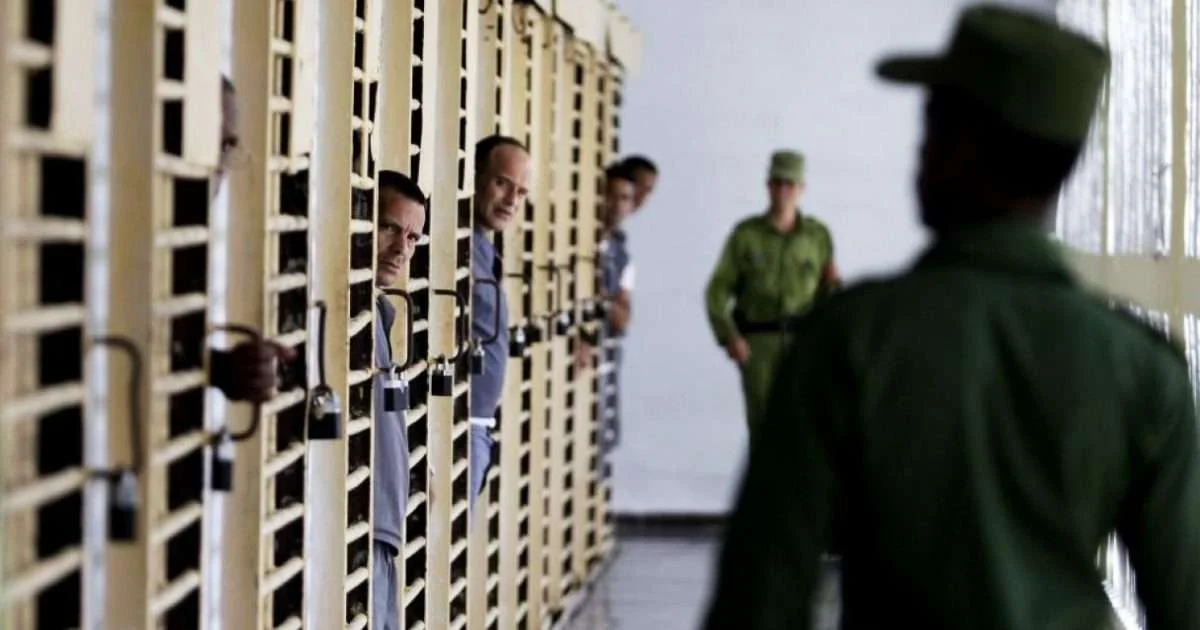
In Cuba, families of political prisoners are facing severe financial burdens, spending between 20,000 and 60,000 Cuban pesos for each delivery of food and medicine to their incarcerated loved ones. This economic strain has forced some families into debt, compelled them to sell belongings, and even led them to cut back on their own meals, according to a report released on Monday, October 12, by Cubalex.
The report, titled "The Extended Punishment: Needs of Political Prisoners in Cuba and Their Families," includes interviews with 28 relatives of individuals jailed for political reasons, 25 of whom are women.
Shifting Burdens onto Families
The report highlights how prison authorities are shifting essential responsibilities onto the families, duties that should be managed within the prisons themselves. These include providing adequate food, medications, hygiene products, bedding, and even potable water.
Cubalex documented expenses ranging from 20,000 to 60,000 pesos per delivery, but most commonly mentioned amounts fall between 30,000 and 40,000 pesos.
Variability in Costs and Efforts
These expenses are tied to each package of supplies that families prepare for their imprisoned relatives and do not represent a fixed monthly cost or a uniform amount across all households.
The financial outlay for food and medicine is only part of the economic challenge. Traveling to visit prisoners incurs costs between 400 and 15,000 pesos, depending on the distance, with usual expenses ranging from 3,000 to 8,000 pesos, according to collected testimonies.
Additional Financial Strain
When family members cannot travel, they might have to pay between 5,000 and 6,000 pesos to third parties to deliver the packages. On top of this, families spend between 100 and 1,000 pesos monthly on phone credits to stay in contact with the prisoners.
The report notes that families also bear the cost of purchasing medications, often obtained from the informal market. Documented examples include a bottle of carbamazepine priced at 5,000 Cuban pesos.
Economic Context and Impacts
To provide context, Cubalex uses the average monthly salary in the state civil sector, which was 6,930 pesos in 2025, as a benchmark.
A delivery of food and medicine costing between 30,000 and 40,000 pesos translates to roughly 4.3 to 5.8 months of that salary, excluding the household's living expenses.
The situation is particularly dire for families that do not receive remittances or have consistent financial support. Sixty percent of those interviewed identified financial need as their most pressing concern.
Some accounts describe households that can barely afford one meal a day. One interviewee summed up the sacrifice made to support an imprisoned relative: "Even if we don't eat, the best is for him."
Struggling to Make Ends Meet
Cubalex also reported cases of families having to sell possessions, including a child's crib, to cover imprisonment-related costs. Others stopped bringing food for months after losing financial aid they relied on.
Furthermore, testimonies highlight insufficient rations, medical care challenges, and water access issues in various prisons. In some instances, families claim they must also procure necessary materials for medical procedures.
Challenges of Distance and Daily Life
Distance to prisons poses another hurdle. The report includes stories of family members setting out at 3:00 AM, walking 12 to 13 kilometers, sometimes with young children, to make visits lasting only two hours.
The responsibility often falls on mothers, wives, sisters, and daughters, who must gather food, medicine, and funds for travel while managing domestic duties and caring for other relatives.
According to Cubalex, some women also face employment difficulties and surveillance or threats attributed to State Security, exacerbating the financial strain when their households need more income.
Impact on Children and Access to Information
The hardships extend to children, with reports of emotional distress, school problems, and material shortages in homes with incarcerated members.
The study also identifies barriers to obtaining information about the prisoners' conditions and legal rights, adding to the families' uncertainty.
In its findings, the organization asserts that political imprisonment has repercussions that extend beyond the detainee, directly impacting the economy, health, and stability of their family environment.
This new study delves into the economic dimensions of prison conditions that Cubalex has explored in past research. Another report documented 115 deaths in custody in Cuba from February 2024 to June 2026, with allegations of inadequate medical care and harsh detention conditions.
Understanding the Financial Burden on Families of Political Prisoners in Cuba
What are the main expenses for families of political prisoners in Cuba?
The main expenses include delivering food and medicine, travel costs for prison visits, and phone credits for communication with the prisoners. These can range from 20,000 to 60,000 pesos per delivery.
How do families cope with these financial burdens?
Families cope by going into debt, selling personal belongings, and reducing their own food intake. Some also pay third parties to deliver packages or rely on informal markets for essential medications.