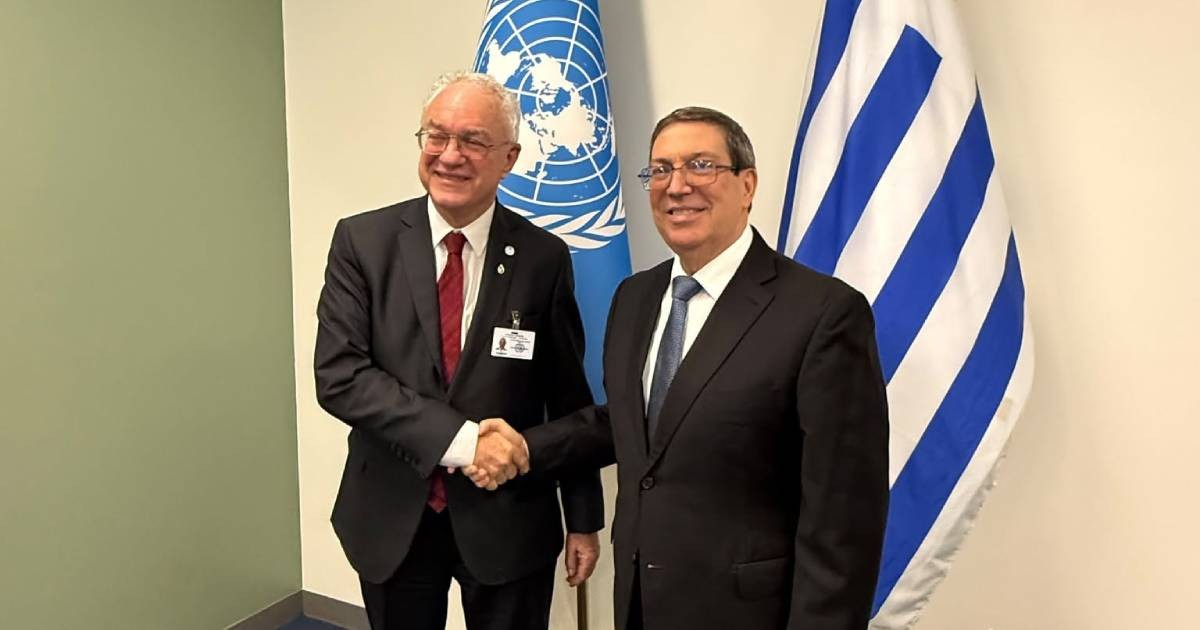
Uruguay's Foreign Minister, Mario Lubetkin, has voiced concerns over Cuba's deepening crisis, advocating for internal dialogue within the Cuban society to chart the nation's future, as well as promoting negotiations between Havana and Washington.
In an interview during the UN General Assembly in September, which was published on October 10 by the Brazilian newspaper Folha de S.Paulo, the Uruguayan minister shared his apprehensions regarding the island's situation and proposed two avenues of understanding.
"I believe one crucial step is to foster two types of dialogue: an open and negotiation-oriented one between the United States and Cuba, and an honest dialogue within Cuban society itself," he stated.
Lubetkin emphasized the importance of Cubans playing an active role in shaping their future, moving beyond a focus solely on the past decades' events.
"I will not criticize what happened in the last 50 years," he remarked, suggesting that given the current circumstances, Cuban society must come together to envision its future.
These remarks came after Lubetkin's bilateral meeting with Cuban Foreign Minister Bruno Rodríguez Parrilla at the UN General Assembly in New York. On September 28, the Uruguayan minister confirmed the meeting on social media, explaining that the discussions aimed to address bilateral, regional, and multilateral issues, as well as to strengthen ties between the two countries.
During the interview with Folha de S.Paulo, Lubetkin also reiterated Uruguay's willingness to provide humanitarian aid to Cuba, including the possibility of sending solar panels to help alleviate energy challenges.
"We sent powdered milk alongside the Mexicans. We are ready to send solar panels through any feasible channel," he affirmed.
Uruguayan cooperation has a recent history of support. In June, Cuban authorities announced the distribution of approximately 760 tons of powdered milk donated by Mexico and Uruguay, primarily aimed at children, pregnant women, and healthcare facilities.
On that occasion, Uruguay's ambassador in Havana, Juan Andrés Canessa Franco, also expressed his government's readiness to assist with components for photovoltaic parks and spare parts for thermoelectric plants.
However, some humanitarian aid from Uruguay has been met with criticism. Cuban-born Uruguayan lawmaker Leydis Aguilera previously raised concerns that Conaprole brand powdered milk was being sold in stores linked to the military conglomerate GAESA, despite the population's nutritional needs.
In the same interview, Lubetkin questioned the legitimacy of the Venezuelan government led by Delcy Rodríguez, considering her "as illegitimate as Maduro." He asserted that Uruguay would not resume diplomatic relations with Caracas until democratic elections are held and validated by an independent judicial body.
"We have not resumed and will not resume them," he stated regarding bilateral relations, maintaining that Venezuela's political situation remains unchanged following Nicolás Maduro's apprehension by the United States.
Key Points on Uruguay's Role in Cuba's Crisis
What did Uruguay's foreign minister suggest for Cuba's crisis?
He advocated for internal dialogue within Cuban society and negotiations between the United States and Cuba to shape the country's future.
What kind of humanitarian aid did Uruguay offer to Cuba?
Uruguay offered to send solar panels to alleviate energy issues, alongside previous donations of powdered milk.
What was Lubetkin's stance on the Venezuelan government?
He criticized the Venezuelan government as illegitimate and stated that Uruguay would not restore diplomatic relations until democratic elections occur.