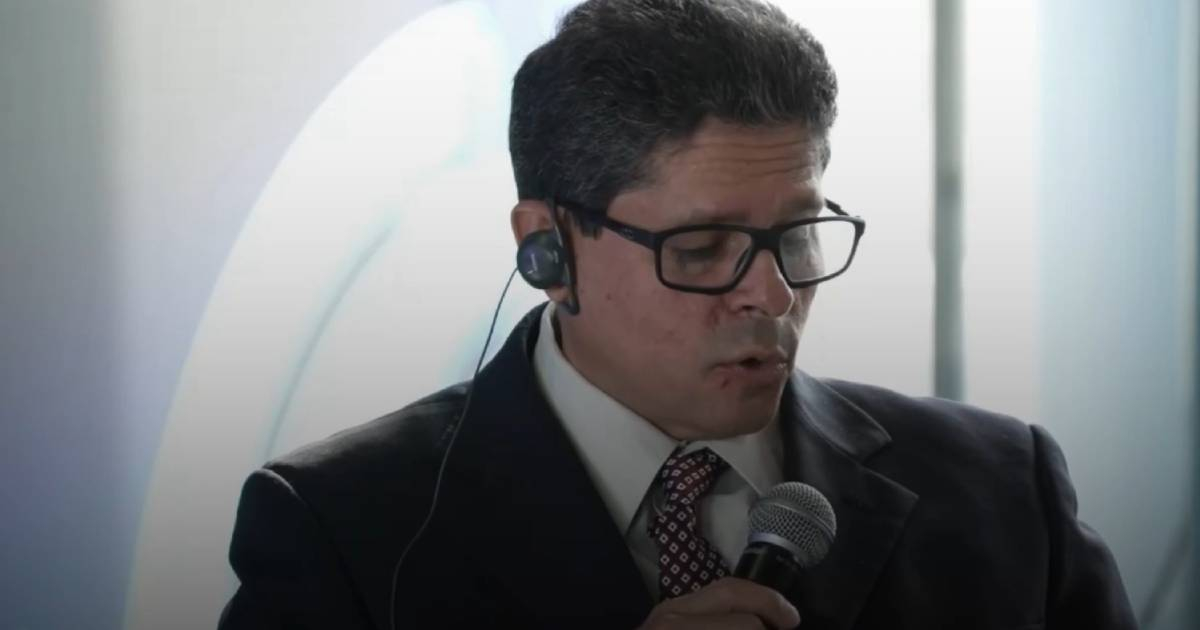
While the Cuban government proudly proclaimed its progress towards "digital sovereignty" through homegrown technology at a digital forum in Russia, residents in Cuba continue to suffer from blackouts that disrupt internet access and essential electronic services.
Claims of Technological Advancement Amidst Blackouts
Speaking at the Second Global Digital Forum in Moscow, Deputy Minister of Communications Pablo Julio Pla Feria attributed the main challenges in Cuba's technological development to the U.S. embargo. Despite these hurdles, he claimed that such restrictions have spurred the creation of domestic solutions.
Showcasing Cuban Innovations
The Russian news agency TASS reported on October 9 that the official highlighted a platform created by Cuba's Center for Digital Government, boasting over 300 administrative processes and access to more than 400,000 registered services, as demonstrated at the event.
Cuban Criticism of U.S. Policies
Pla Feria also condemned U.S. sanctions, labeling them "illegal, inhumane, and extraterritorial," according to Sputnik Mundo. He argued that Cuba has learned to develop its own technological solutions despite these challenges, asserting that "technological sovereignty is forged through resilience and creativity."
Limitations of the Soberanía Platform
The Soberanía platform, launched in July 2025, had only 18 services available online by the end of August 2026, despite offering information on over 300 administrative procedures. This was acknowledged by Cuban authorities during a visit by Miguel Díaz-Canel to the Digital Government Center, where it was also reported that more than 43,000 digital identities had been verified.
Cuba's Push for Independent Technology
Additionally, Pla Feria introduced the Cuban AI model CecilIA as an alternative to foreign technologies. As per Sputnik, he emphasized its ability to preserve the nation's cultural and linguistic identity, warning that "losing culture and historical memory equates to losing the nation."
Persistent Internet Service Disruptions
On October 5, just days before the deputy minister's statements, ETECSA acknowledged disruptions in Nauta navigation and Transfermóvil services due to energy issues that disabled equipment and technological systems. The state enterprise had also admitted in September that prolonged blackouts disconnect telecommunications facilities and hinder network expansion, leaving communities without mobile coverage or internet access.
Despite these ongoing challenges, Pla Feria defended in Russia that Cuba has managed to develop its own technologies in the face of external restrictions.
Understanding Cuba's Digital Challenges
What is Cuba's claim regarding digital sovereignty?
Cuba claims to have advanced towards digital sovereignty by developing its own technologies, despite ongoing blackouts that disrupt internet access on the island.
How has the U.S. embargo affected Cuba's technological development?
The Cuban government attributes major technological challenges to the U.S. embargo, but asserts that these constraints have also led to the creation of domestic solutions.
What is the Soberanía platform?
The Soberanía platform is a Cuban digital initiative launched in 2025, intended to provide online services and streamline administrative processes, though its current online offerings are limited.