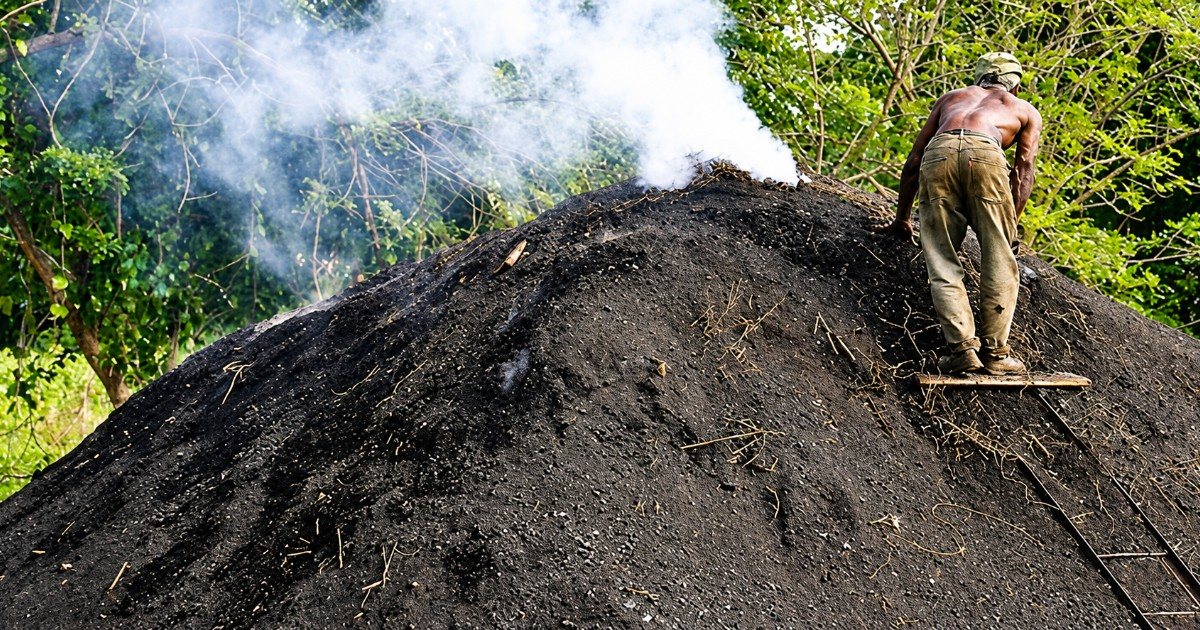
Amidst an ongoing energy crisis forcing countless Cuban families to resort to charcoal for cooking due to extended blackouts and a shortage of liquefied gas, fines for irregularities in charcoal production are on the rise in Sancti Spíritus.
In 2026, the number of fines issued in this province has already equaled the total from the previous year, as reported by the state-run magazine Bohemia.
The main violations are linked to improper use of fire in forested areas and the unauthorized cutting of wood species for charcoal production.
The escalation in fines comes as charcoal production in Cuba increases, attracting individuals lacking expertise to meet the demand for this now-essential household fuel.
Unregulated Charcoal Production Raises Concerns
Ernesto Ramón Toledo Medina, the technical director-developer at the Agroforestry Company of Sancti Spíritus, acknowledged the lack of regulation in the activity. "Historically, experienced charcoal makers performed this work, but now anyone decides to make charcoal anywhere. The reality shows that not everyone adheres to the established legal framework," he stated.
Forest authorities clarified that while charcoal production isn't banned, it must be conducted with proper authorizations, using approved species, and adhering to safety measures to prevent fires.
Inspection and Compliance Efforts
Iraida Rodríguez-Gallo Companioni, deputy head of the Forest Rangers in Sancti Spíritus, and Mariela Montelier Montelier, head of the Fire Management Specialized Group, explained that inspections verify whether kilns have the necessary permits, the type of wood used, where it was sourced, and whether preventive measures were taken.
"Some citizens claim we prohibit charcoal production, but that's not true; we simply require the safe and appropriate use of fire and approved wood in designated areas," they emphasized.
Authorized species include marabú and aroma, while using woods like red mangrove, black mangrove, patabán, and yana is considered an infraction. There are also restrictions on cutting marabú in water protection zones.
Charcoal: A Costly Necessity
Bohemia noted that charcoal prices continue to climb, with thousands of families relying on it to cook their meals.
With electricity, liquefied gas, and other domestic fuels in short supply, many families have returned to using charcoal stoves and wood-fired hearths.
Acquiring charcoal is also a significant expense. As of July, a sack's price ranged from 3,200 to 5,000 Cuban pesos, varying by province.
Just a month prior, a sack of charcoal cost 3,200 pesos in Havana, while it reached 5,000 pesos in Santa Clara.
The situation even prompted Sancti Spíritus authorities to order agricultural companies in July to join the charcoal production effort, aiming to boost supply and stabilize prices.
Understanding the Charcoal Production Issue in Cuba
What are the main violations in charcoal production in Sancti Spíritus?
The primary violations include the improper use of fire in forested areas and the unauthorized cutting of wood species for charcoal production.
Why has the demand for charcoal increased in Cuba?
The demand for charcoal has surged due to prolonged blackouts and a shortage of liquefied gas, making it an essential fuel for cooking in many Cuban households.
What measures are being taken to ensure safe charcoal production?
Authorities conduct inspections to ensure kilns have the necessary permits, verify the wood type and source, and check if safety measures are in place to prevent fires.
How have charcoal prices affected Cuban households?
With prices ranging from 3,200 to 5,000 Cuban pesos per sack, the cost of charcoal represents a significant financial burden for many families in Cuba.