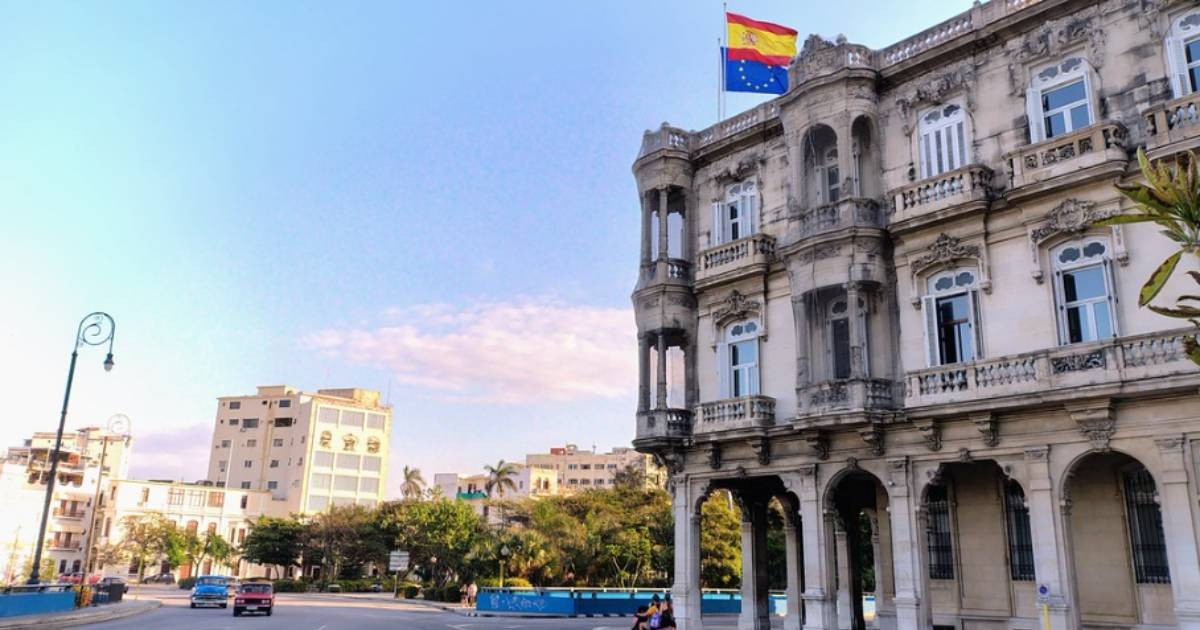
The Spanish Undersecretary for Foreign Affairs, European Union, and Cooperation awarded a contract worth €1,131,295.68 to Grupo Palco—a Cuban state-run company under the Council of Ministers—on December 12, 2024. This contract was for providing staff to the Consulate General of Spain in Havana, as documented in public procurement file 2024SWs00114.
The selection process was restricted, requiring manual submission of proposals. Remarkably, Palco was the only bidder, and the award was based solely on price, weighted at 100%. The awarded amount matched the initial budget, indicating no discount was provided.
The official justification in the award announcement leaves no room for ambiguity: "Economic offer received from Grupo PALCO, the sole state entity providing personnel."
The Cuban Employment Monopoly
This situation underscores a structural reality: Cuban law prohibits foreign diplomatic missions from directly hiring local workers, mandating that they work through state-sanctioned entities. Palco is the designated provider, effectively creating a monopoly for staffing embassies and consulates in Cuba.
Contract Details and Implementation
The contract, identified with CPV codes 79621000 (office staffing) and 79622000 (domestic staffing), commenced on January 1, 2025, and will remain in effect until December 31, 2028. Palco's headquarters is located on 60th Street, No. 505, between 5th and 5th A, in Havana's Miramar neighborhood.
Notices of contract award and formalization were published on March 5, 2025, more than two months post-signature. The signed document, titled "Contrato de Suministro Empleadora PALCO firmado.pdf," is accessible under the "Formalization" section of the file.
Political Implications and Controversies
This contract is the largest of three agreements that the Foreign Ministry has finalized with Palco. The second, file 2024SWs00113, totals €242,743.48, covering staffing at the Spanish Embassy in Havana; a third, for office rental, approximates €228,000. Collectively, these contracts amount to €1,602,217, a figure that the Popular Party has cited in parliamentary demands for Foreign Minister José Manuel Albares to address Congress.
The driving force behind the contract was the influx of nationality applications under the Democratic Memory Law, which closed its window on October 22, 2025. The Spanish Consulate in Havana faced over 350,000 applications, overwhelming the office and necessitating external staffing through Palco. The main contract documentation estimates around 88 new hires for the Consulate; the second file suggests the total number of workers reached 107.
Palco has also been linked to alleged corruption investigations. In October 2024, Yoel Perdomo Di-Lella—brother of then Deputy Prime Minister Jorge Luis Perdomo Di-Lella—and other executives were questioned regarding supposed corruption, currency trafficking, and tax fraud, just days before the Deputy Prime Minister's dismissal.
Accessing Public Procurement Files
The full documentation is available for public viewing at contrataciondelestado.es. By selecting "Tenders," choosing "Search by form," and entering the code 2024SWs00114 in the "File" field, users can access the award announcement, formalization notice, and the signed contract PDF.
The Grandchildren's Law has once again ignited political debate in Spain, while the Popular Party continues its parliamentary pressure, demanding a legal report from the State Attorney's Office on the legality of outsourcing consular duties to an entity outside the Spanish administration.
Key Questions on Spanish-Cuban Contractual Relations
Why was the contract awarded exclusively to Grupo Palco?
Grupo Palco was the sole bidder in a restricted process. Cuban law mandates that foreign diplomatic missions employ staff through state-authorized entities, making Palco the default provider.
What are the implications of the contract for Spanish-Cuban relations?
The contract highlights the complexities of operating within Cuban regulations, emphasizing the monopolistic control Cuba exerts over foreign diplomatic staffing. It also stirs political debate within Spain regarding the legality and transparency of such international agreements.
How did the Democratic Memory Law influence the need for additional staffing?
The law prompted a surge in nationality applications, overwhelming the Spanish Consulate in Havana. This led to a significant increase in staffing requirements, fulfilled through the contract with Grupo Palco.