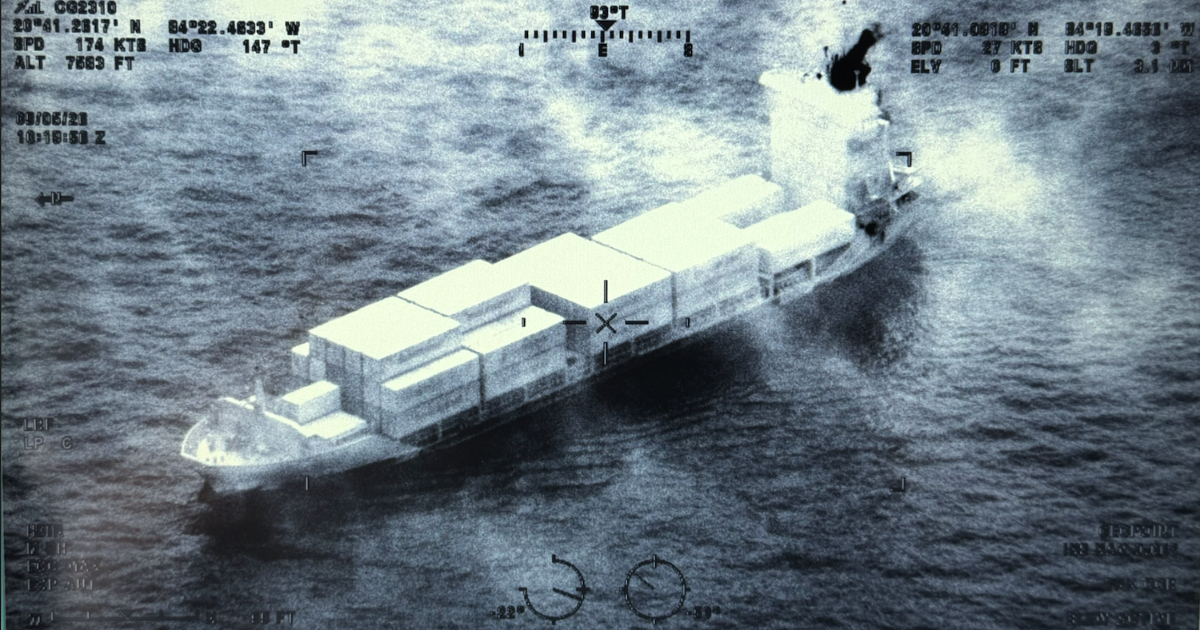
The Cuban Minister of Energy and Mines, Vicente de la O Levy, firmly dismissed any ties between the Havana government and the 90 shipments of biodiesel confiscated by U.S. authorities in September. This statement was made during an exclusive interview with Reuters in his office in the Cuban capital.
Last Tuesday, the U.S. Department of Homeland Security announced in Miami the seizure of over 620,000 gallons of biodiesel, valued at nearly three million dollars. These were distributed across 71 tanks at Port Everglades, Florida, and 19 shipments in the port of Houston, Texas. The commercial documents indicated that the intended recipient was ENETEC S.A., a Cuban state-owned wholesale fuel company sanctioned by the OFAC in July 2026.
Official Denial and Allegations
Minister De la O Levy expressed complete ignorance regarding the intercepted shipments and denied any commercial agreement with the company targeted by Washington. “We can assure you that there was no contract of any kind with ENETEC S.A.,” stated the minister. “No Cuban state company has managed to secure a fuel contract, whether for small or large quantities.”
Earlier, Deputy Foreign Minister Carlos Fernández de Cossío condemned the U.S. policy of intercepting vessels in international waters as illegal, equating it to piracy acts: “It is illegal to harass and intercept ships transporting fuels to Cuba in international waters, just as piracy and plundering are illegal.”
Cuba and the United Nations have criticized the energy restrictions imposed by Washington as unilateral coercive measures contrary to international law.
Energy Crisis at Breaking Point
Despite the denials, De la O Levy acknowledged the severe energy situation on the island, worsened since the capture of Nicolás Maduro in January 2026 halted Venezuelan oil shipments. Although Washington has allowed private exporters to send gasoline and diesel to Cuba’s private sector since early this year, the minister emphasized that these volumes are inadequate. “I would venture to say that the amount entering the country does not even cover 3% of its fuel needs,” he asserted.
The harsh reality for Cubans is evident: the island has endured at least six total electrical system collapses in 2026, with blackouts lasting between twenty and twenty-four hours daily in various locations. Cuba produces around 40,000 barrels of crude oil daily but requires between 90,000 and 110,000 to meet its demand.
Níquel, Cobalt, and Sherritt Dispute
De la O Levy also discussed the nickel and cobalt mining situation. Sherritt International Corp., a Canadian company with over 30 years of joint ventures with the Cuban government at the Moa mine in Holguín, ceased operations this year and announced its withdrawal, leaving an outstanding debt of approximately 277 million dollars with the Cuban state.
In May, Sherritt signed a non-binding agreement with Gillon Capital LLC, a Dallas firm whose vice president is Ray Washburne, a former official from the first Trump administration. The minister clarified that this operation does not involve a direct acquisition of the joint venture with the Cuban state. “We have always made it clear that what the American firm would purchase are shares of Sherritt, not of the joint venture,” he specified. “The Canadian company is publicly traded, and any investor has the right to buy its shares.”
However, he warned that any resumption of production requires addressing specific obstacles: “If the intention is to restart nickel production, all those issues would need to be resolved.”
Renewable Energy as a Crisis Solution
Amid the fuel blockade, De la O Levy highlighted the transition to renewable energy as the regime’s primary strategy. According to his figures, 144 solar parks with a combined capacity of 1,418 megawatts have been installed, and the country already boasts over a million electric motorcycles and tricycles.
Nevertheless, 40% of Cuba’s electricity still comes from national oil, almost entirely allocated to thermoelectric plants. The official admitted that the pace of progress does not meet the population’s real needs: “We are advancing with our solutions little by little, though not as quickly as we would like.”
Key Questions About Fuel Seizure and Cuba's Energy Crisis
What was the value of the seized biodiesel shipments?
The seized biodiesel shipments were valued at nearly three million dollars.
Which company was named as the recipient of the seized shipments?
The recipient listed for the seized shipments was ENETEC S.A., a Cuban state-owned company sanctioned by OFAC in July 2026.
How has the energy crisis affected the Cuban population?
The energy crisis has led to at least six complete electrical system failures in 2026, causing blackouts of up to 24 hours in various areas of Cuba.