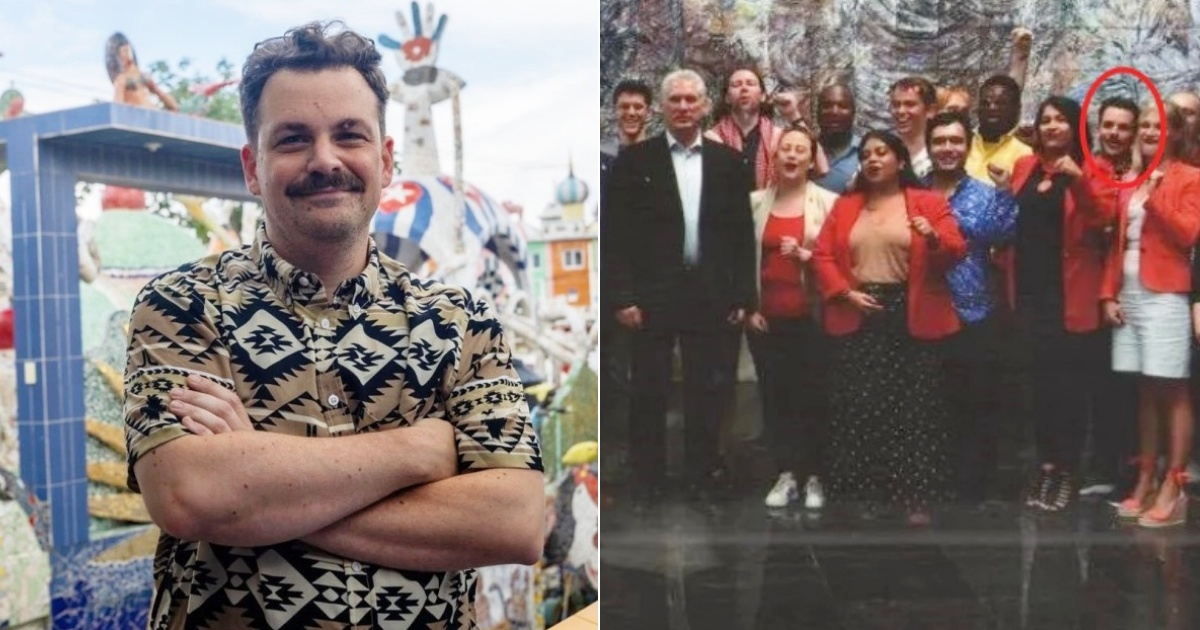
Zohran Mamdani, an advisor to the New York mayor, recently traveled to Cuba as part of an American socialist delegation that engaged in discussions with top figures of the Havana regime, including Miguel Díaz-Canel. During his visit, he indulged in luxurious accommodations, plentiful meals, and exclusive dining experiences, painting a stark contrast against the backdrop of Cuba's widespread food shortages and deteriorating living conditions.
The advisor in question, Danny Valdez, a friend and political collaborator of Mamdani, participated in a trip organized by the International Committee of the Democratic Socialists of America (DSA) from October 22 to 26, 2023.
The details of this visit were disclosed by the New York Post in an investigative piece published on October 11, based on a travel journal authored by Valdez himself. This journal, originally posted online in November 2023, was later removed from the internet.
In his document, titled "The Cuba Diaries," Valdez enthusiastically recounted the comforts enjoyed by the delegation while acknowledging the stark disparity between their privileges and the hardships faced by ordinary Cubans. "We undoubtedly had an extraordinarily luxurious experience in Cuba," Valdez wrote, according to the newspaper.
Valdez elaborated that the group traveled in a large air-conditioned bus, had unlimited access to food and water, and stayed in modern facilities offering amenities out of reach for most island residents. "Our hotel was sleek and modern, featuring a rooftop pool, gym, and a fully stocked bar," he described.
Five-Star Hotel and Exclusive Dining in Havana
During their visit, Valdez, along with other DSA members, including the national co-chair Ashik Siddique, stayed at the Grand Aston Havana. This five-star hotel boasts approximately 600 rooms, a rooftop pool, spa, bars, and restaurants.
Valdez shared photos of the amenities provided to the delegation, including a welcome cocktail he described as a sweet blue drink made with rum. According to the New York Post, the visitors dined at various exclusive restaurants in Havana and capped off their trip with a meal at La Torre, a restaurant located on the 33rd floor of the iconic Focsa building.
The personal journal highlighted the contrast between the opulence of these places and the conditions encountered beyond their walls. Valdez noted the hotel's abundant food supplies, while outside, he observed poverty and dilapidated buildings reminiscent of bombed-out structures.
Meeting with Díaz-Canel to Advocate Ending the Embargo
Aside from the luxury, the U.S. delegation engaged with key figures in Cuba's political power structure. A pivotal meeting took place on the third day of the trip when the DSA members met with Miguel Díaz-Canel. Valdez viewed this encounter as a political achievement for the organization, which supports lifting U.S. sanctions against Cuba.
"For our delegation, having this meeting was a real accomplishment. It signaled that the Cuban government took our organization seriously and saw us as potential partners in the effort to end the U.S. blockade," Valdez wrote.
During the meeting, Díaz-Canel expressed his criticisms of Washington's policies, asserting that U.S. sanctions hindered the country's economic development. "No other country has to operate under such conditions. Vietnam and China are not under a blockade and can develop their socialist approach," the Cuban leader argued, as recounted by Valdez.
The delegation also met with Mariela Castro, director of the National Center for Sexual Education (CENESEX) and daughter of former leader Raúl Castro. This trip enabled U.S. activists to establish direct connections with Cuban political representatives and gain firsthand insights into Havana's official stance on relations with the United States.
While the New York Post portrayed these engagements as part of an operation to influence U.S. foreign policy, it did not report any criminal charges against Valdez or other delegation members for their involvement in the trip.
Valdez's Connection with Mayor Zohran Mamdani
The investigation also highlights Danny Valdez's relationship with Zohran Mamdani, who assumed the New York mayoralty following a campaign supported by leftist sectors in the United States. Valdez organized a fundraiser for Mamdani's campaign in 2025 and publicly identified as a friend of the New York politician.
In November of that year, Valdez recalled organizing a small fundraising event at his home to support a socialist friend whose mayoral candidacy seemed unlikely to succeed. Additionally, Valdez claimed to have advised Mamdani on Cuba-related issues during the electoral campaign.
This collaboration was mentioned in a 2025 DSA candidate questionnaire and later confirmed by Valdez himself, according to the New York Post. However, the investigation does not provide evidence that Mamdani participated in the 2023 visit, organized meetings with Cuban officials, or was involved in the delegation's activities in Havana.
In April 2026, Valdez founded the nonprofit organization Cuban Americans for Cuba, dedicated to advocating for the lifting of the U.S. embargo. "We are Cuban Americans united by a common goal: to end the U.S. embargo on Cuba," the organization's website stated.
Family Background and Views on the Cuban Government
One of the most striking passages in Valdez's personal diary addresses his family's history. According to the New York Post, his relatives left Cuba after Fidel Castro came to power, and his grandfather spent six years imprisoned for political reasons.
Despite this background, Valdez expressed an understanding stance toward the Cuban government, attributing some of its repressive practices to the historical conflict with the United States. "Of course, I wish the Cuban government didn't resort to the kind of political repression that led to my grandfather's imprisonment for six years," he wrote.
However, he added, "But wishes don't make political reality." The activist argued that U.S. pressure forced Cuban authorities to govern under conditions akin to a state of permanent war.
"When you understand the origins of the aggression in this conflict and appreciate the magnitude of the war being waged against Cuba, it's hard not to side with Cuba," he asserted.
Valdez also made favorable comments about certain community roles of the Committees for the Defense of the Revolution (CDR), despite acknowledging that the same structure was responsible for his grandfather's arrest. He highlighted what he considered community contributions of the organization, even though his testimony recognized the repressive consequences his family endured.
Contacted by the New York Post, Valdez confirmed his trip to Cuba and his meeting with Miguel Díaz-Canel. He also acknowledged his collaboration with Mamdani on Cuba-related matters during the New York mayoral campaign. The activist explained that the purpose of the trip was to challenge the U.S. embargo and reaffirm DSA's opposition to Washington's policy toward Havana.
According to the newspaper, neither Valdez nor Ashik Siddique responded to additional requests for comments on specific aspects of the investigation.
Insights into the Cuba Trip and Meeting with Díaz-Canel
Why did Danny Valdez travel to Cuba?
Danny Valdez traveled to Cuba as part of a delegation organized by the Democratic Socialists of America to engage in discussions with Cuban leaders and advocate for the end of the U.S. embargo on Cuba.
What was the significance of the meeting with Miguel Díaz-Canel?
The meeting with Miguel Díaz-Canel was significant because it represented a political achievement for the delegation, indicating that the Cuban government took their organization seriously and viewed them as potential partners in efforts to end the U.S. blockade.
How did Valdez describe the conditions in Cuba outside the luxury hotels?
Valdez described the conditions outside the luxury hotels as marked by poverty and dilapidation, with buildings reminiscent of bombed-out structures, contrasting sharply with the opulence experienced by the delegation.
What was Valdez's stance on the Cuban government's repressive practices?
Despite his family's history of suffering under the Cuban government, Valdez expressed an understanding of the regime's repressive practices, attributing them to the historical conflict with the United States and the pressure to govern under challenging conditions.