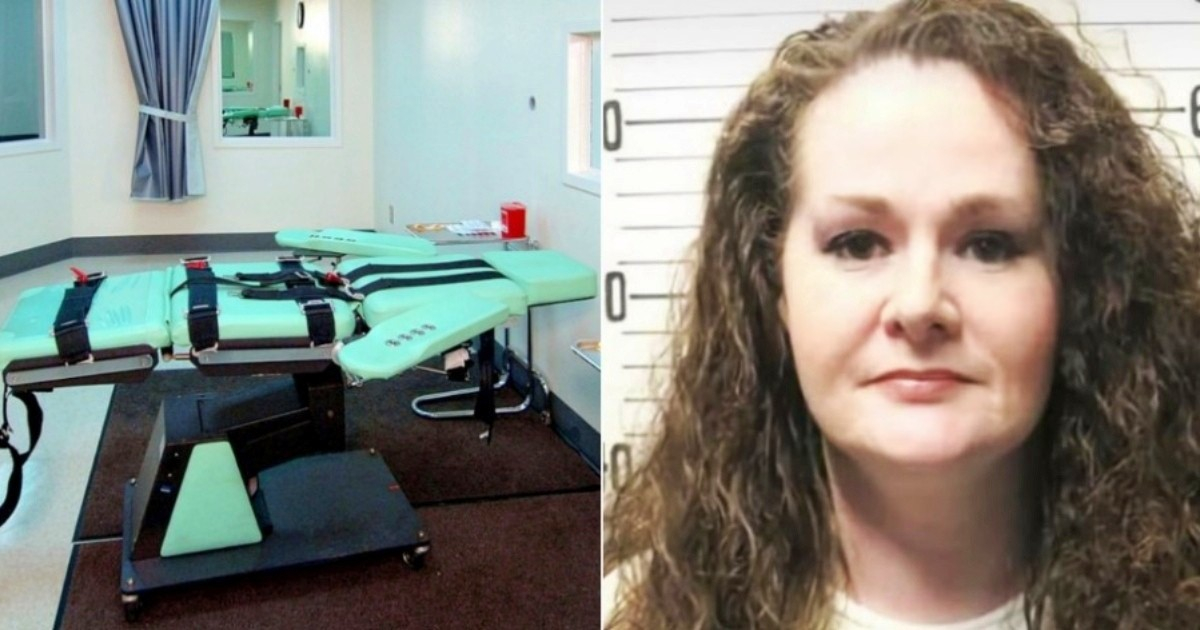
Christa Pike, a 50-year-old woman who endured a failed lethal injection in Tennessee after receiving two doses of pentobarbital, was discharged from the hospital on Saturday and returned to prison.
The unprecedented situation following her recovery, after being unconscious for several days and suffering severe injuries, has sparked a legal battle over whether the United States can attempt to execute her again.
Her legal team, consisting of Luke Ihnen, Randy Spivey, Stephen Ferrell, and Kelly Gleason, confirmed that Pike was taken back to the Debra K. Johnson Rehabilitation Center, the prison where she has been held for over three decades.
"She is grateful to the emergency services and her medical team for the care provided under these extraordinary circumstances," the attorneys stated in a release on Saturday.
Pike continues to receive medical attention within the prison as her legal representatives monitor her recovery and any potential physical and psychological aftereffects from the procedure.
The Controversial Case of a Failed Execution
The case has stirred significant controversy in the United States, not just because of the botched execution, but also because, according to the Death Penalty Information Center, Pike might be the first known individual to survive a lethal injection attempt after the drugs were administered.
On September 30, 2026, Pike was brought to Tennessee’s execution chamber to fulfill the death sentence imposed for the murder of 19-year-old Colleen Slemmer.
As per case records, Pike was strapped to a gurney at 7:27 PM. Before the procedure began, she spoke words that seemed to convey acceptance of her fate.
"I’m leaving this world the way I spent much of my life: with love. I am at peace, ready to be free. This is a happy day," she declared.
However, what was supposed to be a straightforward execution using a lethal dose of pentobarbital turned into a lengthy and painful ordeal.
A Grim Struggle for Life
Prison officials struggled to establish intravenous access. According to attorney Randy Spivey, who witnessed the event, at least seven attempts were made to insert needles.
Shortly after the first dose, Pike complained of intense burning in her arm and questioned whether the sensation was normal.
"Please try higher, on my shoulder," she requested, as reported by NPR.
Witnesses saw her lift her head, moan, and move her legs. Journalist Catherine Sweeney from WPLN later described the scene bluntly: "Nothing about it was normal."
With the expected outcome not achieved, officials administered a second dose of pentobarbital. Pike lost consciousness but continued to breathe.
"It lasted a long time," recounted Spivey, describing Pike as a survivor.
Ultimately, authorities halted the procedure and called for emergency medical assistance. Pike was transported to a Nashville hospital, where an unexpected battle for survival began.
Legal and Ethical Implications
The main legal question now is whether Tennessee can attempt to execute Christa Pike again. Republican Governor Bill Lee ordered an independent investigation into the incident and postponed pending executions for the remainder of 2026.
However, this decision does not mean Pike’s death sentence has been overturned.
"The state has not made any promises that Ms. Pike will not be executed in the future," attorney Luke Ihnen warned during a court hearing in Nashville.
The defense argues that a second attempt could violate constitutional protections against cruel and unusual punishment and raise issues related to double jeopardy.
Robert Dunham, a death penalty policy expert, highlighted a critical difference in this case compared to other failed execution attempts.
"Christa Pike is the only case where the chemicals for lethal injection were administered," he explained.
In other interrupted procedures, officials failed to establish proper intravenous access before administering the drugs.
One of the most well-known precedents is Willie Francis, a teenager who survived an electric chair execution in Louisiana in 1946. The U.S. Supreme Court allowed a second attempt, resulting in his death.
However, Pike’s lawyers could argue her situation differs because the state introduced substances intended to cause her death.
Judge I'Ashea Myles from the Davidson County Chancery Court ordered the preservation of evidence related to the failed procedure, including medical materials, communications, and records.
What Lies Ahead for Christa Pike?
For now, Pike remains incarcerated and under medical care. Her discharge from the hospital marks significant improvement, but she has yet to fully recover from the injuries sustained during the failed execution.
Her legal team remains concerned about potential neurological damage, memory difficulties, and the psychological trauma of undergoing a procedure meant to end her life.
The next steps will depend on the findings of the governor’s investigation, judicial decisions, and potential executive intervention to commute her sentence to life imprisonment.
The defense maintains that Pike has already endured extraordinary suffering and that subjecting her to another execution would raise constitutional issues.
Meanwhile, the state of Tennessee faces scrutiny over its lethal injection protocol and the accountability of officials involved in the procedure.
Legal and Ethical Questions Surrounding Christa Pike’s Case
What led to Christa Pike's death sentence?
Christa Pike received a death sentence for her involvement in the brutal murder of 19-year-old Colleen Slemmer in 1995. Pike, along with her then-boyfriend and another student, attacked Slemmer out of jealousy in a wooded area near the University of Tennessee's agricultural campus.
Why is the failed execution of Christa Pike significant?
Pike's failed execution is unprecedented because she survived after lethal injection drugs were administered, raising legal and ethical questions about a second execution attempt under U.S. constitutional protections against cruel and unusual punishment.
What are the potential outcomes for Christa Pike?
The future for Pike depends on the results of an independent investigation, court rulings, and possible executive clemency. Her defense argues against a second execution attempt due to the extraordinary suffering she has already faced.
What role does Governor Bill Lee play in this situation?
Governor Bill Lee has ordered an independent investigation into the failed execution and postponed other scheduled executions, but this does not imply that Pike's death sentence has been revoked.