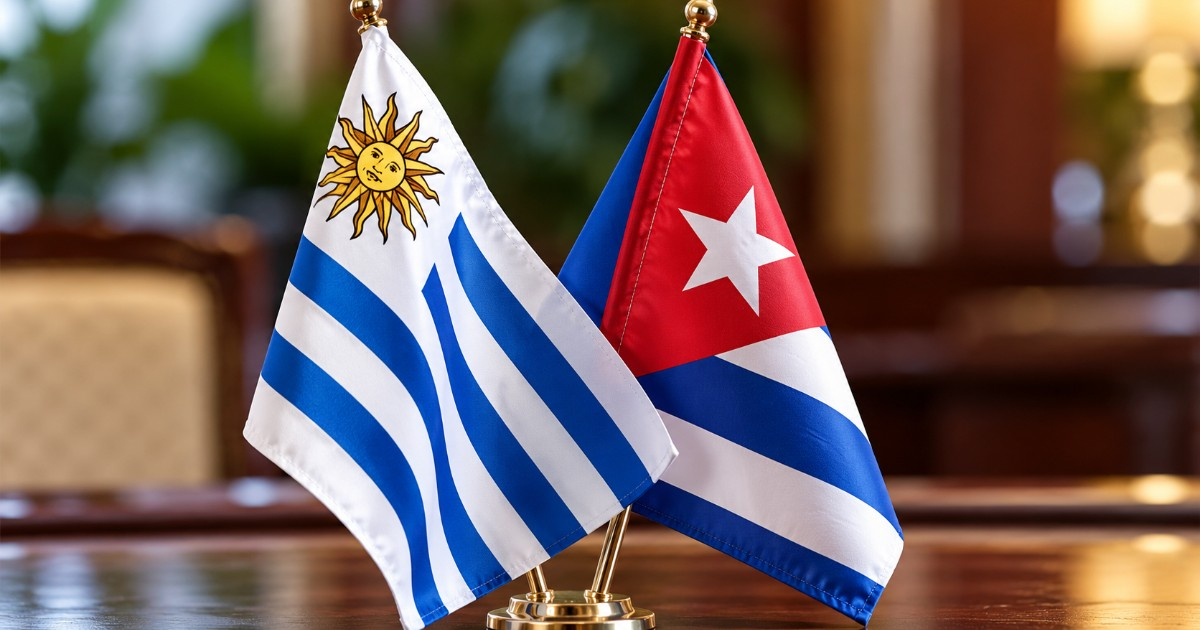
Uruguay has introduced a new special mechanism for obtaining permanent residency, potentially benefiting thousands of Cubans who have long awaited responses to their asylum applications in the South American nation.
The official decree, dated October 8, 2026, outlines a pathway to permanent residency based on roots for foreigners who entered Uruguay before January 1, 2026, and meet one of two specific criteria: either they have a pending asylum application and choose to formally withdraw it, or they have received a definitive rejection of their application.
This move is particularly significant for the Cuban community. As of June 2026, there were 30,715 pending asylum cases in Uruguay, with approximately 89% involving Cuban nationals, according to the Commission for Refugees (CORE).
The extensive backlog had prompted public outcry for authorities to provide answers to those who have waited years for a decision.
Eligibility and Application Process
The new policy does not grant automatic residency. Applicants must have entered Uruguay legally through an authorized migration checkpoint, have no impediments to staying in the country, and lack other avenues for regularizing their immigration status as temporary or permanent residents.
Eligible individuals have a 12-month window from the decree's effective date to apply for residency based on roots. The National Directorate of Migration may extend this period once for another 12 months.
Applicants must provide a passport-style photo, a valid and well-maintained identity document, and criminal records from any country where they resided for more than 180 days in the five years prior to entering Uruguay.
Requirements and Exceptions
Additionally, applicants need to demonstrate personal or familial means of support in Uruguay. This can be shown through a work history from the Social Security Bank or a notarial certificate confirming their economic activity and a monthly income exceeding the national minimum wage. The decree also mandates the submission of the relevant Uruguayan vaccination certificate.
However, the regulation allows exceptions for individuals facing justified difficulties in obtaining documents from their home country. Migration authorities may consider humanitarian circumstances, lack of consular representation, high procedural costs, or the absence of family assistance in document procurement.
Authorities might also implement expedited procedures for applicants in vulnerable situations who cannot meet certain criteria.
Impact on Cuban Asylum Seekers
A crucial point for current asylum seekers is the requirement to formally renounce their asylum application when initiating the residency process. This decision will be recorded in their file and communicated to CORE, with officials required to explain the implications of such renunciation beforehand.
The decree also states that once the process begins, individuals can obtain a certificate necessary for a provisional identity document as a resident in process. Upon acquiring permanent residency through roots, they may apply for a permanent identity document.
Importantly, withdrawing from the current asylum process does not preclude future applications: the decree clarifies that those who obtain residency through roots will retain the right to apply for asylum again in Uruguay if new reasons arise.
The decree will become effective 90 days after its official publication.
This decision is made amid significant pressure on Uruguay's immigration system. Despite the high number of applications, only 52 Cubans had been officially recognized as refugees, with many applicants lingering in uncertainty for years.
Meanwhile, Uruguay has become an increasingly prominent destination in the Cuban exodus. A route through Guyana and Brazil to the Uruguayan border has gained traction, with over 11,000 Cubans passing through the joint migration checkpoint at Santana do Livramento-Rivera between January and October 2025.
Throughout 2025, entries of Cuban nationals into Uruguay outnumbered departures by 14,961, and a further positive balance of 8,123 was recorded between January and July 2026. Cubans also led in the issuance of permanent residencies, receiving 6,185 in 2025 and an additional 4,665 in the first seven months of 2026.
Understanding Uruguay's New Residency Policy for Cubans
What is the new residency policy in Uruguay?
Uruguay's new policy allows foreigners who entered before January 1, 2026, to apply for permanent residency based on roots. It requires applicants to withdraw any pending asylum applications or have had their applications denied.
Who benefits from this new policy?
The policy primarily benefits Cubans, who make up a significant portion of pending asylum cases in Uruguay. It offers them an alternative pathway to legal residency.
What are the requirements to apply for residency?
Applicants must have entered Uruguay legally, have no impediments to staying, and lack other residency options. They need to provide identification, prove means of support, and submit criminal records and vaccination certifications.
Can applicants apply for asylum again after obtaining residency?
Yes, the decree allows individuals who gain residency through roots to apply for asylum again if new reasons arise in the future.