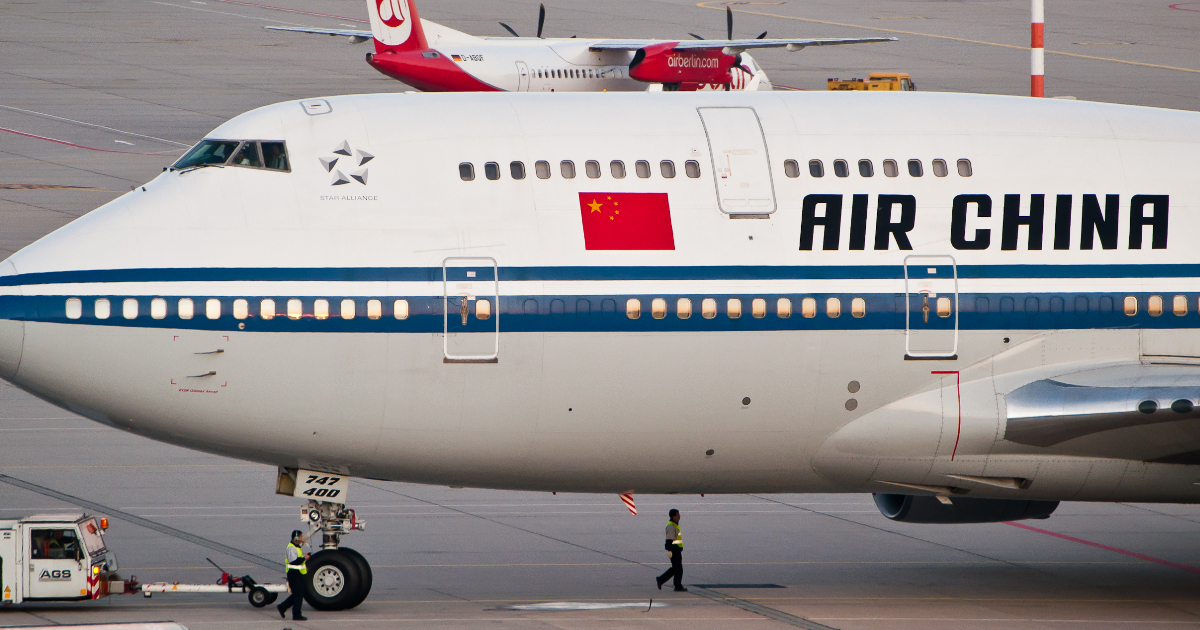
The Chinese Embassy in Cuba has issued a warning regarding frequent schedule changes and temporary cancellations of certain Air China flights between Beijing and Havana. This route, which includes a stopover in Madrid, is one of the few remaining direct connections between Spain and Cuba.
In an official statement released on Saturday, the embassy highlighted that due to "technical reasons," flights CA865, from Beijing to Havana, and CA866, in the opposite direction, have been experiencing schedule alterations more often than usual.
"Recently, the schedules for Air China's CA865 (Beijing-Havana) and CA866 (Havana-Beijing) flights have been altered frequently, and some flights have been temporarily canceled due to technical reasons," the announcement clarified.
The embassy advised travelers planning to use these connections to stay alert to any changes in their flights to avoid disruptions. However, the notice did not specify which frequencies have been canceled or the duration of these adjustments.
Notably, the cancellations are not officially linked to the ongoing aviation fuel shortage in Cuba. The only stated cause is "technical reasons," suggesting no confirmed connection to the Jet A-1 fuel crisis from either Air China or the Chinese diplomatic mission.
For passengers holding tickets for flights CA865 or CA866, the Chinese Embassy recommends directly checking the status of their flights and remaining attentive to any notifications from the airline before heading to the airport.
The situation holds particular significance for Cuban and Spanish travelers, as Air China operates the Beijing-Madrid-Havana route, with a stopover in Spain's capital, and also sells tickets for the Madrid to Havana segment.
The airline began offering two weekly flights on this route, on Wednesdays and Saturdays, a connection that has gained importance following the withdrawal or suspension of other airlines from the Cuban market.
From Madrid, Air Europa and Air China are now the primary direct options to Havana after the suspensions of Iberia, World2Fly, and other companies that used to operate flights between Spain and Cuba.
The Chinese embassy's announcement comes amidst a prolonged aviation fuel crisis on the island, which has led numerous airlines to cancel flights, cut frequencies, or add technical stopovers outside of Cuba since February.
As of this Sunday, ten Cuban airports, including Havana's José Martí International Airport, have issued official notices of Jet A-1 fuel unavailability until November 1st.
These notices do not mean that the airports are closed or that all flights have been canceled. Instead, they indicate that Jet A-1 fuel is unavailable for refueling aircraft at these facilities.
The fuel shortage has forced various airlines to adjust their operations. For example, Air Europa continues its flights between Madrid and Havana but makes a technical stop outside Cuba for refueling on the return journey.
Key Questions About Air China Flight Changes
Why are Air China flights between Beijing and Havana being canceled?
The flights are being canceled due to technical reasons, as stated by the Chinese Embassy in Cuba. No connection to the current aviation fuel shortage has been officially confirmed.
How should passengers on affected flights proceed?
Passengers are advised to check directly with Air China for the latest updates on their flight status and remain vigilant for any changes communicated by the airline before going to the airport.
What impact does the aviation fuel shortage have on Cuba's airports?
The shortage has led to official notices of Jet A-1 fuel unavailability at several airports. This situation has forced airlines to adjust their operations, such as adding technical stopovers for refueling outside Cuba.