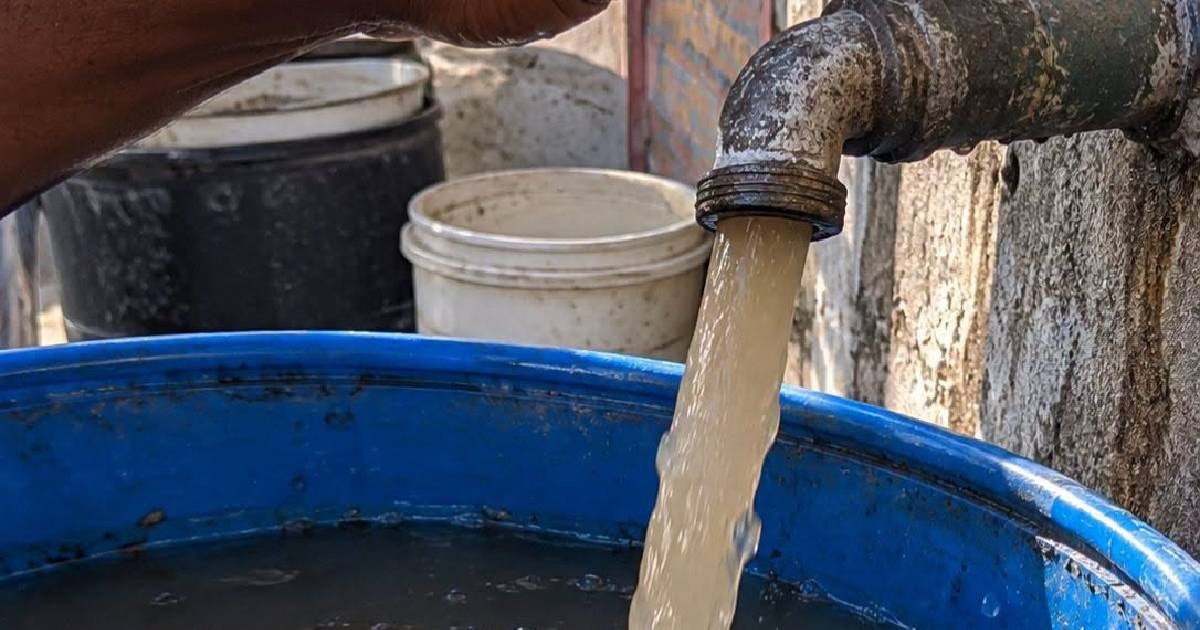
Numerous reports from concerned citizens highlight a troubling surge in diarrheal diseases in Santiago de Cuba. This rise is suspected to be linked to the consumption of water that reaches homes with a dark hue, heavy sediment, and significant cloudiness, according to a warning issued by independent journalist Yosmany Mayeta Labrada on Friday.
Testimonies have emerged from residents in areas like El Cristo, the Altamira neighborhood, Antonio Maceo, and Veguita de Galo, among other locations within the province. Several affected individuals report enduring prolonged bouts of diarrhea that leave them bedridden for days, as detailed by the reporter on his Facebook page.
An anonymous specialist from the Provincial Center for Hygiene, Epidemiology, and Microbiology in Santiago de Cuba confirmed the uptick in cases and the surge of patients seeking medical attention in health care facilities.
The expert explained, "The water arrives cloudy. We always advise boiling it because, despite being treated at the purification plant, it carries many sediments."
He further cautioned that pipes left dry for weeks and leaks in water systems, coinciding with sewer line breaks, can lead to contamination. He suggested letting the water run for several minutes once the service is restored, although he noted that this does not ensure its safety for consumption.
The situation poses a severe risk, particularly to children, the elderly, and vulnerable individuals. Frequent power outages and fuel shortages make it challenging even to boil water before drinking.
One resident bluntly summarized the crisis: "How are we supposed to boil water when families can't afford to buy charcoal to boil that chocolate they call water?"
Other comments underscore the severity of the issue. "In my area, the water smells like sewage with a terrible odor; I've had diarrhea for three days," a resident reported.
Another resident complained that water from the Quintero purification plant "looks like swamp water, with a dark color and many sediments," adding that the Santiago Water Company resumed charging for the service "blindly" this week, after a year without billing or reading meters.
A neighbor from the Abel Santamaría neighborhood noted that since Hurricane Melisa, the water has smelled like rotten mud, with cases of hepatitis and diarrhea already reported. Another neighbor pointed out a telling paradox: "Chlorine is available for sale on the street, but there's none for water chlorination."
As of now, there are no official statistics or laboratory results confirming the extent of the potential outbreak or its exact origin.
In early October, Cuban authorities acknowledged that 2.7 million people faced total or partial disruption of water services, affecting 35% of those receiving supply through the system.
In June, certain areas of the eastern city went without water for 39 to 48 days, and in July, two successive breaks in the main pipeline left the Quintero I and II plants operating at just 1,000 liters per second.
By the end of September, the Ministry of Public Health recognized an increase in cases of diarrhea, hepatitis, and dengue, attributing it to "limitations in environmental sanitation systems, water treatment, and waste collection."
This Friday, pediatrician Vivian Mena Miranda, vice president of the Cuban Pediatric Society, warned on state television about the rise in hepatitis and diarrheal diseases among children. She was clear: "If you don't have safe water, you can't prevent these diseases."
Frequently Asked Questions about Water Contamination in Santiago de Cuba
What is causing the increase in diarrheal diseases in Santiago de Cuba?
The increase is believed to be linked to the consumption of contaminated water that contains dark coloration and sediments.
Which areas in Santiago de Cuba are affected by the water contamination?
Areas such as El Cristo, Altamira, Antonio Maceo, and Veguita de Galo have reported issues with water contamination.
What precautions are recommended to ensure water safety?
Boiling water is advised to eliminate potential contaminants, although it is challenging due to power outages and fuel shortages.