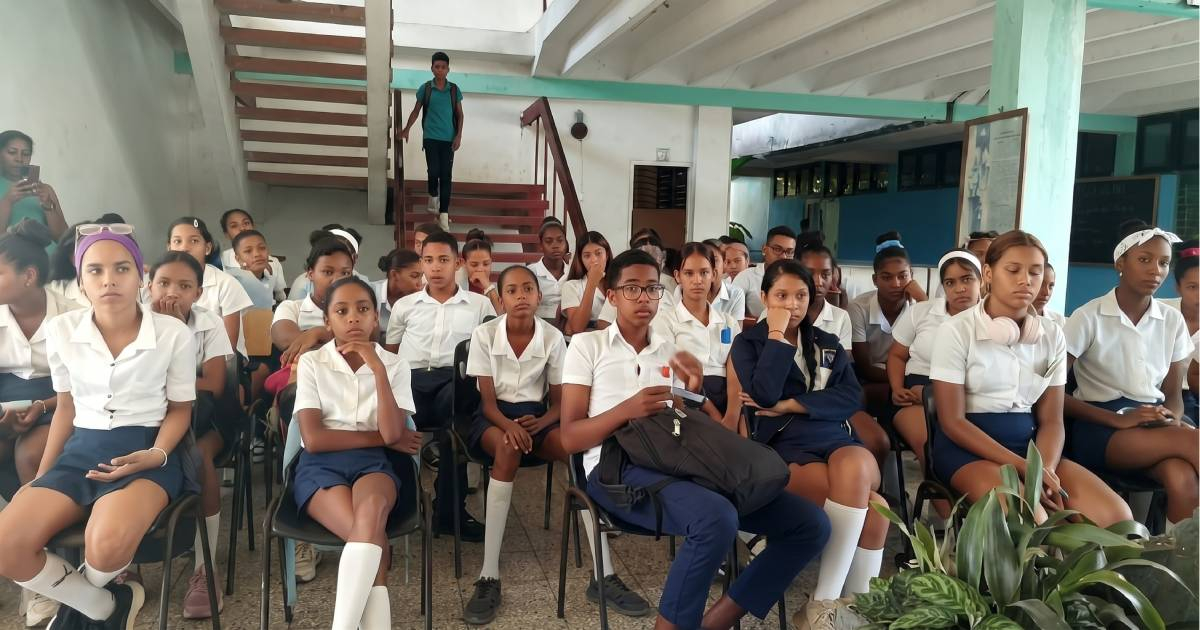
The Union of Cuban Journalists (UPEC) in Guantánamo has launched an initiative to attract students to the field of Journalism due to a significant shortfall of communication professionals in the province. This effort took the form of an open house at the Américo César Deslís Hernández pre-university school in Manuel Tames.
This initiative is a collaboration between UPEC and university students from the Journalism program in Manuel Tames. According to the state-run newspaper Venceremos, it marks the first time the organization has engaged with this school for such a purpose.
Taimi Fernández Pérez, who serves as president of UPEC in Guantánamo, acknowledged that this effort specifically targets "regions suffering from a scarcity of communication professionals."
Engaging the Youth: A Glimpse into Journalism
During the event, students were introduced to the academic path of Journalism, including the professional growth opportunities and the social impact of the media. They also had the chance to interact with university students who shared their personal stories and motivations for pursuing this career path.
Estrella Padilla, the school's director, commended the initiative, emphasizing the importance of illustrating to the younger generation the "social utility of a profession dedicated to research, information, and public service."
Challenges Facing Cuban Journalism
This initiative comes amid a structural crisis threatening the survival of state-run journalism in Cuba. At the VI Plenary Session of UPEC's National Committee on July 22, the dean of the Faculty of Communication at the University of Havana revealed that only 17 students enrolled in Journalism for the 2026-2027 academic year, marking the lowest enrollment on record.
Representatives from Guantánamo, Santiago de Cuba, and Las Tunas highlighted the challenges in maintaining journalistic operations in their regions. The decline is attributed to various factors, including meager salaries that do not exceed 5,060 Cuban pesos per month—less than seven dollars at the informal exchange rate.
Obstacles and New Requirements
Starting in the 2024-2025 school year, female students aspiring to study Journalism must complete a year of Mandatory Military Service, a prerequisite not seen in other university programs. Only 49% of students manage to graduate, and those who do often emigrate or seek better-paying sectors.
In 2025, merely two eleventh-grade students took the aptitude test at the Manuel Ascunce Domenech campus of the University of Ciego de Ávila. In response to these challenges, in September, the Faculty of Communication at the University of Havana issued a special call for students from other disciplines to transfer to Journalism.
The Impact of Legal Constraints
The legal framework exacerbates the disillusionment. Decree 160, effective since August 4 and signed by Prime Minister Manuel Marrero Cruz, strengthens state monopoly over the press and forbids non-state economic actors from practicing journalism.
Cuba ranks 171 out of 180 countries on the 2025 World Press Freedom Index by Reporters Without Borders. Gabriel Hernández, a Journalism student in Cuba, captured the conundrum faced by those pursuing this career: "When I graduate, my own country's laws will prevent me from practicing free journalism, without following a prescribed narrative."
Understanding Journalism Challenges in Cuba
What is the main reason for UPEC's recent initiative in Guantánamo?
UPEC's recent initiative in Guantánamo aims to attract students to the Journalism field in response to a significant shortage of communication professionals in the province.
What challenges do journalism students face in Cuba?
Journalism students in Cuba face several challenges, including low salaries, mandatory military service for women, and restrictive laws that limit free journalism practice.
How has the enrollment in Journalism changed recently?
Enrollment in Journalism has decreased significantly, with only 17 students enrolling for the 2026-2027 academic year, the lowest number on record.