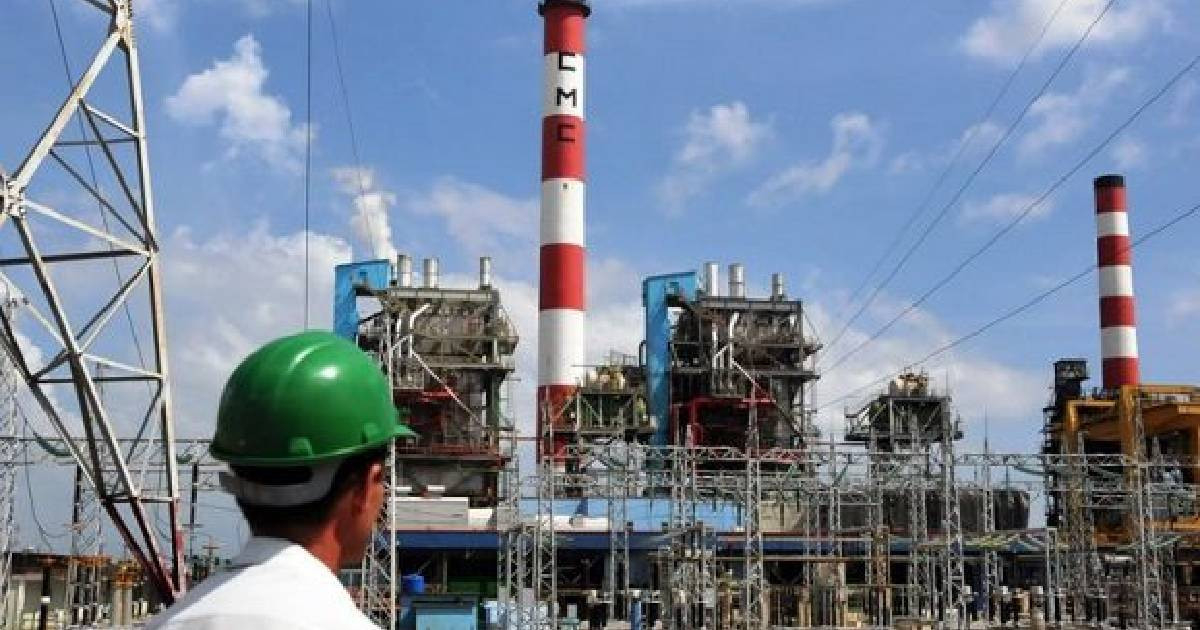
The Cuban Electric Union (UNE) announced on Saturday at 3:17 PM that the partial disconnection of the National Electric System (SEN) in eastern Cuba had been resolved. This announcement was made through a brief message on their Facebook page that read, "Partial disconnection of the SEN in the eastern zone restored."
However, this message raises more questions than it answers. If the "disconnection" has been restored, when will the actual connection be reestablished?
The power outage began at 12:46 PM on the same day when a failure on the 220 kV Nuevitas–Las Tunas transmission line electrically isolated five provinces: Las Tunas, Holguín, Granma, Santiago de Cuba, and Guantánamo, affecting approximately 3.4 million residents. The disconnection lasted for two hours and 31 minutes.
This incident occurred amidst a broader energy crisis. As of six in the morning, the SEN had already reported 1,222 MW affected, with only 1,250 MW available compared to a peak demand forecast of 2,900 MW, covering merely 43% of the country's needs.
Social media users mocked the announcement of the alleged restoration. "So the disconnection is restored, what about the electricity?" one user sarcastically remarked.
Lázaro Guerra Hernández, Director General of Electricity, had warned that significant disruptions would continue throughout the day, although slightly less severe than those on Friday due to the reactivation of the Antonio Guiteras thermoelectric plant—the largest in the country, located in Matanzas—along with a unit from Santa Cruz del Norte and unit 8 of Máximo Gómez.
Nevertheless, the estimated shortfall for peak hours was 1,680 MW, ensuring widespread blackouts across the region.
This recent outage follows a massive blackout in the eastern zone on Thursday when a transmission line fluctuation took Unit 1 of the Lidio Ramón Pérez thermoelectric plant in Felton offline, cutting power to provinces from Holguín to Guantánamo.
The 220 kV Nuevitas–Las Tunas line is a crucial power corridor, and its failure can isolate the entire eastern region from the rest of the national grid. This vulnerability highlights decades of underinvestment in transmission infrastructure.
In 2026 alone, the SEN has experienced at least eight total disconnections, in addition to numerous regional partial outages. The longest occurred on March 16th, lasting 29 hours and 29 minutes. The eastern region is consistently the hardest hit: on August 27th, a fluctuation isolated the grid from Las Tunas to Guantánamo, with reconnection not occurring until the following day.
The disruptions in early October underscore the system's severe deterioration: 2,059 MW were affected on October 1st and 2,130 MW on October 2nd.
Residents in eastern Cuba endure power outages exceeding 20 hours a day, with no credible recovery plan from the regime in sight.
Understanding Cuba's Ongoing Electrical Crisis
What caused the recent power outage in eastern Cuba?
A failure on the 220 kV Nuevitas–Las Tunas transmission line isolated five provinces in eastern Cuba, affecting approximately 3.4 million residents.
How is Cuba's power grid crisis affecting its citizens?
Cuban citizens, particularly in the eastern region, face extended power outages often exceeding 20 hours daily, indicating a severe failure in the national power grid.
What measures are being taken to address the power shortages?
Efforts include reactivating significant thermoelectric plants like Antonio Guiteras and units in Santa Cruz del Norte and Máximo Gómez, though these measures are insufficient to meet the demand.