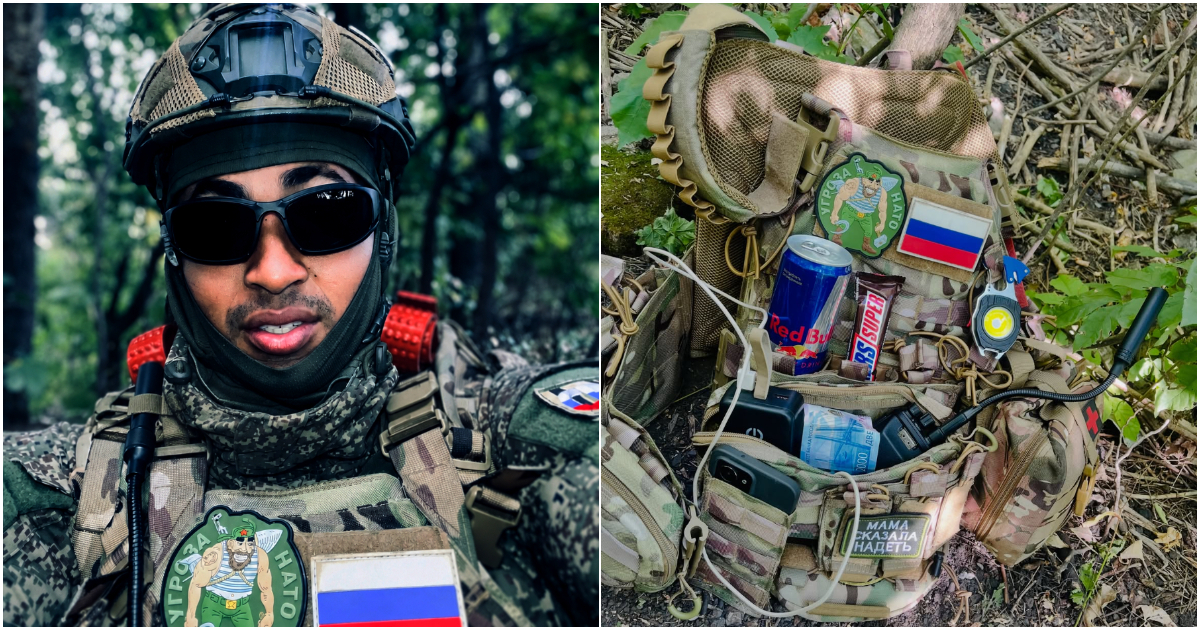
The U.S. Department of State's 2026 Trafficking in Persons (TIP) Report, released on October 8, has once again placed Cuba in Tier 3—the most severe category—for the seventh consecutive year. The report, for the second year running, highlights the fraudulent recruitment of Cuban citizens to serve as mercenaries in Ukraine on behalf of Russia, categorizing it as a form of human trafficking.
According to the report, Cuban nationals were lured through deceitful online job advertisements for construction or other trades in Russia. Upon arrival in Moscow, they were coerced into fighting as mercenaries on the Ukrainian front lines.
"Based on expert analysis and media reports, Cuban citizens were fraudulently recruited to fight for Russia in Ukraine," the report states. "Individuals with firsthand experience reported being recruited online for construction jobs or other employment in Russia, only to be coerced into working as hired mercenaries in Ukraine upon reaching Moscow."
Continued Allegations of Mercenary Recruitment
This marks the second instance that the State Department's annual report has addressed the issue of Cuban mercenaries. Initially mentioned in the TIP 2025 report published last September, the allegations have since become a repeated and solidified accusation.
In response to the earlier mention, Cuba's Ministry of Foreign Affairs (MINREX) denied any state involvement, asserting that the Cubans involved in the conflict acted independently, without state encouragement, commitment, or consent.
Reacting to this year's report, Cuban Foreign Minister Bruno Rodríguez Parrilla dismissed the document as "unilateral" and "deceptive," and criticized the claims regarding medical missions as "an obsessive pursuit."
Broader Issues of Forced Labor
Beyond the mercenary issue, the 2026 report accuses the Cuban regime of sustaining a "governmental policy or pattern" of forced labor through its labor export program. At the start of 2026, approximately 18,000 Cuban workers were stationed in 52 countries, a decrease from the 24,000 recorded at the beginning of 2025. This reduction is attributed to U.S. diplomatic pressure and the termination of bilateral agreements by four countries in the previous year.
The Cuban government retains between 50% and 95% of the wages paid by host countries for these workers' services. These workers face surveillance, curfews, movement restrictions, and threats to their families back in Cuba to prevent them from leaving the missions. Health professionals make up 75% of this exported workforce and are the program's primary source of foreign currency.
The report further accuses the regime of forcing some political prisoners to work in agriculture, sugarcane cutting, construction, and public services, with goods produced by this labor—such as marabou charcoal and tobacco—being exported to certain European countries.
Prosecution and International Attention
Prosecution efforts have worsened: in 2024, Cuba investigated 14 sexual trafficking cases, the same as in 2023, but only prosecuted and convicted 10 traffickers compared to 19 the previous year. No forced labor cases were investigated, and there have been no prosecutions or convictions for labor trafficking since at least 2022.
The allegations concerning Cuban mercenaries have also been reinforced by other international actors. In September 2026, Amnesty International released a report documenting the recruitment of foreigners—including Cubans—through deception and coercion, urging Ukraine to individually assess if some prisoners of war are trafficking victims.
In November 2025, the organization Citizenship and Freedom presented a report in Berlin estimating that up to 25,000 Cubans had been recruited for the Russian army, based on Ukrainian intelligence data.
Cuba is one of 12 nations globally identified as having a documented "policy or pattern" of state-sponsored human trafficking, alongside Afghanistan, Belarus, Burma, Cambodia, China, Eritrea, Iran, North Korea, Russia, South Sudan, and Sudan.
Assistance restrictions associated with Tier 3 status will come into effect on October 1, 2026, marking the start of the next U.S. fiscal year.
FAQs on Cuban Recruitment and Forced Labor
Why is Cuba placed in Tier 3 of the U.S. Trafficking in Persons Report?
Cuba is placed in Tier 3 due to persistent issues of human trafficking, including fraudulent recruitment of Cubans as mercenaries and forced labor practices through its labor export program.
What actions did the Cuban government take in response to the TIP report?
The Cuban government, through its Foreign Minister, dismissed the report as unilateral and deceptive, denying state involvement in the recruitment of Cubans for mercenary roles.
How does the Cuban labor export program function?
The program deploys Cuban workers abroad, primarily health professionals, while the government retains a large portion of their wages and imposes strict controls on their movements and personal lives.