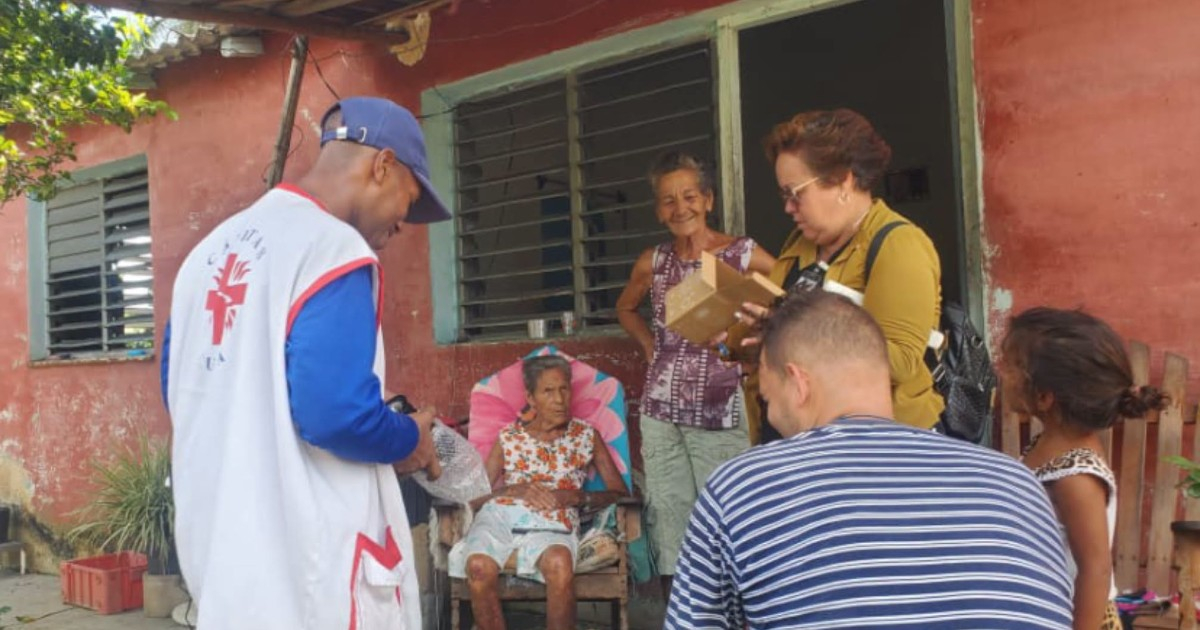
This past Saturday, volunteers from Cáritas Pinar del Río made their way to the homes of the most vulnerable families in the Candelaria municipality to distribute food and hygiene kits sent from the United States.
According to a Facebook post by the organization, the initial deliveries were carried out in six rural communities: Mango Dulce, Bayate, La Picadora, Tabaco Rubio, El 20, and Barrancones. These areas are part of Candelaria, which administratively belongs to the Artemisa province but is under the ecclesiastical jurisdiction of the diocese of Pinar del Río.
The shipment, comprising 700 food kits and 700 hygiene modules, arrived at Havana's José Martí International Airport on Thursday. It was received by Monsignor Juan de Dios Hernández Ruiz, the diocesan bishop, and Abel Castillo López, director of Cáritas Pinar del Río.
Cáritas identified the recipients with the help of parish volunteers who conducted home visits to determine those most in need. Priority was given to elderly individuals living alone, pregnant or nursing women with identified risks, children under five living in precarious conditions, and people with disabilities or bedridden.
"Each visit left a mark of deep emotion and gratitude. More than just material relief, these resources symbolize an outstretched hand, a gesture of fraternal love, and the assurance that no one should feel forgotten," the Facebook post stated.
The food kits include essentials such as rice, beans, oil, brown sugar, pasta, sardines, and tuna. Hygiene modules contain soap, detergent, toothpaste, toothbrushes, water purification tablets, sanitary products, a bucket, a 20-liter container, and a rechargeable lamp.
The distribution in Candelaria is part of a $100 million humanitarian program announced by the Trump administration in May 2026. Of this, $60 million is channeled through Cáritas Cuba and Catholic Relief Services (CRS), while the remaining $40 million is allocated to other independent organizations.
The program is specifically designed to exclude the Cuban regime as an intermediary. CRS procures the supplies in the United States, and Cáritas distributes them on the island via its diocesan and parish networks, ensuring that the government neither receives cash nor controls the delivery chain.
The territorial reach of this initiative has expanded gradually. The first flight departed from Miami in July with approximately 18 tons of supplies, initially distributed in Bejucal and Alquízar. The program then reached Villa Clara in September, and by October, it had extended to Camagüey, Ciego de Ávila, and Pinar del Río.
Frequently Asked Questions About U.S. Aid to Cuba
How is the humanitarian aid distributed in Cuba?
The aid is distributed through Cáritas Cuba and Catholic Relief Services, using their diocesan and parish networks to reach those most in need without government intervention.
Who are the primary beneficiaries of the aid in Candelaria?
Priority is given to elderly people living alone, at-risk pregnant or nursing women, young children in precarious conditions, and individuals with disabilities or who are bedridden.
What items are included in the food and hygiene kits?
Food kits contain rice, beans, oil, brown sugar, pasta, sardines, and tuna. Hygiene kits include soap, detergent, toothpaste, toothbrushes, water purification tablets, sanitary products, a bucket, a 20-liter container, and a rechargeable lamp.