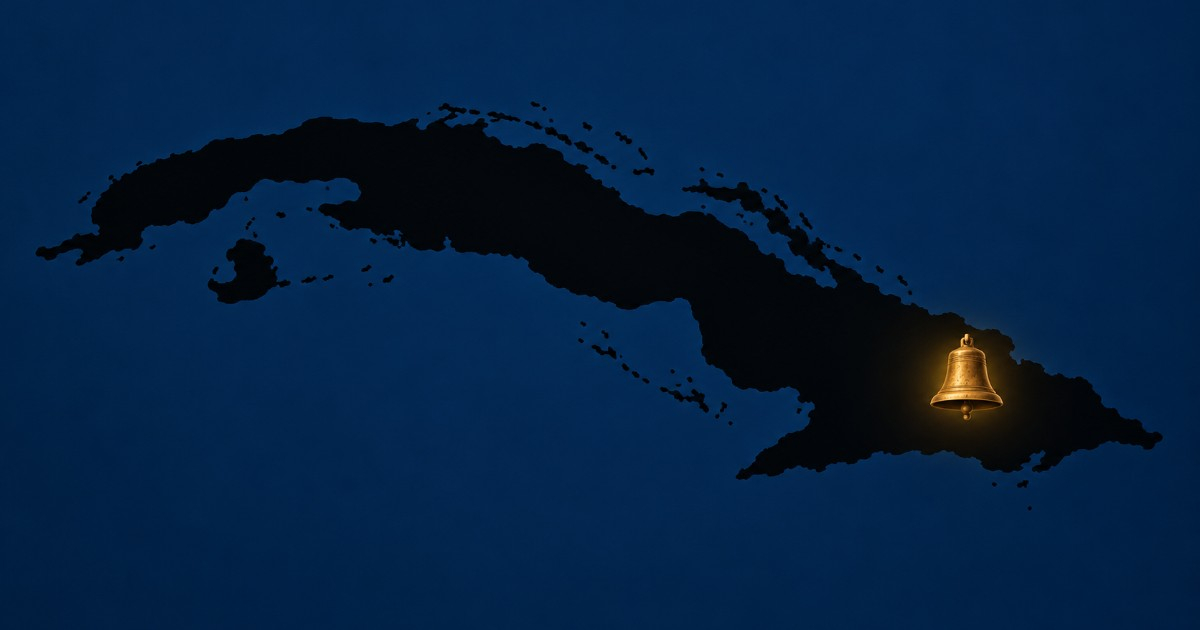
Cuba marks the 158th anniversary of the Yara Uprising this Saturday, amidst a severe electricity crisis that defies quantification through early morning service outage reports. From September 3 to October 2, 23 out of 28 days with nationwide closure data saw power disruptions exceeding 2,000 megawatts (MW), according to a CiberCuba analysis of Union Eléctrica (UNE) reports. In numerous localities, households endure prolonged periods—sometimes entire days—without electricity.
October 10 began with documented power interruptions in Havana, Villa Clara, Holguín, and Sancti Spíritus. At midnight, Havana's Electric Company reported 258 MW affected and 97 distribution circuits without service. By 6:00 a.m., this decreased to 174 MW and 68 circuits impacted. These figures represent two specific moments, not the total number of outages or the cumulative hours each household spent without power.
The Blackout Observatory by CiberCuba, compiling reports from electric companies and official sources, noted 139 circuits affected in Villa Clara. In Holguín, the Iberia 1 circuit faced 25 hours and 11 minutes of outages, while the Juan Vicente circuit experienced 22 hours and 5 minutes of interruption. Sancti Spíritus reported issues in Iguará and outages in Fomento and Taguasco.
Understanding the Incomplete Reports
The 258 MW reported in Havana at midnight reflects a provincial snapshot, not Cuba's total outages. Similarly, the number of affected circuits doesn't reveal how many people are without power, the total duration of their outages, or future interruptions. Announced restorations also do not guarantee continuous supply throughout the day.
The Observatory warns that institutional figures may be preliminary, incomplete, or subject to revision. While its records gather available reports, they don't provide continuous, comprehensive monitoring of all households on the island. As a result, the real impact on the population could be more extensive than indicated by isolated communications, though these data cannot calculate the exact percentage of the country that remains in darkness most of the time.
Weeks of Severe Blackouts
The issue isn't isolated to October 10. A CiberCuba analysis published on October 4 examined 30 days from September 3 to October 2, finding comparable maximum real impact figures on 28 of them. In 23 days, the demand removed via blackouts exceeded 2,000 MW, with an average daily maximum of about 2,093 MW.
This average doesn't imply 2,093 MW were disconnected for 24 hours; it measures the daily reported maximum. However, it documents the recurrence of significant disruptions. September 18 and 19 were excluded from the comparison due to a total disconnection of the National Electroenergetic System (SEN) and its subsequent recovery process, not representing a period of electrical normalcy.
UNE reports attribute ongoing limitations to a mix of thermoelectric failures, units halted for maintenance, and fuel shortages for distributed generation groups. Solar parks contribute energy during the day, but their output doesn't continuously replace the missing generation at night.
Chronic Outages from 2025 to 2026
By 2025, outage durations were already extreme. During a June visit to Granma, Miguel Díaz-Canel acknowledged that families in Río Cauto had suffered over 20-hour blackouts. In December, Guantánamo's Electric Company director admitted to outages lasting up to 20 hours in some circuits, challenging rotation program adherence.
The situation continued to severely impact daily life in 2026. An EFE report released this week described Puerto Esperanza, in Pinar del Río, receiving just about two hours of electricity daily. Local fishermen explained that without refrigeration, they must sell their catches immediately or risk losing them.
The reach of the outages goes beyond homes. In September, state telecommunications company ETECSA admitted prolonged blackouts left communities without connectivity, and during the national SEN collapse on the 18th, over 80% of its radio bases were offline. Power cuts also hinder water pumping, food preservation, and the operation of production facilities.
This anniversary recalls the uprising led by Carlos Manuel de Céspedes in La Demajagua on October 10, 1868, marking the start of the Ten Years' War. In the 2026 commemoration, provincial reports continue to log restorations and interruptions, while places like Puerto Esperanza face days where time with electricity is far less than time without it.
Understanding Cuba's Power Crisis
What is causing the severe power outages in Cuba?
The outages are primarily due to a combination of thermoelectric plant failures, maintenance stoppages, and fuel shortages affecting distributed generation groups. While solar parks contribute during the day, they don't continuously replace the missing nighttime generation.
How are the power outages affecting daily life in Cuba?
The outages significantly disrupt daily activities, leaving families with limited electricity for essential tasks, affecting food preservation, water pumping, and connectivity. Some areas receive only a couple of hours of power daily, impacting livelihoods and access to services.