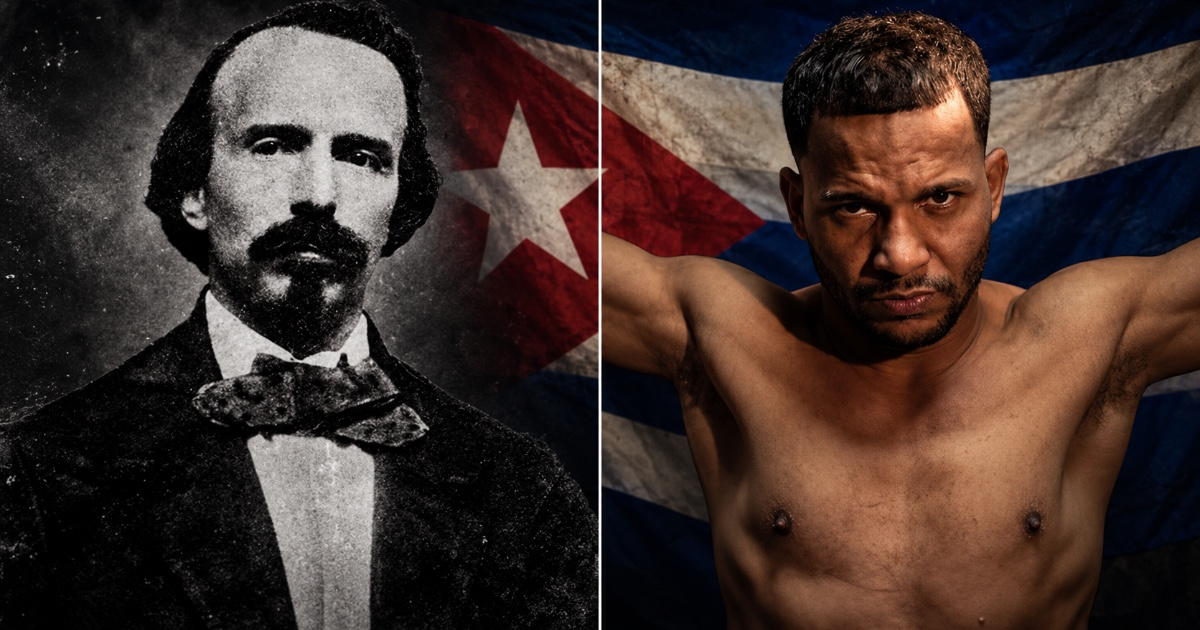
This Saturday marks the 158th anniversary of the Cry of Yara, overshadowed by the grim reality of 1,339 individuals listed as political prisoners by Prisoners Defenders as of late August 2026. By October, this dynamic list had grown to 1,353 cases. Behind these numbers lie stories of people serving prison sentences, others under restricted freedom, and families struggling to visit or provide medical care for their loved ones. Among the most notable cases is the rapper Maykel Osorbo, co-author of "Patria y Vida," who remains imprisoned.
On October 10, 1868, Carlos Manuel de Céspedes launched an uprising in La Demajagua against Spanish rule, igniting the Ten Years' War. His manifesto demanded political representation and freedoms for Cubans. This anniversary coincides with a rise in the number of people identified as victims of politically motivated imprisonment or sanctions by a human rights organization.
Understanding Prisoners Defenders' Statistics
In a report released on September 10, Prisoners Defenders announced 19 new additions and seven removals in August, resulting in a net increase of 12 cases. A year earlier, in August 2025, the count was 1,185, meaning there was a yearly increase of 154 individuals. The figure of 1,353 published on their site reflects an October update and does not replace the detailed August report.
The August registry categorizes 807 as prisoners of conscience, individuals jailed for politically motivated reasons; 495 as convicted of conscience, facing restrictions without imprisonment; and 37 as other political prisoners, whose legal processes have severe political bias. Therefore, the figure of over 1,300 political prisoners does not imply all are physically behind bars.
The list includes 155 women and 38 individuals detained as minors, 14 of whom remain imprisoned, according to the report. Additionally, the organization documented 217 protesters convicted of sedition, with an average sentence of ten years of imprisonment.
From Prison to Exile: The Cases of Maykel Osorbo and Luis Manuel Otero Alcántara
Maykel Castillo Pérez, widely known as Maykel Osorbo, is a prominent figure among artists facing repression. The rapper and co-founder of the Movimiento San Isidro — an organization that challenged cultural censorship and championed creative freedom — was arrested on May 18, 2021. On June 24, 2022, he was sentenced to nine years for charges including assault, disrespect, and public disorder. He also co-authored "Patria y Vida," which became the anthem of the 2021 protests, earning two Latin Grammys: Song of the Year and Best Urban Song.
In July 2026, the Inter-American Commission on Human Rights (IACHR) released a report branding his detention as illegal and arbitrary, noting he was forcibly disappeared between May 18 and 31, 2021, and recommending Cuba annul his sentence. Osorbo is still listed as incarcerated at Guanajay prison in Artemisa. In an August audio message, he expressed his willingness to go into exile, though Cuban authorities have blocked his departure.
His ally and fellow activist, Luis Manuel Otero Alcántara, an artist known for his protests against censorship, was arrested on July 11, 2021, and sentenced, like Osorbo, on the same day, to five years for crimes such as disrespect, public disorder, and affront to national symbols. Unlike Osorbo, Otero Alcántara was released on July 18, 2026, after serving his sentence, but was forced to leave Cuba and now resides in Miami. Amnesty International, which recognized both as prisoners of conscience, condemned this exile as an extension of punishment against dissenting voices. Otero Alcántara, while no longer imprisoned, remains a symbol of political persecution.
A Father's Struggle: A 300-Kilometer Journey in Vain
The plight of families was highlighted this week by the case of Wilber Aguilar Bravo. On Thursday, October 8, he traveled from Havana to the Nieves Morejón prison in Sancti Spíritus to visit his son, Walnier Luis Aguilar Rivera, who was jailed for the July 11, 2021 protests. After traveling over 300 kilometers, authorities denied him entry and refused his delivery of food.
Aguilar reported that it had been 84 days since his last visit to Walnier, with a new visitation date set for November 20. His son was initially sentenced to 23 years for sedition, later reduced to 12 years. The father also reported surveillance and harassment for asserting his rights.
Their situation prompted the IACHR to grant precautionary measures for Walnier in 2022 and extend them to his father and family in January 2025, given the seriousness and urgency of reported threats. The IACHR noted that Cuba failed to provide information and requested protective measures for the family.
The Health Crisis Among Incarcerated Individuals
Prisoners Defenders reported that among those still imprisoned, 463 suffer from severe medical conditions and 54 from serious mental health issues. The organization highlighted that inadequate nutrition, abuse, and denial of medical care worsen their conditions.
On October 7, the Cuban Observatory for Human Rights released a letter from Ana Ibis Tristá Padilla, imprisoned in Las Tunas women's prison. Sentenced to 14 years after a second trial for crimes against constitutional order and state security, she described kidney problems, chronic asthma, and mobility issues. "I can barely walk and live with daily pain," she wrote, calling for urgent medical attention and her release.
Tristá's case was particularly controversial: initially acquitted due to lack of evidence, the prosecution appealed, leading to her conviction in a subsequent trial. Her health complaint has not, according to available information, received a public response from prison authorities.
July 11 Protesters Still Behind Bars
A significant portion of political prisoners stem from the July 2021 protests. A report by Human Rights Watch on July 10, 2026, noted that estimates from Justicia 11J and Prisoners Defenders indicated about 800 political prisoners remain incarcerated, nearly half linked to those demonstrations.
Human Rights Watch contended that Cuban courts punished actions protected by freedoms of expression and association, with some receiving disproportionate sentences based on unverified or dubious evidence. The report cited Juan Enrique Pérez Sánchez, sentenced to eight years for disrespect, public disorder, and sabotage, where prosecutors used "scent traces" on rocks as evidence, a method questioned by forensic experts.
Cuban authorities conduct these trials under charges like sedition, disrespect, or public disorder; human rights organizations dispute the application of these charges to peaceful protesters and the fairness of the proceedings. The designation of political prisoner comes from these organizations, not an acknowledgment by Cuban authorities.
Key Questions About Political Prisoners in Cuba
What is the significance of the Cry of Yara in Cuban history?
The Cry of Yara, initiated by Carlos Manuel de Céspedes on October 10, 1868, marked the beginning of Cuba's Ten Years' War against Spanish colonial rule. It is a pivotal moment in the island's struggle for independence and political freedom.
Who is Maykel Osorbo and why is he significant?
Maykel Osorbo is a rapper and activist, co-founder of the Movimiento San Isidro, and co-author of "Patria y Vida," a song that became an anthem for the 2021 protests in Cuba. His continued imprisonment highlights the Cuban government's crackdown on dissenting voices.
What are the health conditions of political prisoners in Cuba?
Many political prisoners in Cuba suffer from severe medical conditions and mental health issues, exacerbated by inadequate nutrition, abuse, and lack of medical care, as reported by Prisoners Defenders.