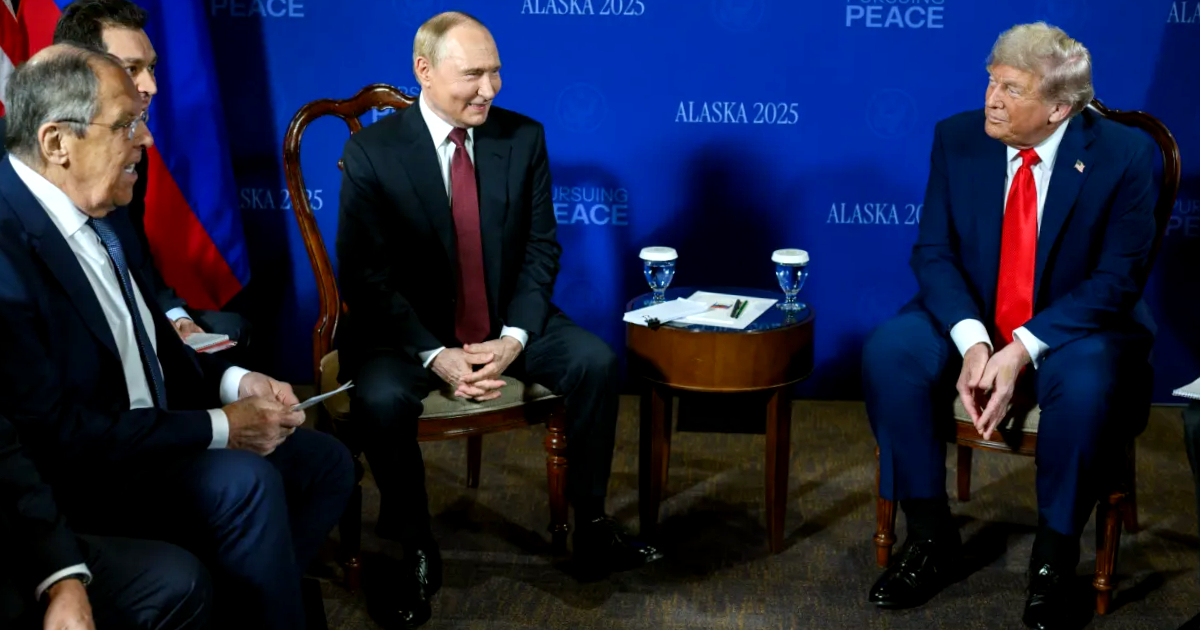
Less than a month after enacting legislation aimed at economically suffocating Russia, Donald Trump declared on Friday a massive fuel import agreement with Vladimir Putin. This decision, permitting millions of tons of Russian diesel to enter the U.S. market, has been criticized by lawmakers from both sides of the aisle as inconsistent with the very sanctions he endorsed, as reported by CNBC.
The announcement was made via Truth Social, where Trump hailed the deal as a significant achievement: an immediate influx of over 300,000 tons of diesel, with an additional 500,000 tons in November, a further million tons "immediately after," and potentially up to three million more, contingent on the capacity of Russian refineries.
The cumulative total surpasses 4.8 million tons. To facilitate this, the Treasury Department issued OFAC's General License 135 the same day, allowing the sale, delivery, and importation of Russian diesel into the U.S. until April 7, 2027.
The Bipartisan Dilemma
The contradiction is evident: on September 18, Trump enacted the Lindsey O. Graham Russia and Iran Sanctions Act (H.R. 5334), which received overwhelming bipartisan support — 86-11 in the Senate and 262-159 in the House. This law was designed to sever the financial streams fueling Russia's war in Ukraine.
Named after the late Republican Senator Lindsey Graham, who passed away at 71 on July 11 and was a staunch advocate of the initiative, the legislation authorizes tariffs up to 500% on Russian imports and up to 100% against the five largest importers of Russian oil or gas.
Additionally, it includes sanctions targeting banks, oligarchs, and the so-called "shadow fleet" employed to circumvent energy restrictions.
Political and Economic Repercussions
Republican Representative Don Bacon of Nebraska, a retired Air Force brigadier general, was among the first within his party to spotlight the inconsistency. "We need lower diesel prices for American farmers, ranchers, and consumers, but purchasing Russian fuel is the wrong solution," Bacon expressed on X.
He elaborated on the geopolitical dynamics underpinning the agreement: "Ukraine has been targeting Russian refineries because they fund Putin's illegal invasion. Putin wants the U.S. to pressure Ukraine to cease these attacks."
His conclusion was blunt: "Congress overwhelmingly passed the Lindsey O. Graham Sanctions Act and President Trump signed it. Now is the time to leverage these sanctions to crush Putin's war machine, not reward a dictator with more money while he continues to assault and kill Ukrainian civilians."
Democratic Opposition and Energy Context
From the Democratic side, Senator Richard Blumenthal, a co-sponsor of the Graham Act, stated that the agreement is "directly contrary to the intent of Congress" and implicates the U.S. as complicit in Putin's war. Senators Chuck Schumer, Jeanne Shaheen, and Elizabeth Warren labeled it a "betrayal" of Ukraine, European allies, and national security.
The energy context invoked by Trump as justification is genuine: diesel prices in the U.S. exceeded six dollars per gallon for the first time on September 10, reaching 6.28 dollars, according to the American Automobile Association (AAA). Ukraine has claimed responsibility for disabling 51% of Russia's refining capacity, while the International Energy Agency estimated a 30% drop in Russian diesel production.
This decision also coincides with the midterm election campaign, which several analysts point to as an additional political motive to lower fuel prices ahead of November.
Ukrainian President Volodymyr Zelensky criticized the agreement, warning that easing Russian energy exports provides Moscow with revenue while the war persists. Just a month earlier, Trump had urged Zelensky to halt attacks on Russian refineries, arguing that they were driving up global fuel costs.
FAQs on Trump's Diesel Deal with Russia
Why is Trump's agreement with Russia controversial?
The agreement is controversial because it appears to contradict the sanctions Trump signed into law just weeks before, which were intended to economically pressure Russia by cutting off revenue sources funding its military actions.
What does the Lindsey O. Graham Sanctions Act entail?
The act authorizes significant tariffs on Russian imports and imposes sanctions on banks, oligarchs, and entities that help evade energy restrictions, aiming to weaken Russia's financial capacity for war.
How has the U.S. political landscape reacted to the fuel import deal?
Both Republican and Democratic lawmakers have criticized the deal, with some viewing it as undermining the efforts to support Ukraine and counter Russia's aggression.