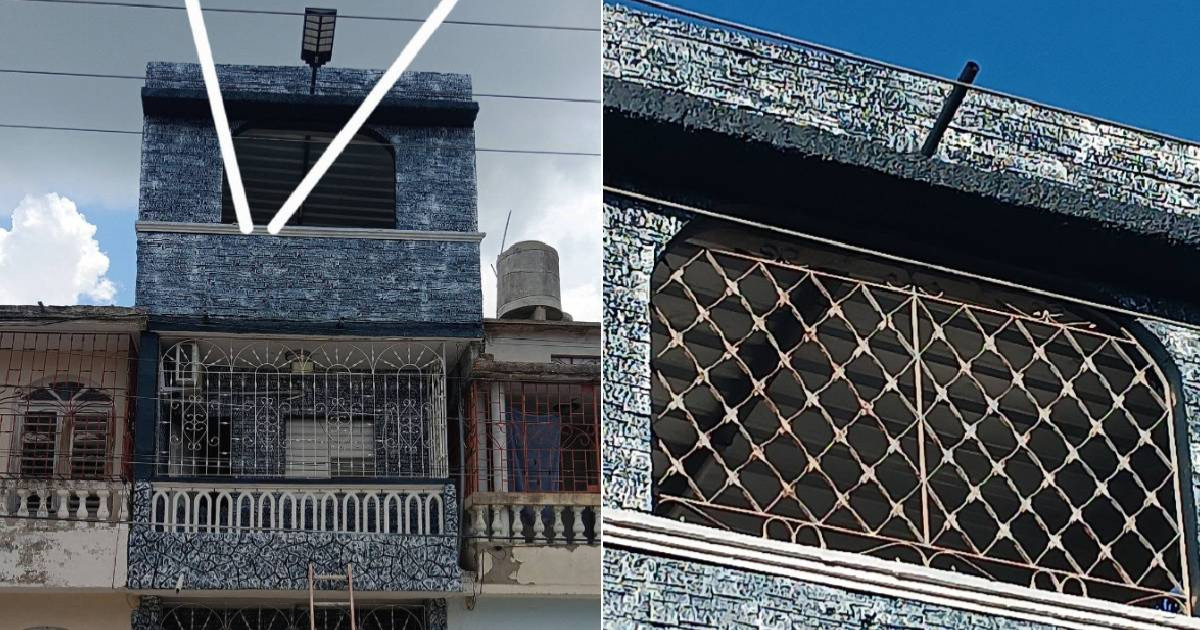
In a stark reminder of the challenges Cubans face, a solar lamp installed by a family to illuminate their neighborhood during frequent power outages was stolen from outside their home on Alemán Street in Santa Clara. The theft occurred in the early hours of Thursday morning, leaving residents without a shared source of light.
Maylín García, the homeowner, took to Facebook to express her frustration and disappointment. Her post, aimed at the thief, explained that the lamp was not just for her family’s benefit but served a significant portion of the block. The post quickly gained traction, resonating with hundreds and sparking widespread reactions.
"You might have seen just a lamp to take," García penned, "but we placed it there for everyone. With so many blackouts in Cuba, that light brightened a large part of the street, offering our neighbors a bit of clarity." She emphasized the communal loss with a poignant remark: "You didn't just take a lamp. You took a piece of the light we shared with others."
García concluded her message with a sentiment shared by many: "Even though that light is gone, the shame of your actions belongs to you, not us."
Growing Problem of Solar Lamp Theft
The incident in Santa Clara is not isolated. Another user shared a similar experience of having two lamps stolen from the Casino Deportivo in Havana, with the thief returning to take the remaining two the following month. Similarly, another individual recounted installing lights for street visibility, only for them to be stolen as well.
Participants in the online discussion noted that the theft of these devices not only removes a source of light but also plunges streets into darkness, potentially enabling other crimes. Some called for harsher penalties for those who harm the community in this way.
Wider Implications and Government Response
This theft highlights the loss of a practical solution that families have used to help neighbors cope with blackouts. Although the lamp did not replace the electric supply, it offered shared illumination during outages, a benefit that vanished with the theft.
Earlier this year, solar streetlights installed in Santiago de Cuba were stolen soon after their installation, with the police failing to respond to distress calls. In Havana, the Escolapios parish reported the theft of lamps funded by donations. Moreover, in Guantánamo, eight youths were arrested for stealing over 20 public lighting lamps to sell to private businesses for prices ranging from 15,000 to 20,000 Cuban pesos.
Solar equipment has become highly sought after on Cuba’s informal market, driven by an energy crisis leading to blackouts lasting over 20 hours a day in some areas. In response, the government enacted Supreme People's Court Ruling 475, categorizing the theft of solar components as sabotage—a crime against state security—punishable by seven to 30 years in prison, life imprisonment, or the death penalty in severe cases.
Despite these severe penalties, thefts persist. The Cuban Citizen Audit Observatory reported a staggering 479% increase in verified thefts from 2023 to 2025, with 1,536 documented cases in the last year alone.
Understanding Cuba's Solar Equipment Theft Issue
Why are solar lamps being stolen in Cuba?
Solar lamps are highly valued due to Cuba's ongoing energy crisis, which results in prolonged power outages. They offer a critical source of light during these times, making them targets for theft.
What measures has the Cuban government implemented to address solar equipment theft?
The Cuban government has introduced Supreme People's Court Ruling 475, classifying the theft of solar components as sabotage, a crime against state security, with severe penalties including long prison sentences, life imprisonment, or the death penalty in extreme cases.