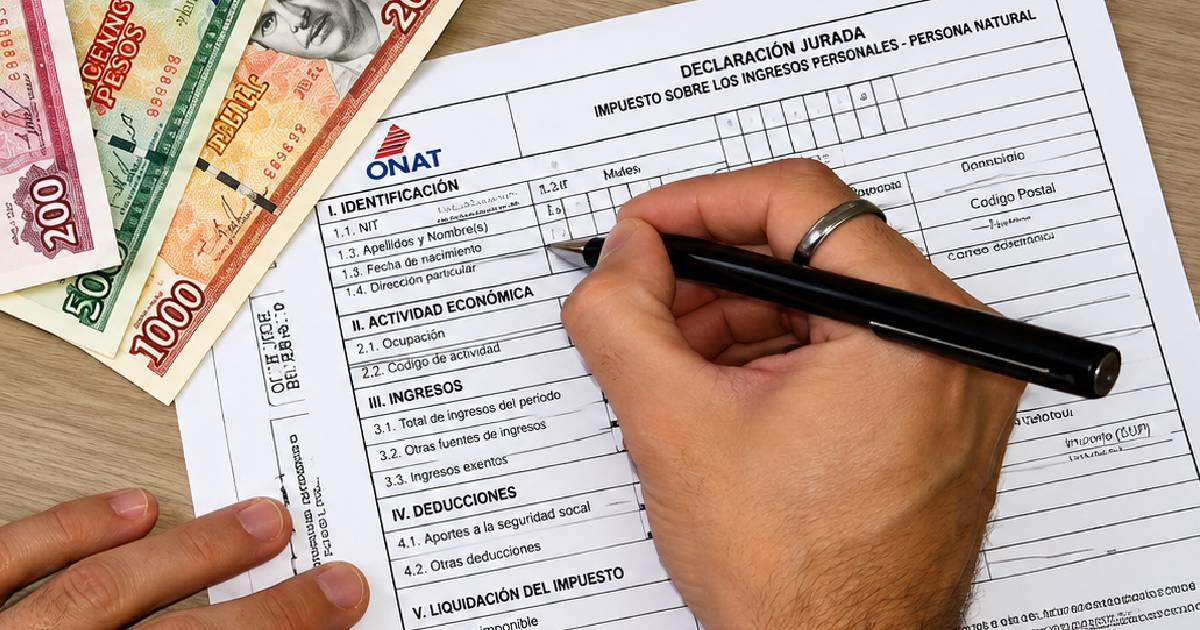
The Cuban government declared on Friday that it possesses a comprehensive legal framework to pursue tax evasion, which includes the authority to seize bank accounts, confiscate properties, and even initiate criminal proceedings with potential prison sentences of up to five years.
According to the state-run media outlet Cubadebate, Cuban authorities, including the Prosecutor General's Office, publicly outlined the available mechanisms to ensure that "no case of tax evasion goes unpunished."
This official report, presented as a legal explanation, effectively serves as a public warning to taxpayers, especially targeting self-employed individuals and small to medium-sized private enterprises, which have been on the rise since 2021.
New Measures to Combat Tax Evasion
The most aggressive tool is the so-called "collection order without acceptance," established by the Ministry of Finance and Prices' Resolution 126/2026. This provision allows the National Tax Administration Office (ONAT) to request banks to directly debit confirmed tax debts without the account holder's consent.
For legal entities, the debit affects the current account; for individuals with economic activities, it targets the Fiscal Bank Account. However, in cases of underreporting or proven evasion, the measure can even extend to the debtor's personal accounts after prior notification.
If the available balance does not cover the full amount owed, the bank is authorized to conduct partial and successive debits until the debt is cleared. Furthermore, if ten business days pass without payment or a deferment agreement, the ONAT can issue an order to seize movable and immovable assets, credit rights, wages, and bank accounts.
Stricter Penalties and Legal Consequences
Administrative penalties have also intensified: modifications published in the Official Gazette at the end of 2025 increased fines up to 40% of the total debt, in addition to late payment charges.
On the criminal front, Article 319.1 of the current Penal Code penalizes tax evasion with one to three years of imprisonment, fines ranging from 300 to 1,000 units, or both. If the offense severely harms the State Budget, the sentence escalates to two to five years. The use of deceit, accounting falsifications, or other intentional maneuvers can also result in two to five years behind bars.
Cubadebate raises the question of whether settling the debt can prevent criminal proceedings, and the answer is nuanced: Article 323.2 of the Penal Code specifies that "if the person pays the debt before the conclusion of the oral trial, the court may dismiss the case or reduce the minimum and maximum limits of the sanction, provided that no fraudulent means or procedures were used to evade, obstruct, or delay ONAT's collection."
Economic Context and Urgency for Revenue
The figures presented by the government highlight the magnitude of the issue they aim to address. By the end of November 2025, ONAT had identified debts exceeding 10,914 million pesos, with 171 reports filed for alleged evasion and 179 cases processed that year for potential tax crimes.
In a previous assessment, the Prosecutor General reported that 30 cases were directly referred for criminal prosecution.
Additionally, ONAT can request travel bans for those failing to meet their tax obligations and has the power to order the temporary or permanent closure of businesses and revoke licenses for underreporting or evasion.
All these legal measures unfold in the midst of a severe economic crisis, with a government desperate for revenue to sustain a bankrupt budget. Instead of reforming the structures that have devastated Cuba's economy during decades of dictatorship, it has chosen to intensify fiscal pressure on the private sector.
Understanding Cuba's Tax Enforcement Measures
What legal measures can the Cuban government take against tax evasion?
The Cuban government can seize bank accounts, confiscate properties, and initiate criminal proceedings with sentences of up to five years of imprisonment for tax evasion.
How does the "collection order without acceptance" work?
This order allows the National Tax Administration Office (ONAT) to request banks to directly debit confirmed tax debts without the account holder’s consent.
Can paying the tax debt prevent criminal proceedings in Cuba?
Yes, if the debt is paid before the end of the oral trial, the court may dismiss the case or reduce the sanction, provided no fraudulent means were used in the evasion.