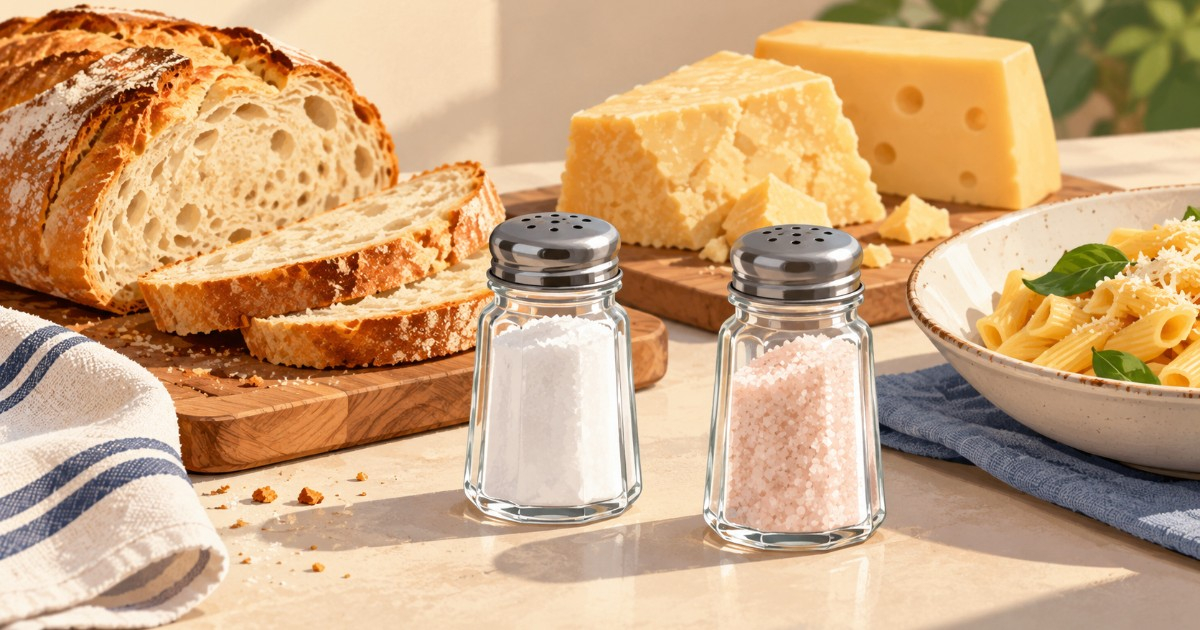
The United States Food and Drug Administration (FDA) has revealed a new regulation on Friday, October 9, allowing manufacturers to use salt substitutes in specific foods, including bread, cheese, and pasta, aiming to produce items with reduced sodium content.
This decision alters the existing regulations regarding foods subject to "standards of identity," which outline the necessary or permissible ingredients for a product to be marketed under a specific name. These standards also specify ingredient proportions and production methods.
According to the FDA's official statement, there were previously 139 standards of identity that required or permitted the addition of common salt—sodium chloride—but did not accommodate alternative substitutes. This previously constrained efforts to lower sodium levels while adhering to the product's established identity. The number reflects regulatory standards, not 139 brands or specific products.
Impact on Manufacturers and Consumers
The update affects various categories under federal guidelines, such as breads, rolls, various cheeses, and pasta. Manufacturers can now explore new formulations using salt substitutes without compromising compliance with the relevant standards of identity.
It's important to note that this change is voluntary. The FDA does not mandate companies to eliminate salt from their formulations, nor does it impose a specific sodium reduction for each food item. Therefore, not all bread, cheese, or pasta products will immediately change their composition.
The agency has also not specified how many products will eventually be reformulated. Any ingredient used as a substitute must meet applicable food safety and labeling requirements. The regulation does not force companies to rely solely on potassium chloride.
Implementation Timeline
Although the final rule was announced on October 9, 2026, it is not yet in effect. The document was available for public inspection in the Federal Register and was scheduled for official publication on October 13. The regulation is set to become effective 60 days following its publication.
This measure is part of the FDA's ongoing efforts to decrease sodium consumption in the United States. The agency emphasizes that excessive sodium intake is linked to a higher risk of high blood pressure, a leading factor in heart disease and strokes.
For consumers, the emergence of lower-sodium options does not replace the need to compare labels: sodium content is listed on the nutritional information panel, while the ingredient list reveals the components used in each product.
Understanding FDA's New Regulation on Sodium Reduction
Why is the FDA allowing salt substitutes in food products?
The FDA is permitting salt substitutes to help manufacturers create foods with reduced sodium content, aligning with efforts to lower sodium consumption across the United States due to health concerns like hypertension and heart disease.
Will all bread and cheese products change immediately?
No, the change is voluntary, and not all products will be reformulated immediately. Manufacturers have the option to use substitutes, but it is not mandatory.
When will the new regulation take effect?
The new regulation will become effective 60 days after its publication in the Federal Register, which is scheduled for October 13.