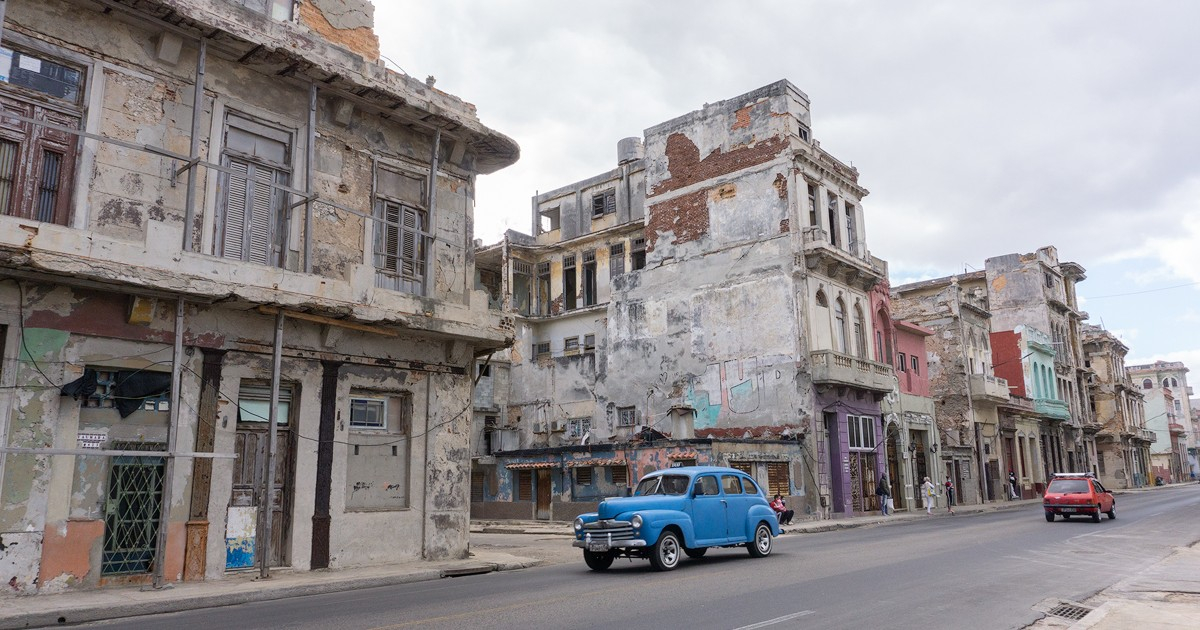
Cuba's newly enacted Housing Law introduces opportunities to restore properties, expand housing, and attract new economic players. However, a crucial question remains: Who will finance the transformation of Havana's urban landscape?
For decades, Havana has been plagued by decaying buildings, makeshift repairs, and crumbling facades. The Housing Law 187, approved on July 30, 2026, aims to modernize a legal framework that has long governed construction, maintenance, and real estate transactions in the nation.
Beyond real estate procedures, some provisions of the law may significantly impact the appearance of Havana, ranging from downtown rooftops to Vedado's multifamily buildings and other deteriorating neighborhoods.
Yet, legal permission for rehabilitation does not equate to available resources for execution. Where will the investments come from to transform the city?
Reviving Ruins: Turning Dilapidated Buildings into Homes
One of the law's most significant changes concerns properties declared as ruins. According to the official explanation published by Granma, owners can now engage in transactions allowing others, including companies, to take over dilapidated properties and restore them under specific urban conditions.
This policy could enable abandoned buildings to find new owners or responsible parties willing to rehabilitate them. However, it raises a critical issue: What happens when owners lack the funds to restore their properties?
The legislative proposal included judicial processes to reclaim homes abandoned to ruin. Marvelis Velázquez Reyes, head of Legal Affairs at the Ministry of Construction, stated that these situations should be evaluated by courts, ensuring no arbitrary actions.
Transforming Havana's Skyline: Rooftops and Multifamily Buildings
The new legislation also alters how existing spaces can be utilized. Construction Minister René Mesa Villafaña announced the removal of certain administrative approvals for transferring rights to rooftops for construction or expansion purposes.
While municipal approval is no longer required to transfer a house or rooftop rights, technical and urban standards still apply. This could facilitate new constructions on existing buildings, offering a glimmer of hope for families living in cramped conditions. Yet, building on aging structures requires assessing their structural capacity, in addition to abiding by national regulations.
The minister also highlighted updates including horizontal property and housing cooperatives, which may redefine residential management and construction.
Another adjustment pertains to the upkeep of collective properties, proposing the creation of management boards and owner contributions for common expenses. While this could lead to improved management, funding these repairs remains a challenge for residents with limited incomes.
Foreign Investment and the Diaspora: The Quest for Capital
Reconstructing Havana demands investments that individual resident contributions cannot fulfill, especially amid Cuba's ongoing economic crisis.
The official explanation of the new law points to lifting restrictions for certain foreigners and entities to buy or rent properties, though the practical impact depends on the applicable regulatory framework.
Simultaneously, the Cuban government claims to have introduced changes facilitating economic participation from expatriates.
In May, CiberCuba reported on the new "Investors and Business" migratory status, designed for Cuban emigrants eager to engage in economic activities on the island. Yet, these measures do not guarantee that capital will finance housing for the local population, which remains Cuba's most pressing issue.
Real estate investments aimed at tourism might enhance specific buildings but fall short in addressing the housing needs of local communities.
Private owners with resources, expatriate Cubans, and private investors finding profitable opportunities in the real estate market could be key players in Havana's reconstruction, as long as they operate within the legal framework. However, it's unclear how many are willing to invest, what guarantees they will have, or how much capital will be allocated toward housing for the population versus properties aimed at tourism or high-income buyers.
The Threat of Gentrification: A More Unequal Havana
The influx of new investors might speed up gentrification in Havana's most desirable neighborhoods, such as Vedado, Miramar, Kohly, parts of Old Havana, Cerro, or Central Havana.
Gentrification occurs when new capital and wealthier buyers drive up property prices, altering property use and making it harder for lower-income residents to remain in their neighborhoods.
Evidence of a vast disparity between real estate prices and local incomes already exists in Cuba. In 2025, CiberCuba reported a penthouse sale in Vedado for $200,000 and a Kohly mansion for over $300,000.
While these prices do not necessarily reflect all property values in those areas, they indicate a real estate segment targeting buyers with substantial foreign currency access.
If new investment opportunities focus on high-value properties, they could rejuvenate certain areas while others continue to decay.
This risk extends beyond Havana. Attractive areas for tourism and investment in cities like Trinidad, Santiago de Cuba, or Cienfuegos could face similar pressures if residential properties increase commercial and tourist usage.
Urban renewal might benefit primarily those already owning valuable properties or having capital, leaving low-income families struggling to find adequate housing.
There's insufficient evidence to claim the new law will displace residents, but the lack of effective affordable housing mechanisms could turn this possibility into a concern that warrants attention.
Challenges Beyond Legislation: Overcoming Structural Deterioration
The severity of Havana's infrastructural decay poses the most significant obstacle. According to official data collected by CiberCuba, 35% of Cuba's housing stock is in regular or poor condition.
This issue is compounded by material shortages, funding difficulties, economic inflation, a lack of skilled labor, and construction industry limitations.
The government's track record offers little confidence in a swift recovery. State housing construction plans had been unmet for over five years.
In 2025, out of the 10,795 planned homes, authorities reported just 2,382 completed within the plan, a mere 22% completion rate, according to official figures.
Concerns also linger about the assurances provided to potential investors. In September, Cuban economist Pedro Monreal cautioned that changes to foreign investment legislation simplify procedures but fail to address essential legal protection aspects.
"The revised regulation eases banking services, utilities, and contracting but does not redesign procedural guarantees for investors," he noted.
After decades of housing stock deterioration and unmet state housing plans, the government is expanding rehabilitation possibilities through private owners and investors. Yet many families living in these buildings lack the funds to repair roofs, reinforce structures, or restore facades.
The state maintains subsidy programs for those without resources, but these aids have not reversed the housing stock's accumulated deterioration and do not ensure future success.
The reform may make it easier for those with capital to restore their properties, while those without continue living in increasingly precarious conditions. The effort to preserve Havana's architectural heritage and urban landscape may fall on a population lacking the means to bear it.
Will Havana see a renewed face or become a city of glaring contrasts? The reforms could pave different paths for the capital's urban future. Some owners might expand their homes, certain buildings could be restored through private investments, and some neighborhoods might undergo visible renewal.
However, there's also the risk that interventions will focus on properties capable of generating profits, while buildings housing families without resources continue to deteriorate until collapse.
The primary uncertainty regarding this law's future isn't what it will allow, but who will be able to seize these opportunities, what role the state will play in preserving urban heritage, and in protecting owners unable to afford home restoration.
Havana risks a reconstruction that primarily benefits those with capital, potentially leading to a city increasingly divided by stark contrasts between neighborhoods. In central or commercially attractive areas, some families may feel pressured to leave the homes they've occupied for decades.
Insights on Havana's Housing Law and Urban Future
What is the main goal of Cuba's new Housing Law?
The primary aim of the new Housing Law is to modernize the legal framework for construction, maintenance, and property transactions in Cuba, facilitating property restoration and expansion while attracting economic investment.
What challenges does Havana face in terms of building restoration?
Havana faces significant challenges due to widespread infrastructural decay, a lack of materials, funding difficulties, inflation, a shortage of skilled labor, and construction industry limitations.
How might the new law impact urban gentrification in Havana?
The new law could accelerate gentrification in desirable neighborhoods by attracting wealthier buyers and investors, potentially increasing property prices and making it harder for lower-income residents to remain in their areas.