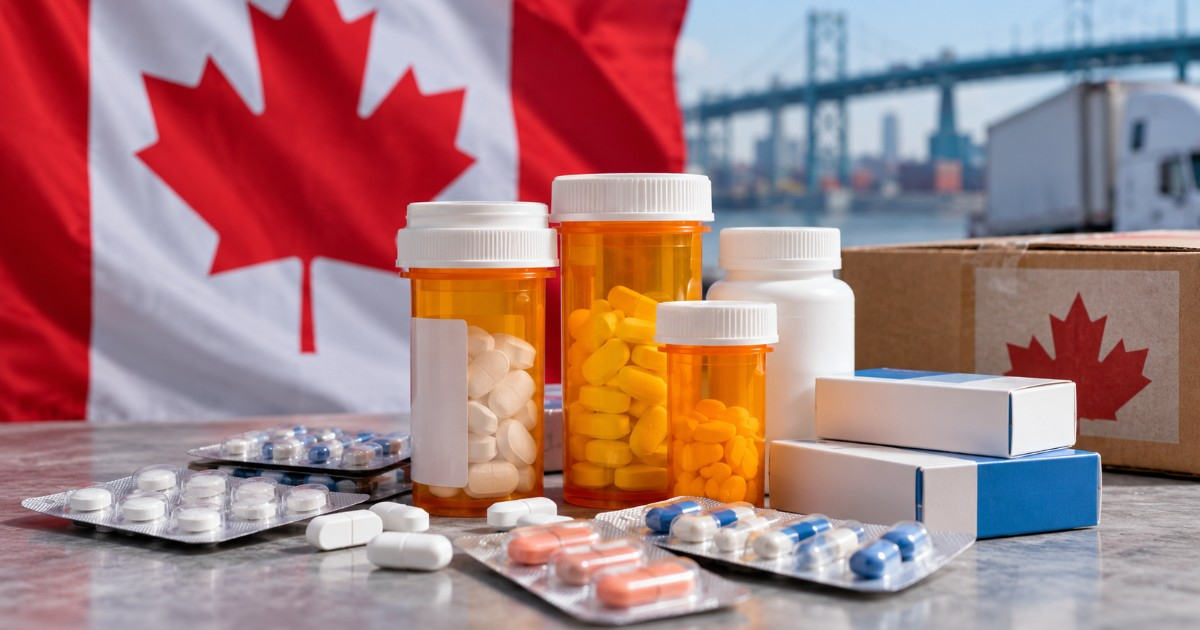
Florida residents depending on Canadian pharmacies for their prescription medications may soon face delivery delays, increased costs, or even disruptions. This change is due to a significant shift in regulations by the United States Customs and Border Protection (CBP), effective October 22. The updated rules impose stricter requirements on certain goods shipped via international mail, potentially complicating the delivery of medications.
While this regulation does not outright ban the purchase of all Canadian medications, pharmacies serving American patients caution that heightened documentation, customs processing, and financial guarantees could render many personal shipments infeasible.
On October 8, the Associated Press (AP) reported growing concern in Congress, with three Florida Republican legislators and over 70 Democrats seeking explanations or amendments to safeguard those relying on affordable foreign medications.
Changes in Customs Regulations
The heart of the October 22 change lies in a CBP rule published in the Federal Register on June 24, 2026. This rule indefinitely suspends the de minimis customs exemption for international postal shipments valued up to $800 and introduces new entry procedures.
These regulations, phased in gradually, became generally effective on July 24. However, October 22 marks the compliance deadline for specific provisions concerning goods subject to other federal agencies' requirements and certain tariff categories. Medications, in particular, face stringent controls under the Food and Drug Administration (FDA).
The new procedures may require identifying the importer, providing electronic data on the merchandise, and securing a customs bond for clearance. CBP has also launched a pilot for a simplified electronic declaration, Entry Type 13, applicable to shipments up to $2,500, including some under other agencies' scrutiny, provided they meet specific conditions. This option does not bypass FDA requirements or guarantee medication entry.
Impact on Florida Patients
Purchasing medications from abroad has been a viable option for many who find U.S. pharmacy prices prohibitive. A 2020 study cited by AP revealed approximately 2.3 million Americans purchased medicines internationally, not limited to Florida or exclusively from Canada.
The financial difference can be substantial. Ken Hunter, director of the Campaign for Personal Prescription Importation, highlighted a price comparison for Eliquis, a prescription anticoagulant: a three-month supply of 180 tablets (5 mg) costs around $565 through a Canadian mail-order pharmacy compared to $1,017 and $1,029 at two U.S. commercial outlets. These figures are illustrative, not guaranteed prices for all patients.
Florida's Republican representatives Aaron Bean, Gus Bilirakis, and Scott Franklin have expressed concerns to the federal administration about the potential effects on their constituents. Unlike those residing near the Canadian border, Floridians cannot easily travel to Canada for their medications if postal deliveries are disrupted.
Legalities of Importing Prescription Drugs
The legal landscape for importing prescription drugs was already restrictive before this rule change. The FDA's personal importation policy generally prohibits importing foreign prescription medications for personal use without U.S. authorization.
The FDA may exercise discretion in limited situations, such as specific treatments for serious conditions without effective U.S. alternatives, with conditions that might include a prescription or medical supervision and usually not exceeding a three-month supply. These criteria do not equate to a blanket authorization for any 90-day mail-order medication.
It's crucial to distinguish individual orders from another initiative: Florida's state program for importing certain Canadian medications. Approved by the FDA in January 2024, this program involves additional requirements and doesn't permit unrestricted personal purchases. The FDA has extended this authorization as implementation continues.
Response from the White House
The Trump administration supports the tightening of postal controls as part of a strategy to collect applicable tariffs, enhance package monitoring, and combat illegal goods, including illicit drugs.
White House spokesperson Allison Schuster reiterated the president's commitment to lowering drug costs, citing agreements with pharmaceutical companies as part of that effort. The administration has also promoted the TrumpRx platform, previously detailed by CiberCuba.
However, U.S. discounts don't necessarily cover all treatments acquired via Canadian pharmacies. Lawmakers urging a review fear the broad customs measure could ultimately raise costs for patients with ongoing treatments.
Guidance for Those Receiving Canadian Medications
Individuals relying on regular deliveries should promptly consult their pharmacies to confirm continued operation post-October 22, anticipated delivery conditions, and outcomes for orders failing to pass customs checks.
It is also advisable to contact prescribing doctors and insurers, where applicable, to explore legal alternatives at U.S. pharmacies, authorized generic equivalents, assistance programs, and savings options. Self-adjusting medication regimens due to delivery concerns is not recommended.
While the rule is set to take effect as currently planned, the government could still alter its implementation. For now, the procedural customs change on October 22 stands confirmed, with the final impact on delivery interruptions and price increases hinging on enforcement and company adaptability.
Understanding the New Customs Regulations for Medications
What specific changes will occur on October 22?
The changes involve a suspension of the de minimis customs exemption for international postal shipments and the introduction of new entry procedures, affecting how medications are processed and delivered.
Why are Florida residents particularly concerned?
Florida residents often rely on Canadian pharmacies for more affordable medications, and disruptions in postal deliveries could leave them without viable alternatives due to geographical distance from Canada.
How does this regulation affect the legality of importing medications?
The regulation adds complexity to an already restrictive legal environment, where importing foreign prescription medications without U.S. authorization is generally prohibited except under specific, limited conditions.