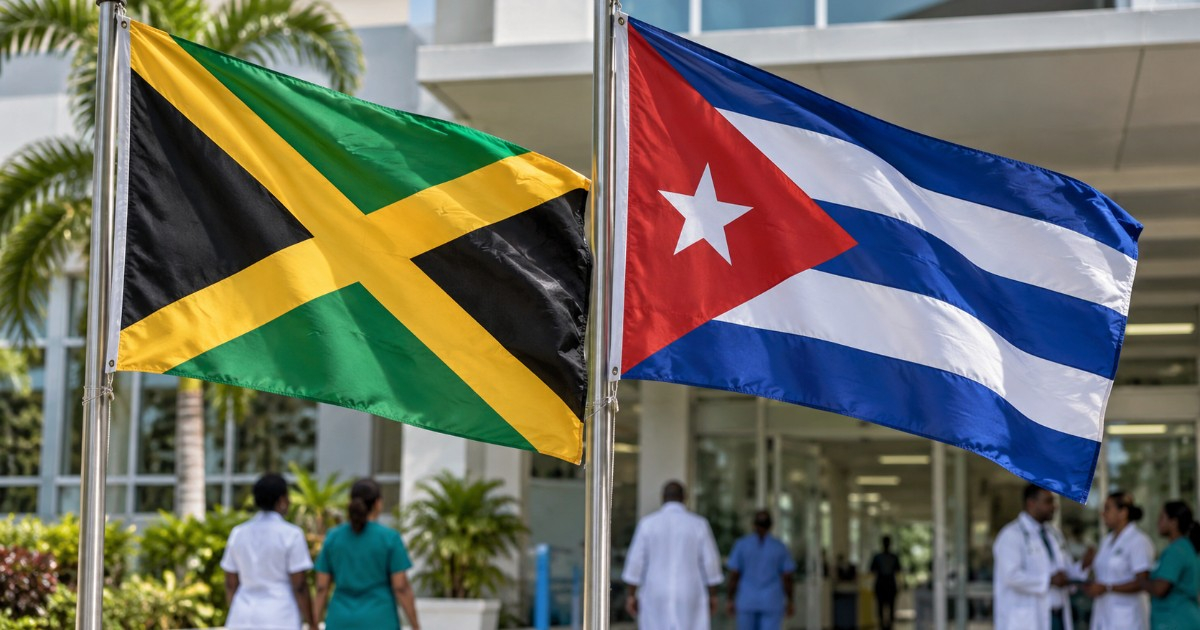
Jamaica has welcomed back 157 Cuban healthcare professionals through a direct hiring model, after the previous bilateral agreement with Cuba ended in March. This agreement had allowed the Cuban government to send medical staff to Jamaica for decades. Currently, 200 Cuban workers are serving in Jamaica's public health system, no longer under the old arrangement between Havana and Kingston.
Jamaica's Minister of Health and Wellness, Christopher Tufton, shared these figures during a press conference on Wednesday, October 7. According to reports from Jamaica Observer and The Gleaner, the 157 returning professionals join 43 other Cubans who opted to stay in Jamaica after the termination of the prior program.
A New Direct Contracting Approach
What's noteworthy is not just the return of doctors and nurses, but the shift to direct employment contracts without the Cuban government acting as a middleman. Tufton explained that these professionals were given the choice to return voluntarily and work through individual contracts. This brings the total number of Cuban medical staff to 200, compared to about 277 before the agreement's end.
Distribution of Cuban Healthcare Staff
Tufton detailed that the 157 healthcare workers have been allocated based on the needs of the public health service. A total of 69 have joined the Southeast Regional Health Authority; 28 are in the western region; and 26 are in the southern region.
An additional 25 are working at the University Hospital of the West Indies, and the remaining nine are employed by the Ministry of Health and Wellness and the northeast regional health authority. This distribution was reported by Jamaican media on October 8.
Why Jamaica Ended the Medical Agreement with Cuba
The decision stems from an announcement on March 5, 2026, by Jamaica's Ministry of Foreign Affairs. An official statement revealed that both governments had failed to agree on new terms after the previous agreement expired in February 2023. The statement also opened the possibility for individual contracts with Cuban healthcare workers according to local labor laws.
Two days later, Jamaica's Ministry elaborated on issues found during a review of the program. Many Cuban professionals did not possess their passports, and their salaries—set to match Jamaican counterparts—were sent in U.S. dollars to Cuban authorities, with workers receiving only overtime pay directly from Jamaica.
Jamaica's review found no issues with housing, permits, or freedom of movement but highlighted concerns over how much of the transferred salaries actually reached the workers. The Jamaican government considered that the previous arrangement posed significant compliance issues with local labor and tax regulations.
Despite efforts to renegotiate these terms with Havana, the Jamaican government ultimately ended the bilateral mechanism. Meanwhile, the Cuban government attributed the withdrawal of its brigade to U.S. pressures, defending the continuation of its overseas medical missions.
Through individual contracts, Jamaica aims to retain the expertise of Cuban professionals without channeling payments through Havana. The specific salaries and full contract terms of the 157 returnees have not been disclosed, making it unclear what each worker will earn.
Jamaica's Ongoing Demand for Medical Personnel
The end of the agreement left vacancies in hospitals and specialized services. In May, Tufton acknowledged that the departure of Cuban healthcare workers had impacted, among others, the ophthalmology program and certain hospital specialties, prompting Jamaica to seek new professionals both locally and internationally.
During his October address, the minister also mentioned that Jamaica is pursuing international recruitment plans, including agreements with African countries like Ghana and Nigeria, to meet the demand for doctors, nurses, and specialists.
The current situation reveals a significant shift: Jamaica continues to rely on Cuban medical talent, but has redefined the contractual relationship. Of the nearly 280 professionals linked to the former program, 200 are now back in the Jamaican public system, with the decision to accept offers and contracts left to each individual's discretion, according to Kingston authorities.
Exploring the Impact of Jamaica's New Healthcare Hiring Strategy
Why did Jamaica decide to hire Cuban healthcare workers directly?
Jamaica opted for direct hiring to eliminate the issues found in the previous agreement, such as inadequate salary distribution and lack of transparency in contractual terms, ensuring compliance with local labor laws.
How are the Cuban healthcare workers distributed across Jamaica?
The Cuban healthcare workers are distributed based on public health needs: 69 in the Southeast region, 28 in the West, 26 in the South, with others at the University Hospital of the West Indies and in various ministries.
What challenges did Jamaica face with the previous healthcare agreement with Cuba?
Challenges included the lack of transparency in salary distribution and the absence of Cuban workers' control over their documents, which raised issues of compliance with Jamaican labor and tax regulations.