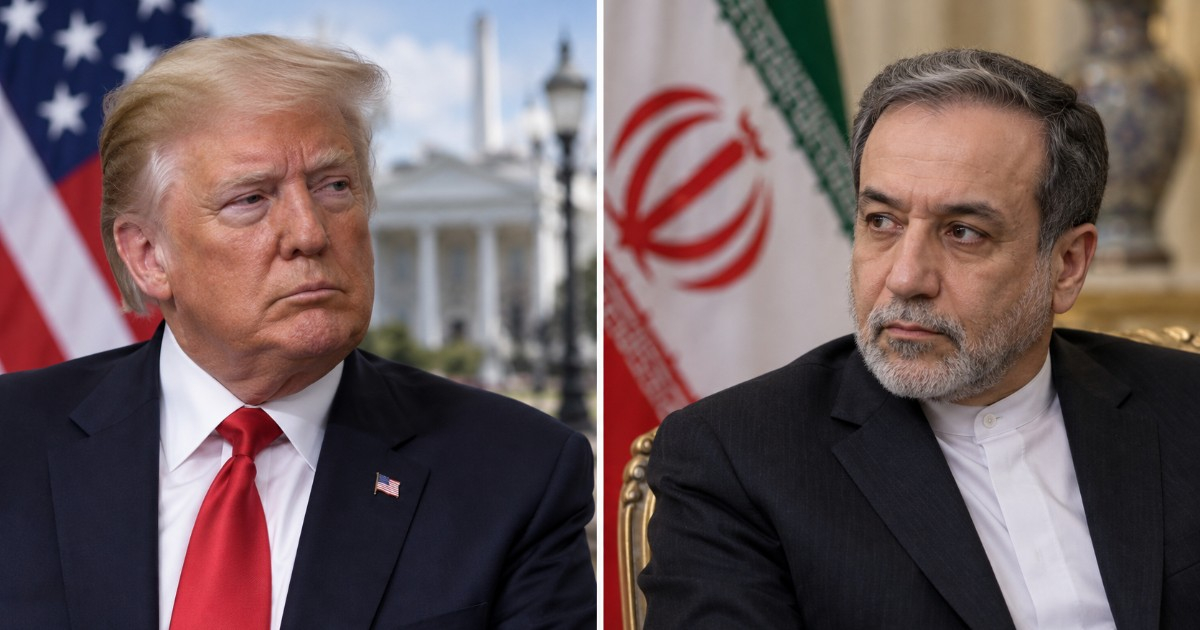
Iran's Foreign Minister, Abbas Araghchi, announced on Thursday, October 8, that Tehran is poised to respond in the coming days to the United States' stance on an Iranian proposal aimed at ending the ongoing conflict and reopening the Strait of Hormuz.
Araghchi elaborated that Iranian authorities are still scrutinizing the U.S. feedback on their so-called "seven-day plan." "The diplomatic process is still underway," he stated, according to the Iranian agency Tasnim, as reported by Reuters.
Following the presentation of Tehran's roadmap, Iranian officials have received Washington's comments and are now working on their reply. This announcement does not signify a peace agreement nor that the United States has accepted Iran's terms.
Details of Iran's Seven-Day Proposal
Tehran introduced the initiative at the end of September and conveyed it to the United States through mediators, including Qatar. According to the disclosed details, the plan outlines a series of actions that could allow the reopening of the Strait of Hormuz in about a week if Washington agrees to the conditions. The seven-day timeframe refers to the execution of these measures, not the period Iran has to respond.
Iran's demands include lifting the U.S. naval blockade on its ports, easing sanctions, releasing frozen Iranian assets, and assurances of halting hostilities in the region. In return, Tehran offers to normalize navigation through Hormuz and subsequently engage in broader negotiations, including discussions on its nuclear program, as reported by Al Jazeera.
Nuclear Program: A Sticking Point
One major contention lies in the negotiation sequence. Iran prioritizes reopening Hormuz and de-escalatory steps, whereas Washington insists that any agreement must first address Iran's nuclear program. Indirect talks have persisted despite the gap between the two governments' positions.
U.S. President Donald Trump had already dismissed the initial terms of the Iranian proposal. On October 4, he warned that he would decide on Iran "the easy way or the hard way," amid tensions over the conflict and U.S. demands regarding Tehran's nuclear ambitions.
Awaiting Iran's Response, Not a Sealed Deal
Araghchi's statement suggests that diplomatic exchanges are ongoing, with Tehran preparing a new communication to Washington. However, no specific date for Iran's response has been set, nor has a definitive agreement been announced.
The progression of these discussions is particularly significant given the Strait of Hormuz's role in global energy trade and the risk of renewed military escalation if talks stall.
Understanding Iran's Strategy and U.S. Response
What is Iran's "seven-day plan"?
Iran's "seven-day plan" is a proposal that sets out a sequence of actions to reopen the Strait of Hormuz within a week, provided the U.S. agrees to Iran's conditions, including lifting sanctions and ending hostilities.
Why is the Strait of Hormuz significant?
The Strait of Hormuz is a critical chokepoint in global energy trade, as a significant portion of the world's oil passes through it. Tensions in this area could disrupt international energy supplies and lead to broader geopolitical instability.
What are the main obstacles in the Iran-U.S. negotiations?
The primary obstacles are disagreements over the sequence of negotiations, with Iran focusing on immediate de-escalation measures and the U.S. demanding initial discussions on Iran's nuclear program.