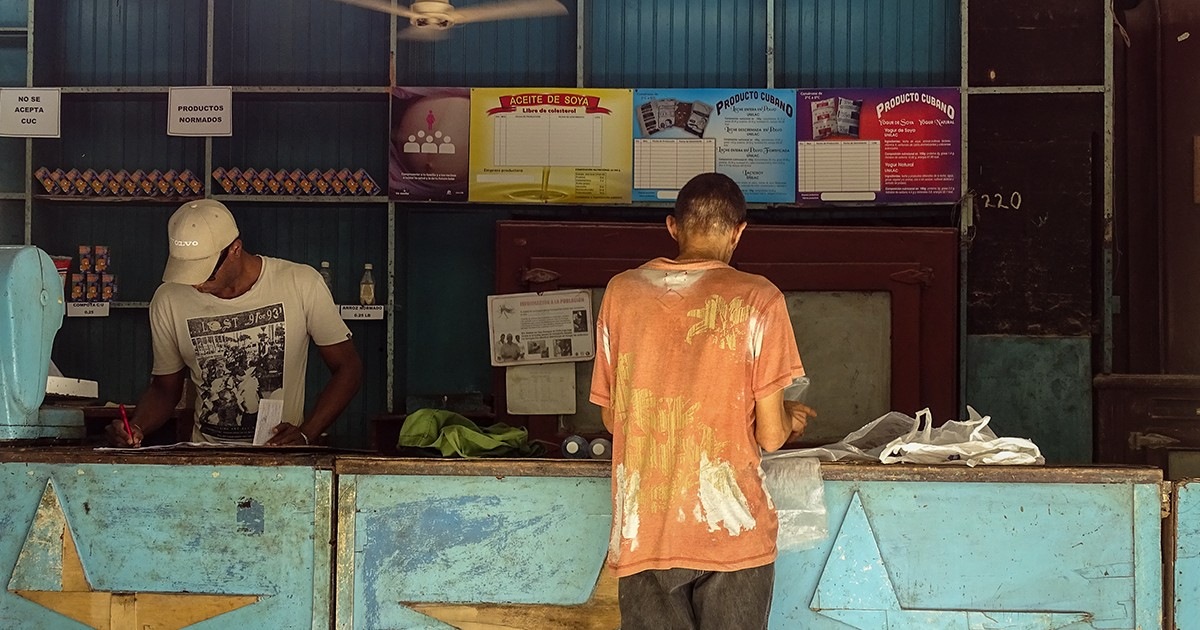
The Cuban government has earmarked 1,913 grocery stores from a network of over 12,000 to focus on serving those in the most vulnerable situations. Meanwhile, the regime continues to promote the transformation of state commerce through neighborhood markets.
This selection accounts for roughly 16% of the national network of stores, leaving many consumers questioning the fate of the remaining 10,000-plus establishments.
Marpessa Portal de Villiers, the General Director of Merchandise Sales at the Ministry of Domestic Trade (MINCIN), shared this information during an appearance on Radio Rebelde's "Haciendo Radio" program, as noted in an official Facebook post by the ministry.
The Future of More Than 10,000 Grocery Stores
While Portal de Villiers highlighted that not every store will transition into a neighborhood market, the specifics regarding the rest of the stores remain unclear. It is uncertain how many will maintain their traditional roles or convert under new commercial models.
The MINCIN has not provided a detailed plan or timeline for these transformations, nor have they revealed how many stores will continue distributing goods through the ration book system.
Expansion of Neighborhood Markets
The regime is pushing forward with the expansion of neighborhood markets, allowing various economic actors to manage state-run commercial establishments. Currently, there are 47 neighborhood markets across Cuba, managed by entities such as companies, small and medium-sized enterprises, non-agricultural cooperatives, self-employed workers, and authorized foreign investors.
These markets operate under a simplified tender process, with management prioritized for local economic actors. Incentives include tax breaks and rent exemptions linked to the official product offerings, intended to increase product variety and lower retail prices.
Distribution of Food Modules During Shortages
Portal de Villiers also mentioned the distribution of a food module, which includes five pounds of rice donated by China, given for free, along with a pound of sugar and a pound of peas, both of which have costs. This distribution has begun in various provinces, including Pinar del Río, Artemisa, and Havana, among others.
Moreover, a kilogram of black beans, part of another donation, is being distributed in select provinces. However, detailed pricing and distribution conditions remain unspecified, leaving many questions about the access and affordability of these food supplies.
Neighborhood Markets and Public Criticism
Despite being presented as a solution to bring essential goods closer to the population at lower prices, neighborhood markets have faced criticism. Promised price reductions of 15% to 30% have not always translated into affordability for those reliant on Cuban salaries and pensions.
Reports from places like Contramaestre show high prices for basic items such as rice and cooking oil, complicating access for many citizens. Critics also highlight a lack of available products, challenging the regime's portrayal of these markets as abundant and helpful.
As the government selectively focuses resources on the vulnerable, many Cubans remain in a constant struggle to secure enough food and afford it with their limited incomes.
The Impact of Cuba's Grocery Store Reorganization
What is the purpose of retaining only 1,913 grocery stores in Cuba?
The Cuban government aims to focus these stores on serving the most vulnerable populations, as part of an effort to transform state commerce and manage resources more effectively.
How many neighborhood markets currently exist in Cuba?
There are currently 47 neighborhood markets in Cuba, managed by various economic actors, including enterprises and cooperatives.
What are the key criticisms of the neighborhood markets?
Critics point out the high prices of goods, the scarcity of products, and the lack of these markets in certain areas, which undermine their intended purpose of providing affordable and accessible goods.