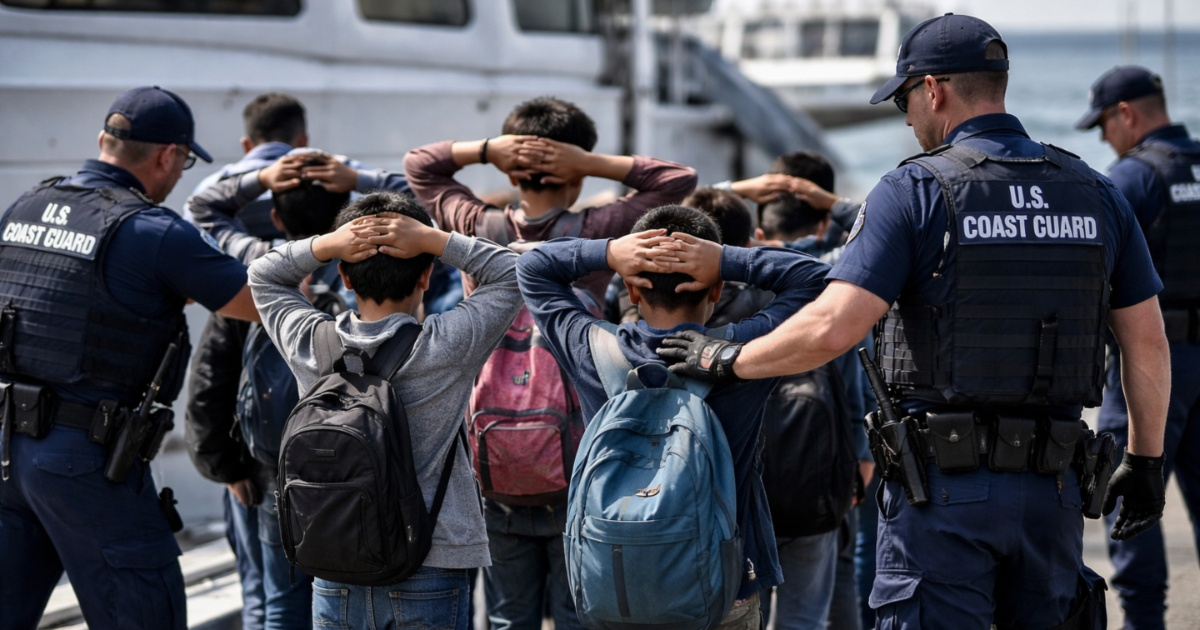
Last week, the Trump administration revealed plans to establish a dedicated team of federal lawyers to represent unaccompanied migrant minors in immigration proceedings. This move has been criticized by rights organizations as a serious threat to children, including Cuban minors who have arrived alone or been separated from their families.
The Department of Health and Human Services (HHS) announced the initiative in the Federal Register, signed by Secretary Robert F. Kennedy Jr. However, the announcement lacked a start date and operational details regarding the new unit, named the Division of Legal Representation for Unaccompanied Alien Minors.
In a statement, the department claimed the division will operate under its general counsel to "safely reunify these minors with their families and ensure they have the necessary legal support." However, it did not clarify whether it would continue partnering with non-governmental organizations for this purpose.
This decision follows the termination of a contract with the Acacia Center for Justice, which managed 24,000 cases through a network of legal providers. The contract expired on July 31, leaving concerns about ongoing support for these minors.
Critics highlight a major conflict of interest inherent in the new setup: the minor's attorney, the judge—appointed by the Department of Justice—and the prosecutor seeking deportation are all federal employees.
"Positioning the minors' legal representation and services within the same agency that holds them in federal immigration custody is an unprecedented step that fails to meet basic standards of defense independence," warned Shaina Aber, Executive Director of Acacia.
Wendy Young, president of Kids in Need of Defense (KIND), expressed concern about the practical implications: "A government lawyer, employed by the government, would likely be directed and encouraged to persuade the minor to accept voluntary departure and leave the United States, rather than fully defending their case."
"Denying legal assistance to the most vulnerable among us—minors who have already fled trauma—is a fundamental breach of the fairness promised by our Constitution," emphasized Sui Chung, Executive Director of Americans for Immigrant Justice. "Minors deserve our utmost protection."
A 2026 decision by the Immigration Appeals Court blocked the most common way to close cases for minors who entered through CBP One without their parents or legal guardians. Even those arriving with grandparents, uncles, or cousins are classified as "unaccompanied," and judges cannot alter their status or release them, even if they have an approved special immigrant visa.
Minors with Form I-220A who arrived alone have different procedural paths before turning 21, but their cases have also become significantly more complicated in recent months.
Meanwhile, many children are already appearing in court without any legal representation.
According to the Vera Institute of Justice, 63% of migrant minors lacked legal representation in 2025; in Florida, this figure reached 73% for those with pending immigration cases.
By the end of September, a CNN Español investigation reported that 25 minors appeared in a single day at the Harlingen, Texas court, several of them without a lawyer, including a three-year-old child.
Following Acacia's exit, the government awarded a contract worth up to $244 million to Our Rescue—an organization with no proven experience in immigration law—without competitive bidding, leading to temporary arrangements and leaving thousands of cases in limbo.
Key Concerns About Legal Representation for Migrant Children
Why is the new legal division for migrant children controversial?
The new division is controversial because it creates a conflict of interest where the minor's lawyer, the judge, and the prosecutor are all federal employees, raising concerns about the independence of the defense and potential pressure on minors to self-deport.
What was the role of the Acacia Center for Justice before its contract ended?
The Acacia Center for Justice managed 24,000 cases through a network of legal providers, offering crucial legal support to unaccompanied minors before its contract expired on July 31, 2023.
How are minors currently affected by lack of legal representation?
Many minors are appearing in court without legal representation, which can severely impact their ability to navigate the complex immigration process and defend their cases effectively.