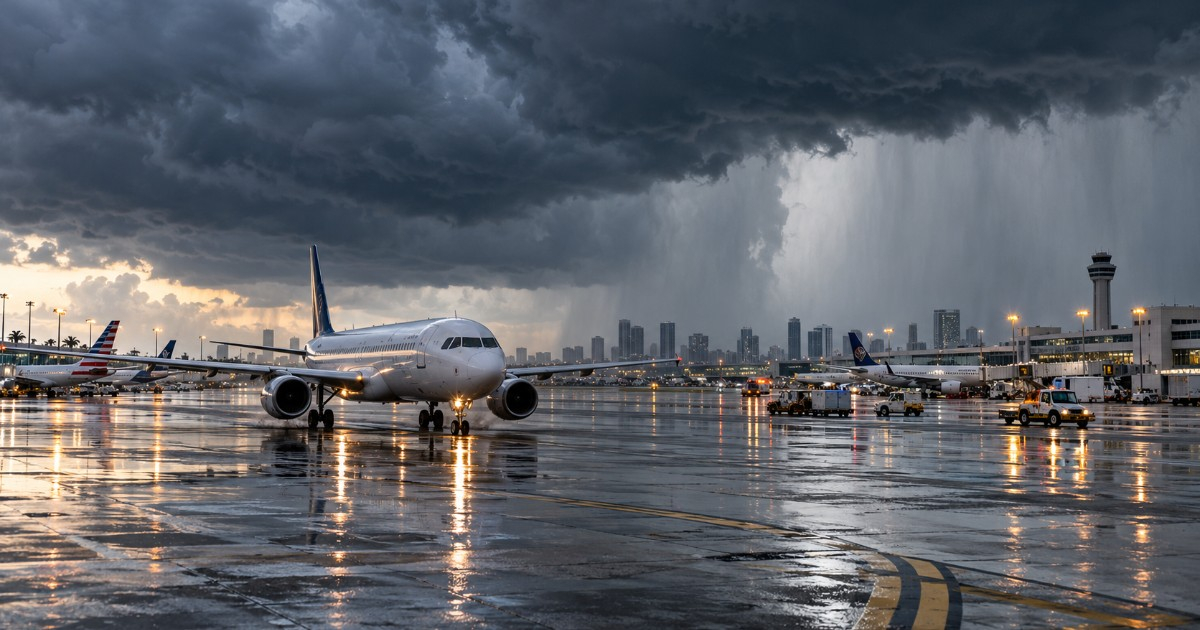
The Federal Aviation Administration (FAA) issued a warning on Wednesday regarding potential delays at Miami and Fort Lauderdale airports, attributing the disruptions to anticipated thunderstorms in South Florida.
In its October 7th daily air traffic report, the FAA indicated that these storms could lead to delays at Miami International Airport (MIA), Fort Lauderdale-Hollywood International Airport (FLL), and potentially affect Orlando (MCO) and Tampa (TPA) as well.
It's important to note that this advisory does not imply airport closures or universal flight delays. Instead, it's an operational forecast suggesting that delays, reroutings, or temporary restrictions might occur based on the storm's development.
FAA Considers Rerouting in South Florida
The FAA's Air Traffic Control System Command Center's operational plan includes Miami and Fort Lauderdale as terminals potentially affected by thunderstorms.
The agency is also considering implementing traffic management procedures and alternative routes for MIA and FLL, while coordinating measures for the airspace over South Florida.
However, the current operational plan does not include a general halt to operations, a ground stop, or a widespread delay program specifically targeting Miami or Fort Lauderdale.
As a result, the impact on individual flights may vary and can change rapidly throughout the afternoon and evening depending on the storms' location and intensity.
Severe Weather and Heavy Rain Threat in South Florida
The National Weather Service (NWS) in Miami has forecasted scattered to widespread thunderstorms and showers for South Florida on Wednesday.
Meteorologists have warned that heavy rainfall rates and the potential for multiple rounds of showers could lead to localized flooding, particularly in the metropolitan areas along the eastern coast.
The storms may also temporarily cause strong wind gusts, reduced visibility, and conditions that necessitate air traffic controllers to space out aircraft arrivals and departures.
How to Check for Flight Delays
Travelers planning to fly from MIA or FLL are advised to check their flight status before heading to the airport.
Miami International Airport provides real-time arrival and departure information, while Fort Lauderdale-Hollywood International Airport has its own flight search tool.
The FAA itself recommends confirming any specific disruptions directly with the airline, as general air traffic system restrictions do not necessarily impact all flights equally.
Historically, disruptions have occurred; for instance, CiberCuba reported delays and cancellations in January at Miami and Fort Lauderdale due to adverse weather conditions. In July, another disruption caused significant delays at MIA after a technological failure by American Airlines.
The situation on Wednesday can change swiftly, so passengers should recheck their flight information shortly before traveling to the airport and follow notifications from their airline.
Frequently Asked Questions About Flight Delays Due to Weather in South Florida
What should travelers do if their flight is delayed?
Travelers should check their airline's website for updates and contact the airline directly for more information. It's also advisable to monitor the FAA's updates for any changes in air traffic conditions.
How do thunderstorms impact flight operations?
Thunderstorms can cause delays because they may require rerouting, spacing out flights, or even temporary grounding due to safety concerns like strong winds and reduced visibility.
Are all flights affected equally by storms?
Not all flights are affected equally. Impact varies based on the flight path, timing, and specific weather conditions at the time of departure or arrival.