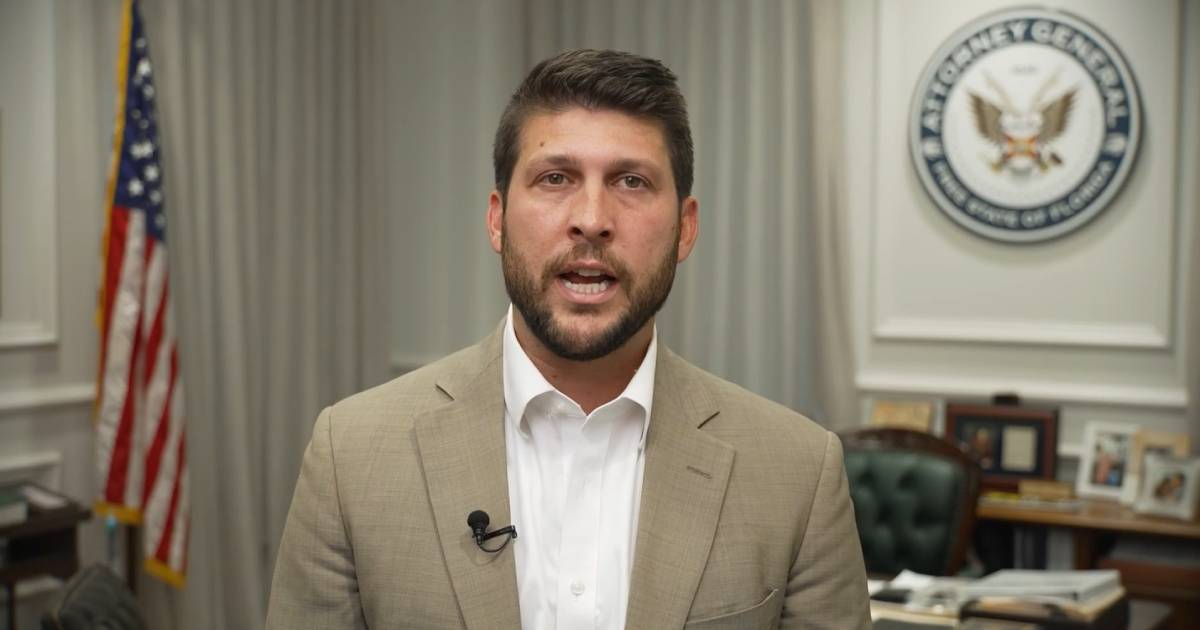
Florida's Attorney General, James Uthmeier, activated the official form on Wednesday for reporting potential price gouging cases amidst the looming threat of Tropical Storm Isaias. This action follows Governor Ron DeSantis' declaration of a state of emergency across 25 counties.
"With the governor's emergency declaration, our office has launched the price gouging report form for Tropical Storm Isaias. If you notice or suspect any excessive price hikes on essential goods, please report it to our office," Uthmeier announced on his X account.
Residents are encouraged to submit their reports to the Florida Attorney General's Office using the price gouging complaint form or by calling 1-866-966-7226.
State of Emergency and Legal Implications
Governor DeSantis signed Executive Order 26-202 on Tuesday, declaring a state of emergency in 25 counties in northern and northwestern Florida, which include Escambia, Bay, Leon, Okaloosa, and Santa Rosa. This decision was made while the system was still Tropical Depression Nine, allowing for the mobilization of resources in anticipation of its intensification.
Under Florida law, disproportionate price increases on essential products and services are prohibited during a state of emergency. To identify price gouging, the law compares the current price to the average price during the 30 days preceding the declaration, with exceptions for justified cost increases or market changes.
Protected Goods and Services
Essential goods and services protected include food, water, ice, gasoline, lodging, lumber, and generators, along with necessary post-storm services such as tree removal, roof repair, and water damage mitigation.
Violations can result in civil fines reaching up to $1,000 per violation and a maximum of $25,000 accumulated over a 24-hour period.
Isaias's Progress and Weather Alerts
Meanwhile, Isaias continued to gain strength in the Gulf on Wednesday. By 10:00 a.m. CDT, the National Hurricane Center (NHC) reported sustained winds at 45 mph (75 km/h), as it moved east-northeast at approximately eight miles per hour.
The NHC forecasts rapid intensification, predicting that Isaias could escalate to hurricane status by Thursday, potentially nearing the northern Gulf Coast by Friday. Hurricane and storm surge watches have already been issued for parts of that region.
Forecasts also indicate rainfall accumulations ranging from three to six inches, with localized maximums of up to 10 inches from southeastern Louisiana to Florida's Panhandle, posing risks of flash flooding and urban inundations.
Notably, Miami-Dade, Broward, and Palm Beach counties are not included in the current emergency declaration, which focuses on northern Florida and the Panhandle.
In contrast, the Institute of Meteorology of Cuba (INSMET) stated that Isaias does not pose a direct threat to the island, although western Cuba might experience some rain bands associated with the system. "This system poses no danger to Cuba," the institution confirmed.
Understanding Florida's Price Gouging Laws During Emergencies
What is considered price gouging under Florida law?
Price gouging is defined as an unreasonable increase in the price of essential goods and services during a declared state of emergency. The law considers price comparisons with the 30-day period preceding the declaration to identify violations.
How can Florida residents report suspected price gouging?
Residents can report suspected price gouging by using the Florida Attorney General's price gouging complaint form or by calling the hotline at 1-866-966-7226.
What penalties exist for price gouging in Florida?
Violations of price gouging laws can result in civil fines, with penalties reaching up to $1,000 per individual violation and a cumulative maximum of $25,000 within a 24-hour period.