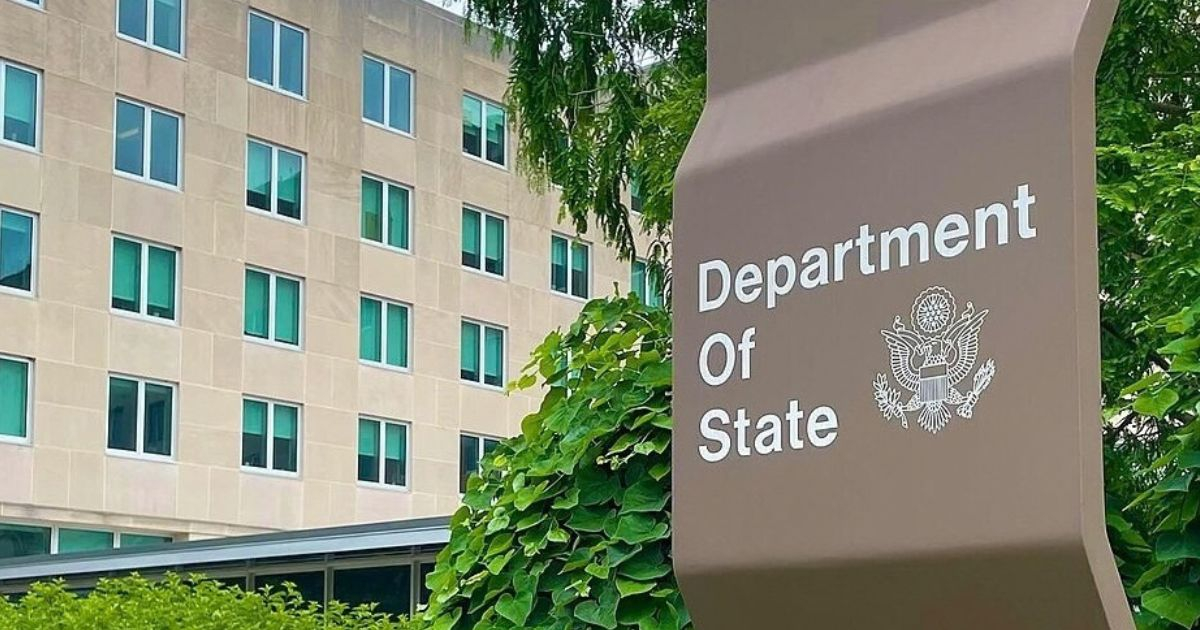
The U.S. State Department has sharply rebuffed recent claims by the Cuban regime regarding communications between the two governments, dismissing Havana's assertions as mere "propaganda." The Cuban government claimed that only lines of communication exist, not a negotiation process.
"It's no surprise that the Cuban regime is spreading this propaganda. In truth, discussions are ongoing, and thus far, the regime has shown no willingness to agree to anything that would benefit the Cuban people, which would ultimately threaten its absolute control," stated the State Department.
By emphasizing this point, Washington not only confirms that channels of communication remain open but also holds the Cuban regime accountable for the lack of any agreement.
Political System Under Scrutiny
The State Department's response highlights the island's political system. According to Washington, Havana has refused to accept any agreement that might benefit Cubans if it risks challenging what the U.S. describes as the regime's "total control."
These comments from the U.S. came after Lianys Torres Rivera, the Cuban Embassy's chargé d'affaires in Washington, claimed that while communication channels exist, there are no formal negotiations between the two countries.
In a Monday interview with Reuters, Torres Rivera confirmed that Havana and Washington maintain "communication channels," but no formal negotiations. She mentioned meetings, phone calls, and WhatsApp messages, but noted no progress towards a negotiation agenda or the resumption of official talks.
Conflicting Narratives
The State Department challenges this characterization. While Washington has not publicly framed the contacts as formal negotiations, it argues that conversations are ongoing and that the main hurdle is the regime's unwillingness to accept conditions that might undermine its power structure.
This distinction is more pronounced: Havana limits the scope to non-agenda communication channels, whereas the U.S. insists discussions are happening, albeit without results due to the regime's reluctance to reach an agreement.
Cuban officials have highlighted a clear boundary. Deputy Foreign Minister Carlos Fernández de Cossío recently stated that Havana will not discuss its internal political order with the U.S. or any other government.
"Cuba is not willing to discuss its internal political matters with the U.S. or any government," Fernández de Cossío asserted, though he indicated openness to bilateral topics like migration, security, trade, and regional cooperation.
Stalled Conversations and Strategic Moves
This controversy follows an investigation by The Atlantic, which reported that talks between Secretary of State Marco Rubio and Raúl Guillermo Rodríguez Castro, known as "El Cangrejo" and Raúl Castro's grandson, stalled when Washington demanded Miguel Díaz-Canel's ouster as a condition for progress.
According to the report, the regime rejected this demand, leading to a deadlock. Publicly, Havana maintains there are no formal negotiations and avoids disclosing details about the interlocutors or discussion content.
The exchange of statements also comes amid weeks of seemingly contradictory messages. Former President Donald Trump told the United Nations that Marco Rubio was "deeply involved in negotiations" with Cuba and later expressed confidence in reaching an agreement without military intervention.
From Miami, Sebastián Arcos, associate director of the Cuban Research Institute at Florida International University (FIU), interpreted Havana's stance as a strategy to buy time, according to Telemundo 51.
"The regime is betting that the U.S. won't act, and if it doesn't, they remain in power, even in a nation that virtually doesn't exist," Arcos remarked.
Arcos further suggested that the humanitarian and migration crisis could become leverage against Washington. "The humanitarian crisis they're creating in Cuba and the captive Cuban people. That's their negotiation card with the international community and the U.S.," he stated.
Ramón Saúl Sánchez, leader of the Democracy Movement, echoed similar concerns, recalling past instances where migration crises from Cuba have forced U.S. action.
"Unfortunately, that has been Washington's sole concern," Sánchez observed, considering it possible that Havana might again use migration pressure as a tool against the U.S.
Key Questions on U.S.-Cuba Relations
What is the current status of communications between the U.S. and Cuba?
While both countries maintain communication channels, the U.S. insists that discussions are ongoing, although formal negotiations have not been established due to the Cuban regime's reluctance to compromise.
Why has there been no agreement between the U.S. and Cuba?
According to the U.S., the main obstacle is the Cuban regime's refusal to accept conditions that might challenge its control, hindering any potential agreement that could benefit the Cuban people.
How has the humanitarian crisis in Cuba been used in negotiations?
Experts suggest that the Cuban regime may use the humanitarian crisis as leverage in negotiations with the U.S., potentially increasing pressure on Washington to act.