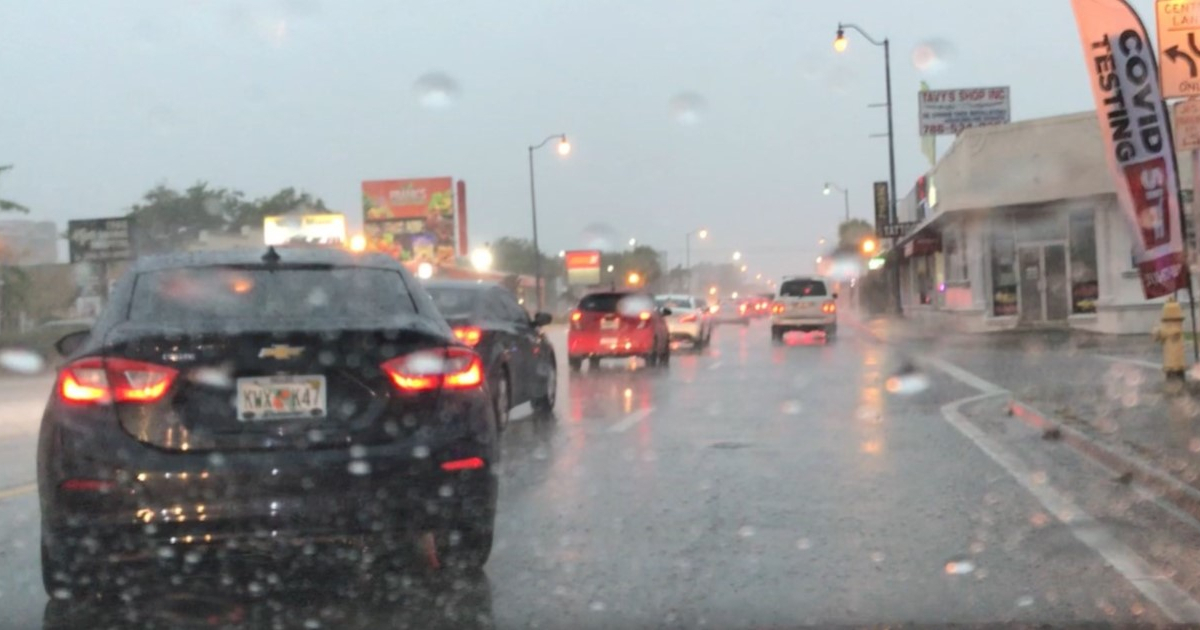
The state of emergency declared by Governor Ron DeSantis due to what was initially Tropical Depression Nine, now upgraded to Tropical Storm Isaias, does not mean that all of Florida is immediately under evacuation orders, school closures, or general restrictions. The main purpose of this declaration is to enable legal and administrative measures to respond more swiftly in counties threatened by the storm.
Executive Order 26-202, signed on October 6, became effective immediately and will remain in place for 60 days unless extended.
This order applies to 25 counties: Baker, Bay, Calhoun, Columbia, Dixie, Escambia, Franklin, Gadsden, Gilchrist, Gulf, Hamilton, Holmes, Jackson, Jefferson, Lafayette, Leon, Liberty, Madison, Okaloosa, Santa Rosa, Suwannee, Taylor, Walton, Wakulla, and Washington.
Governor DeSantis declared the emergency as a precaution against the possibility of heavy rains, flooding, strong winds, storm surges, and tornadoes, particularly affecting North Florida and the Panhandle.
Consumer Protection Against Price Gouging
A direct impact on consumers is the activation of regulations against price gouging. According to Section 9 of the order, under Florida Statute 501.160, it is illegal to sell, lease, or offer essential goods or services at an inflated or excessive price within the counties covered by the declaration.
This protection extends to necessary items and services impacted by the emergency, including supplies, provisions, equipment, and other essential goods. While a state of emergency does not freeze all prices, it does activate legal mechanisms to address exorbitant price increases on critical products related to the disaster.
Access to Medications Ahead of the Storm
Yes, residents can obtain medications before the storm arrives. The order permits pharmacies to issue an emergency refill of up to 30 days for maintenance medications to residents in the declared counties.
This also applies to certain emergency personnel activated by state or local agencies, even if they do not reside in the affected counties. Additionally, hospitals with specific institutional pharmacies in the declared area can prescribe and dispense enough medication for up to 72 hours.
Tolls and Transport Regulations
Tolls are not automatically waived. The order authorizes the Florida Department of Transportation to suspend tolls on the Turnpike and other public roads if necessary to facilitate evacuation or emergency response.
This means the declaration itself does not make tolls free; suspension would be enacted later if conditions warrant it. The Department of Transportation can also manage traffic flow, close roads or specific sections, and temporarily adjust rules for vehicles transporting supplies, equipment, and emergency personnel.
School Closures and Shelter Operations
Schools are not automatically converted into shelters. The order stipulates that primary and secondary schools, community colleges, universities, and other public facilities suitable for use as shelters should be available when requested by local emergency management authorities.
This does not imply that all schools in these counties are closed or automatically turned into shelters. Local authorities will determine which facilities need to be utilized.
Evacuation Orders and Curfews
There are no mandatory evacuations in place. Governor DeSantis' declaration does not include a general evacuation order.
Evacuation decisions may be made by competent authorities as the threat evolves. The order expressly acknowledges the authority of local jurisdictions to take measures to protect lives and property, including the possibility of ordering evacuations when necessary.
No curfews have been imposed. The order does not establish a curfew for the 25 counties.
In fact, one section addresses what would happen if a local authority later imposes such restrictions: specific vehicles transporting only essential goods may be granted permission to travel even in evacuated areas or during a curfew, provided the conditions set by the state emergency coordinator are met.
Handling Lost Licenses or Vehicle Titles
The Florida Department of Highway Safety and Motor Vehicles (DHSMV) is authorized to waive certain fees for obtaining duplicates or replacements of documents affected by the severe weather.
This includes driver's licenses, IDs, plates, vehicle registrations, parking permits for the disabled, and boating-related documents. Fees for late renewals or applications may also be waived when delays result from weather conditions.
This provision does not mean every fee is automatically waived upon the signing of the order but authorizes the agency to grant these waivers when justified by the emergency's impact.
The Role of the National Guard and Out-of-State Medical Professionals
The order directs the adjutant general to activate the Florida National Guard as necessary to respond to the emergency and grants similar authority for the mobilization of the Florida State Guard.
The phrase "as necessary" is crucial: it does not mean all units have been deployed or that there is a military presence in all declared counties.
Out-of-state medical professionals can work in Florida under specific conditions. Medical professionals, social workers, and counselors with valid licenses from other states can offer services in Florida during the emergency to affected individuals.
To utilize this authorization, the service must be provided for free and under the auspices of the American Red Cross or the Florida Department of Health.
Drone Usage During the Emergency
The order temporarily loosens certain restrictions to allow state and local agencies to use drones in operations related to the emergency.
Drone use is authorized for documenting damage from the air, assisting in search and rescue operations, and preventing imminent threats to life or severe property damage.
Public Facilities and Insurance Policies
In addition to making suitable facilities available to local authorities for shelter purposes, the order allows state agencies to close public buildings and facilities when necessary and requires these closures to be reported to the state emergency management system.
Thus, there is a distinction between the ability to close facilities and a general closure: the order enables these decisions but does not mandate that all public buildings in the 25 counties close.
The Executive Order 26-202 does not suspend the sale of home insurance policies or impose a ban on obtaining coverage.
As previously explained when faced with a tropical threat, insurers may establish temporary periods during which they cease issuing new policies or modify coverages when a storm is approaching. This practice is based on company underwriting policies and is not part of this emergency declaration.
So, what does the state of emergency mean for a resident? Practically, it allows Florida to mobilize resources, personnel, equipment, and funds more quickly, temporarily relax certain rules, and anticipate needs that might arise before, during, and after Isaias.
For individuals living in one of the 25 included counties, the most direct effects are the ability to obtain maintenance medications in advance, protection against price gouging, potential leniency with certain DMV documents, and access to shelters if activated by local authorities.
However, the declaration itself does not enforce evacuations, does not close schools, does not impose curfews, and does not automatically suspend tolls. These decisions depend on subsequent measures and the storm's progression.
Understanding Florida's State of Emergency
What is the primary purpose of Florida's state of emergency declaration?
The primary purpose is to activate legal and administrative measures that enable a swift response in counties threatened by the storm.
Does the declaration automatically waive tolls across Florida?
No, tolls are not automatically waived. The Department of Transportation can suspend tolls if necessary for evacuation or emergency response.
Can out-of-state medical professionals work in Florida during the emergency?
Yes, under specific conditions, such as offering services for free and under the auspices of the American Red Cross or the Florida Department of Health.
Are schools automatically converted into shelters during the emergency?
No, schools are not automatically converted. They are made available as shelters if requested by local emergency management authorities.