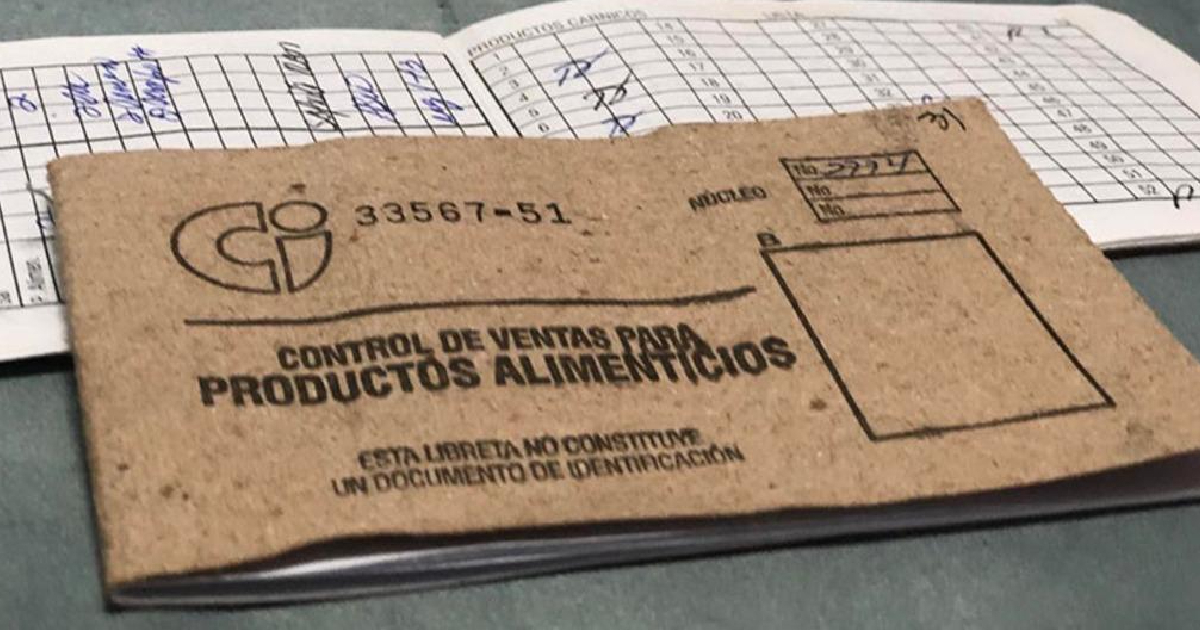
The Cuban ration book, a longstanding emblem of the socialist model, appears to be facing its inevitable end. An AFP tour of Havana revealed numerous stores either shuttered, nearly empty, or transformed into new "neighborhood markets," as the regime gradually dismantles the universal subsidy system without officially announcing its termination.
On Monday, AFP visited various locations in the Cuban capital and confirmed that in recent days, consumers were unable to purchase products using the ration book.
The Shift Away from Universal Subsidies
This on-the-ground observation highlights a process the regime has hinted at in fragments: replacing universal subsidies with targeted aid for certain vulnerable groups and restructuring the state-run network of stores.
In Havana's Cerro neighborhood, 64-year-old Paula Sonia Santiago shared her observations with AFP, stating, "Whether we understand it or not, they are burying it," referring to the traditional store system.
"It's a complete change," she added. Many Cubans, accustomed to this system for nearly their entire lives, face its potential disappearance with unease.
Impact on the Most Vulnerable Sectors
This concern is especially pronounced among retirees and low-income individuals. América Guillén, 82, recalled that even during severe shortages, the ration book guaranteed "a minimum" amount of food "for those of us with little."
An expanded AFP report from Brazil notes that Guillén receives a minimal pension of 3,000 pesos per month and highlights the severe struggles of poorer sectors to obtain food outside the subsidized system.
In recent months, according to AFP's observations, stores offered only rice and sugar through the ration book, while other essential items had to be purchased with foreign currency, at private businesses, or in other markets at significantly higher prices.
A System in Decline
The gradual disappearance of ration book items didn't start recently. The system has deteriorated over decades, with successive reductions in subsidized goods, reaching its lowest point amid the current economic crisis.
Prime Minister Manuel Marrero had previously clarified that the official policy is to gradually phase out generalized product subsidies and focus on "subsidizing people" considered vulnerable.
This shift became even clearer over the weekend when Marrero announced a monthly food allocation for 883,000 Cubans deemed most vulnerable: five pounds of rice, one pound of sugar, and another pound of grains.
Transition to Market-Based Systems
The new approach breaks from the logic that governed the ration book for decades, where subsidized products were available to all registered consumers, regardless of income.
Simultaneously, the regime has begun transforming stores, butcheries, and other state-run establishments into "neighborhood markets," which may even be managed by private actors.
AFP reports that 24 such establishments are already operational, offering around twenty basic products at prices 10% to 15% lower than the private sector. However, this price difference is insufficient for many consumers with devalued salaries and pensions.
"It's not cheaper; it's just less expensive than other markets," a 75-year-old retiree summarized to AFP after buying a dozen eggs at one of these markets.
Economic Challenges Amidst Change
Earlier criticisms emerged when a Cuban, at the end of September, found only five products available in one of Havana's new neighborhood markets and questioned how retirees and pensioners with significantly lower incomes could afford these prices.
This situation unfolds in a country where an independent study by the Christian Center for Reflection and Dialogue-Cuba recently estimated that 66% of the population lives in economic poverty, about 6.4 million people. The study indicates their incomes are insufficient to cover basic food and other essential needs.
This figure underscores the impact of transitioning from an increasingly reduced and irregular subsidized quota to markets where food is sold at prices comparable to the private sector.
The dismantling of the ration book system isn't a sudden decision. In June, authorities had already advanced in cutting the rationing system as part of the official policy to eliminate generalized subsidies and direct resources to selected sectors.
Introduced in 1962, the ration book system became a cornerstone of the Cuban Revolution's economic strategy, allowing citizens to purchase predetermined amounts of food and other products at heavily subsidized prices. Over the years, however, deliveries became increasingly insufficient, incomplete, and delayed, while many products gradually vanished from the standard basket.
AFP now paints a vivid picture of this transformation: closed stores, consumers receiving almost nothing through the ration book, and former state-run establishments turned into markets where products must be bought at prices much closer to commercial rates.
To date, the Cuban regime has not officially declared the abolition of the ration book. However, the severe reduction of its products, the closure or conversion of stores, and the new scheme targeting only certain vulnerable sectors indicate that the universal system that shaped the daily lives of Cubans for decades is being progressively dismantled.
Frequently Asked Questions about Cuba's Economic Transition
What is happening to Cuba's ration book system?
Cuba's ration book system is being phased out, with many stores closing or transitioning to neighborhood markets as the government shifts from universal subsidies to targeted aid for vulnerable groups.
How is the Cuban government replacing universal subsidies?
The government is replacing universal subsidies with targeted assistance for specific vulnerable groups, offering monthly food allocations to those deemed most in need.
What challenges are Cubans facing with the new system?
Many Cubans, particularly retirees and low-income individuals, are struggling with the transition as they face higher prices in neighborhood markets compared to the subsidized goods they previously received through the ration book.