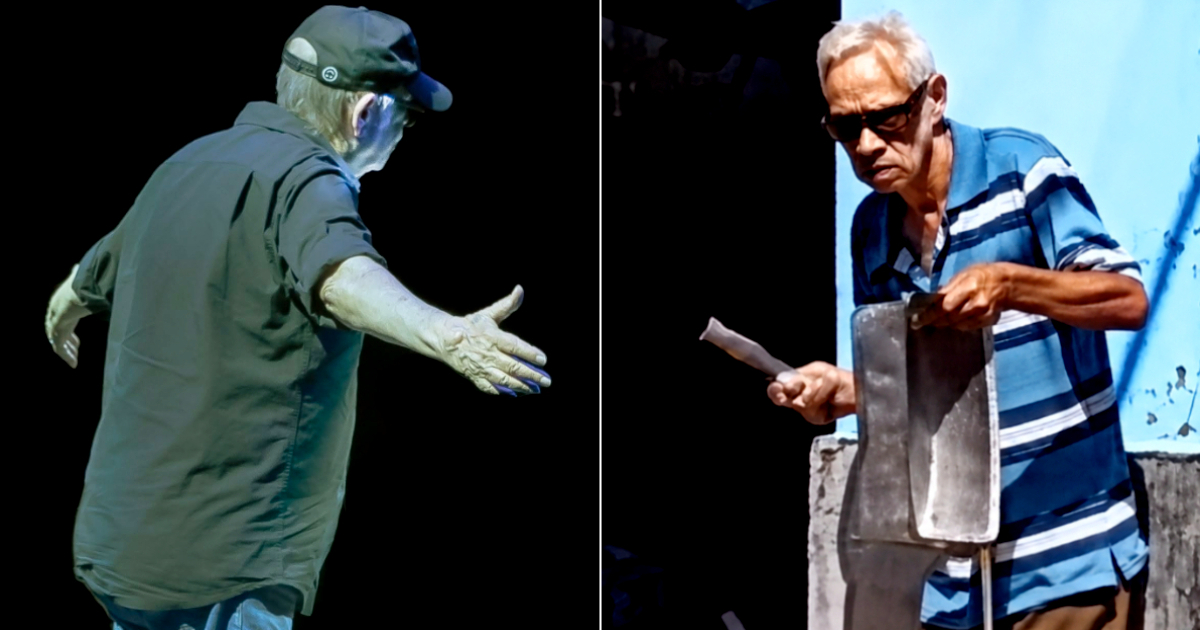
Silvio Rodríguez concluded his extensive 10-concert tour across Spain, the longest he has undertaken in the country in a decade, by expressing admiration for the protest camp at Puerta del Sol in Madrid. There, citizens are demanding urgent action to address the housing crisis.
His remarks, reported by El País, have sparked a wave of criticism due to their stark contradiction: the 79-year-old Cuban troubadour celebrates the right to protest in Spain while backing a regime that imprisons those who exercise the same right in Cuba.
"The Sol camp gives me hope and courage," Rodríguez told the Spanish newspaper. "The world seems to be sinking into a dark age. Events for justice, inspired by compassion and solidarity like the one at Puerta del Sol, are uplifting."
These words did not go unnoticed by Cubans both on the island and abroad: while the singer-songwriter applauds citizen mobilization in Madrid, the regime he supports holds over 1,200 political prisoners, many of whom were sentenced for participating in street protests during the July 11, 2021, uprising.
Rodríguez's Controversial Alignment with the Cuban Regime
The latest episode of his alignment with the dictatorship occurred in March of this year when Rodríguez wrote on his blog: "I demand my AKM if they launch. And let it be clear that I mean it very seriously." Days later, the Ministry of the Armed Forces ceremonially presented him with a functional AKM rifle and a replica in an event presided over by Miguel Díaz-Canel.
Silvio's stance on Cuban protests has historically been ambiguous. After the July 11 protests, he acknowledged the unrest as "a before and after" and called for amnesty for those detained who had not resorted to violence, questioning the lengthy sentences of 15, 20, and 30 years.
Protests and International Reactions
He also met with playwright Yunior García Aguilera in a 70-minute meeting described as friendly, where García asked him to advocate for the prisoners. However, before the November 15, 2021, march organized by the Archipelago movement, Silvio did not publicly support the initiative; the regime blocked the demonstration and placed García under house arrest.
In May 2021, following the arrest of 13 young people in Old Havana who were demonstrating in support of artist Luis Manuel Otero Alcántara, who was besieged and on a hunger and thirst strike, the troubadour suggested "legalizing protests" under a model of "authorized protests" with police protection for demonstrators.
But his proposal included a controversial phrase: "The little scandals will end the day protests are legalized."
The Dichotomy of Public Perception
His torn position led him to assert, in another interview with El País in March of this year, that during the July 11, 2021, protests, "the forces of order should guarantee the safety of those demonstrating." In June, he reiterated his belief in the right to free expression and protest, but added that law enforcement should prevent "violent or vandalistic" acts.
The 2026 Spanish tour was marked from the start by protests from the exile community. On September 1st, activist Avana de la Torre led a demonstration in front of the Gran Teatre del Liceu in Barcelona with signs reading "Boycott," "Do not finance the dictatorship," and "No to the accomplices of repression in Cuba."
Following that protest, exiled Cubans requested Isabel Díaz Ayuso to declare Rodríguez "persona non grata" in Madrid. It wasn't the first time: in October 2021, nearly a hundred Cubans had already protested outside the WiZink Center in Madrid during another of his concerts.
Inside the venues, the atmosphere was dramatically different: 12,000 people packed the Movistar Arena in Madrid on October 4th for the tour's finale, and chants of "Long live the revolution!" were heard among the audience.
The paradox defining Silvio Rodríguez was encapsulated in the critical reading circulating among Cubans following the El País article: the same man who demands a rifle to defend the system established by a regime that has captured the Cuban state—and deprives Cubans of the right to protest—applauds, from a European stage, that Spaniards can indeed protest against their system and leaders.
Silvio Rodríguez and Cuban Protests: Frequently Asked Questions
Why is Silvio Rodríguez criticized for his stance on protests?
Silvio Rodríguez faces criticism because, while he supports the right to protest in Spain, he aligns with a Cuban regime that represses those same rights within Cuba, leading to accusations of hypocrisy.
What did Silvio Rodríguez propose regarding protests in Cuba?
Silvio Rodríguez proposed "legalizing protests" in Cuba under a model where demonstrations would be authorized and protected by police, although his suggestion was accompanied by controversial comments about ending "little scandals."