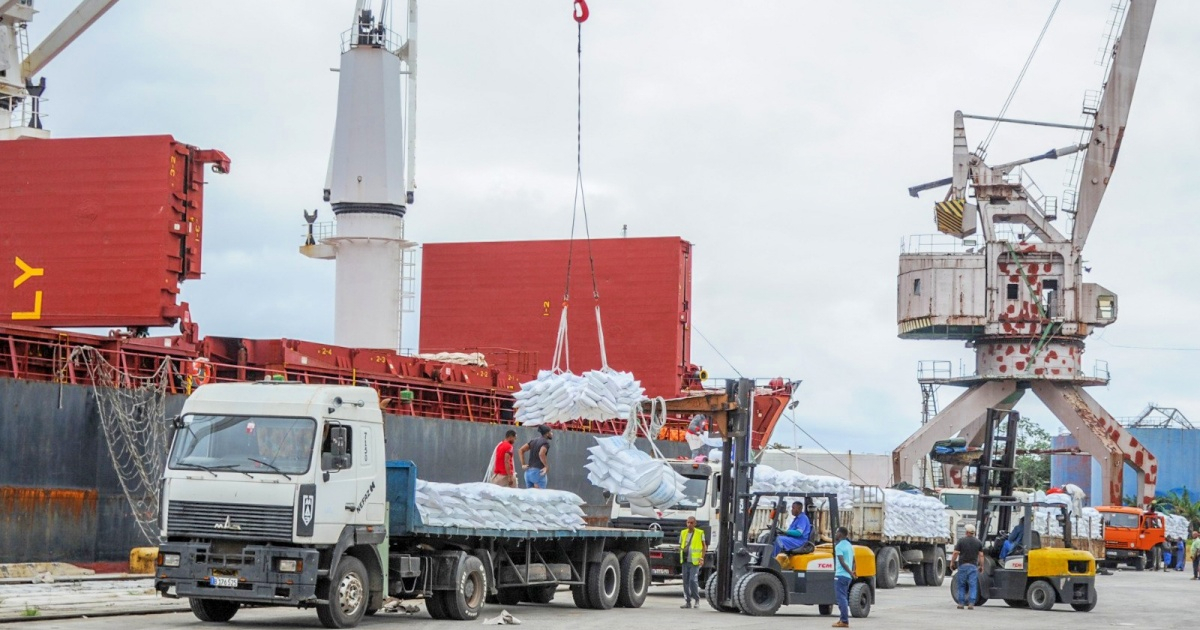
On Tuesday, Cuba's Council of Ministers announced through the Official Gazette a new decree governing foreign commercial representations on the island. It confirms that representative offices are restricted from importing or exporting for commercial purposes, engaging in wholesale or retail trade, issuing invoices, or distributing and transporting goods within the country.
Signed by Prime Minister Manuel Marrero Cruz, the decree updates the earlier Decree 32 from February 2021 and will take effect 30 days following its publication in the Official Gazette.
The decree draws a crucial distinction between two legal entities: representative offices, which face stringent restrictions, and branches, which, as per Decree 183/2026 published on October 2, are allowed to import and export commercially, engage in wholesale trade, issue invoices, and distribute goods. However, general retail trade remains prohibited for branches.
Both representative offices and branches "do not possess separate legal personality or independent assets from the foreign entity that establishes them," meaning that the parent company is liable for all obligations and debts under Cuban law.
New Regulatory Requirements for Foreign Businesses
This regulation requires these entities to receive and process judicial summons, court notices, and notifications from Cuban courts in any legal proceedings involving the foreign company that established them.
As part of the new measures, the decree establishes the National Registry of Foreign Commercial Representations, under the Cuban Chamber of Commerce. All entities operating under these models must register with this body.
The registration license will be valid for up to five years, and currently active entities in Cuba will have 180 days from the decree's effective date to complete this procedure.
Economic Reforms and State Control
The regime justifies this move by citing "changes in foreign trade and accumulated experience suggesting the need to eliminate existing regulatory dispersion" and align the rules "with international terms and practices."
This regulation is part of a broader package of 176 economic and social reforms approved in June 2026, presented by Marrero Cruz to the National Assembly. According to the latest government report, 91% of these measures—160 out of 176—are already being implemented, supported by 197 ratified legal norms.
While the reform package aims to liberalize and decentralize Cuba’s economy, the state retains control over critical trade aspects: licenses, banks, customs, ports, import companies, storage, and access to foreign currency.
The private sector in Cuba is also facing challenging times. In 2025, it experienced its first historical decline in active businesses since its legalization in 2021, with 816 net closures, as the government shut down dozens of small and medium-sized enterprises in a "correction of distortions" program.
Foreign entities operating in Cuba and required to register under the new decree have 180 days post-enactment to regularize their status with the Chamber of Commerce.
FAQs on Cuba's Trade Restrictions for Foreign Companies
What are the main restrictions imposed on foreign representative offices in Cuba?
Foreign representative offices in Cuba are prohibited from importing or exporting commercially, carrying out wholesale or retail trade, issuing invoices, and distributing or transporting goods within the country.
How does the new decree affect foreign branches differently than representative offices?
Foreign branches, unlike representative offices, are permitted to import and export for commercial purposes, engage in wholesale trade, issue invoices, and distribute goods, but they are still barred from general retail activities.
What is the purpose of the National Registry of Foreign Commercial Representations?
The National Registry of Foreign Commercial Representations, managed by the Cuban Chamber of Commerce, aims to regulate and oversee foreign entities operating under representative office or branch statuses in Cuba.