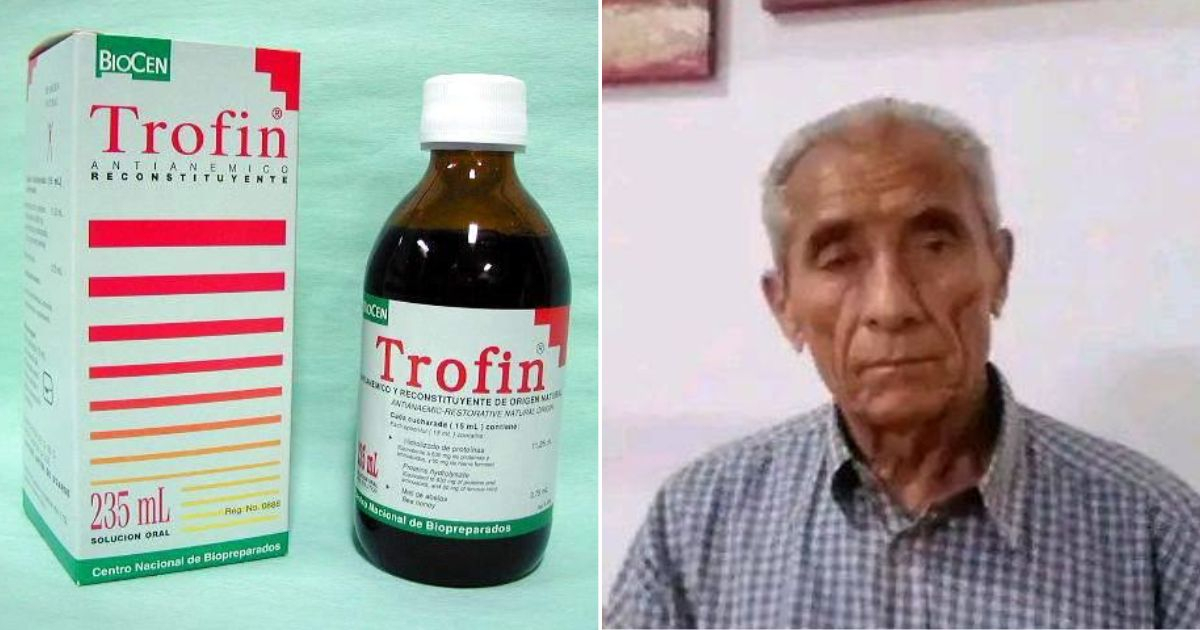
Cuban scientist Raúl González Hernández, known for creating Trofin, has openly criticized the nation's leadership, asserting that the authorities have exhausted their chance to govern effectively. He urged them not to prolong the Cuban people's suffering any further.
"Understand that your chance has expired; do not continue to inflict suffering on the people," González Hernández wrote in a Facebook post directed at Cuba's leaders on Monday.
Dr. González, a distinguished scientist recognized for developing the anti-anemia medication Trofin, labeled his message "The Cynical, Hypocritical, and Dishonest Behavior of the Country's Leadership." He questioned the outcomes of the government's last seven years.
González argued that during this time, the authorities have failed to achieve "a single positive result," accusing the leadership of stubbornly defending a socialist model he deems obsolete.
"After seven consecutive years of failures in governance, unable to present a single positive outcome, it is shameless and a total disregard for the Cuban people to continue defending Cuban socialism, which now only exists in memory," he stated.
The scientist further criticized the contradiction of authorities upholding socialism while, in his view, relying on "capitalist measures," exacerbating economic and social inequalities.
In his post, he painted a picture of a Cuba plagued by a "crisis of values," indiscipline, and a lack of moral authority, accusing leaders of blaming the U.S. embargo for the country's plight.
González was even more scathing, accusing the authorities of deception, lying, justifying, and even resorting to repression to maintain power, which he attributes to the widespread public discontent with the government.
In the closing of his message, González called for accelerated political and social changes and demanded greater citizen involvement in shaping the country's future.
"Do not delay the necessary and inevitable changes in Cuban society that should align with the historical moment we are living, achievable only with the full participation of the people, not behind their backs," he insisted.
The critique is especially significant due to González Hernández's extensive reputation as a doctor in sciences and a prominent researcher who spent over 45 years developing anti-anemic products. He was a founder and leader of the Laboratory of Antianemic Products at the National Center for Biopreparations (BioCen).
His most renowned work, Trofin, was developed as a treatment for anemia. His critical stance gained attention after his family revealed he had difficulties obtaining the very medication he created.
His daughter, Elizabeth González Aznar, reported that the scientist had to reach out to former colleagues to secure bottles of Trofin when needed for his family.
González, a founder and leader of the BioCen Laboratory of Antianemics, dedicated decades to this research field.
The family has also publicly demanded greater recognition of his scientific contributions. Elizabeth González Aznar explained that her father was the primary creator of Trofin, though his name is not individually credited due to the intellectual property system applied to developments within state institutions.
In June 2025, his situation resurfaced when it emerged that, at 80 years old, the scientist began selling coffee to earn a living.
His daughter recounted that González, alongside her, set up a small sales booth after their family's financial situation worsened.
Trofin was registered as a medication in Cuba in 1992 and patented two years later, according to published records of González's career.
Insights into Raúl González Hernández's Critique
Why is Raúl González Hernández's critique significant?
His critique is noteworthy due to his extensive experience and reputable career in scientific research, particularly in developing anti-anemic products like Trofin. His objections hold weight given his background and the struggles he faced even with his own creation.
What does González criticize about the Cuban leadership?
González criticizes the Cuban leadership for failing to produce positive results during their governance and for defending an outdated socialist model. He accuses them of hypocrisy by promoting socialism while implementing capitalist measures, increasing societal inequalities.
What changes does González advocate for?
González calls for urgent political and social reforms that align with the current historical context. He stresses the importance of involving the entire Cuban populace in decision-making processes to ensure these changes are effective and inclusive.