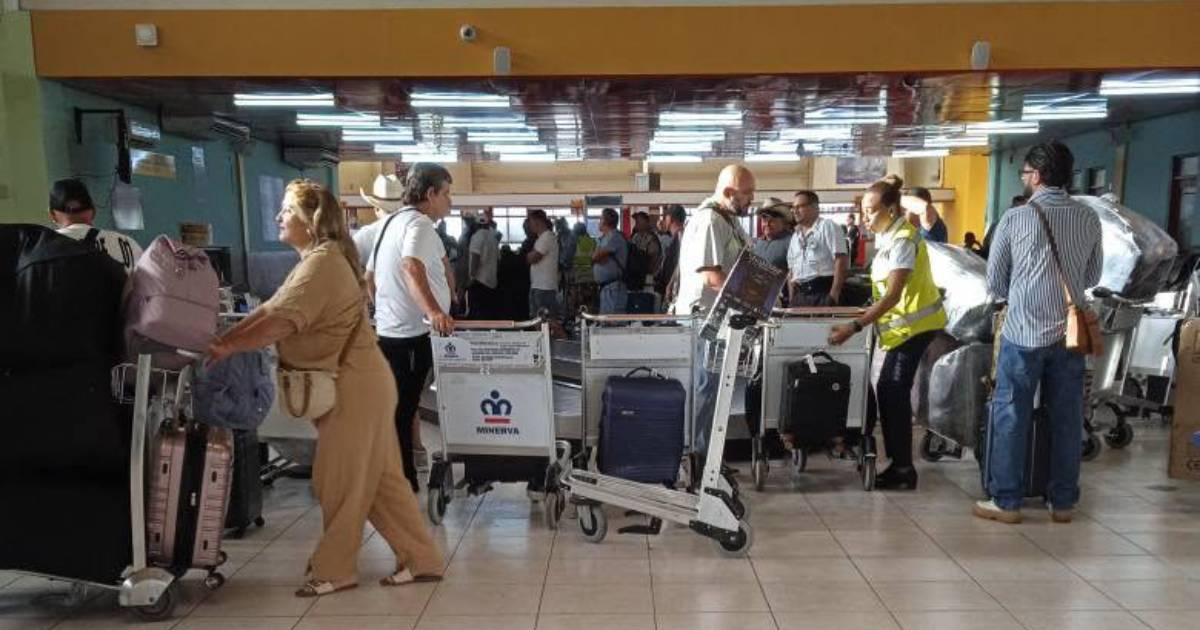
The upcoming customs regulations set to take effect in Cuba on October 12 will not remove the existing limits on goods that travelers can bring or recipients can receive. The primary shift lies in how the customs authority will handle situations where excessive quantities or commercial intent are identified.
Previously, under Resolution 175/2022, which governed non-commercial imports by individuals, any excess goods were typically confiscated. The newly introduced Resolution 340/2026 retains several existing limits but introduces an alternative: goods exceeding the established limits can be transferred to a secondary commercial dispatch, subject to duties and service fees paid in USD.
From Confiscation to Commercial Import
The most significant change under the current rules involves how excess goods are handled. Previously, Resolution 175/2022 dictated that any excess deemed commercial would be confiscated after allowing the authorized amount. In contrast, Resolution 340 introduces a process where, after the non-commercial limits are fulfilled, travelers or recipients have the option to import the surplus by paying the necessary fees in US dollars.
Existing Product Limits and New Commercial Path
For certain products, the new resolution permits up to five units if their value is under $50 and three units if it exceeds that amount, based on declarations or invoices. This aspect is not new; Resolution 175/2022 already covered these limits. The key difference now is the option to process surplus goods through a commercial channel, avoiding confiscation.
Consistency in Electronics and Appliances
Limits on importing electronics and appliances remain unchanged. The previous regulation allowed up to two appliances of the same type and three computing devices, regardless of type, as well as five mobile phones. Resolution 340 upholds these limits but now offers a commercial processing option for any surplus.
Miscellaneous Goods: Same Limit, Different Result
Notably, the treatment of miscellaneous items like clothing, footwear, and toiletries has evolved. Under prior rules, customs could admit up to five kilograms of a repeated item and confiscate the rest. Now, while the five-kilogram limit persists, the excess can be commercially processed.
Nature of Goods and Commercial Intent
The new regulation maintains customs' ability to classify goods as commercial based on their nature and function. If a product is suitable for commercial use, it can now be processed under the new commercial dispatch system, provided all conditions are met.
Cost Implications for Travelers
For those opting for the new commercial dispatch, the tariff is progressive: 15% up to $2,000, 20% for amounts from $2,000 to $4,000, 25% for up to $6,000, and 30% for anything over $6,000. For shipments, the rate is 30%. All fees must be paid in US dollars via international or national USD cards, with cash payments only accepted at designated airport entities.
Refusal to Pay and Consequences
If travelers choose not to utilize the commercial dispatch, they can request the return of their goods. Failure to pay or re-export will result in administrative actions. This mechanism does not permit regularizing prohibited items or fraudulent declarations, which remain subject to legal penalties.
This new framework implements a measure announced by the Cuban government in June as part of its 176 "economic and social measures."
Understanding Cuba's New Customs Regulations
What are the key changes in Cuba's customs regulations?
The main change is that excess goods will no longer be automatically confiscated. Instead, they can be processed through a commercial dispatch if the traveler pays the necessary duties in USD.
How will the new regulations affect travelers?
Travelers can now choose to pay for excess goods to be imported commercially rather than having them confiscated, allowing for more flexibility in what they bring into the country.
What are the payment methods for customs duties?
Duties must be paid in USD using international or national USD cards. Cash is only accepted at specific airport entities.