The General Customs of the Republic of Cuba has rolled out updated guidelines that will differentiate between non-commercial imports and those requiring a secondary commercial processing with payment in USD. These new rules set specific limits for items such as appliances, cell phones, computers, clothing, footwear, tools, and other goods.
These regulations are outlined in Resolution 340/2026, published in Official Gazette No. 83 of 2026 this Monday, and are set to be enforced starting October 12, seven days following their publication.
The regulation elaborates on the mechanism approved by the Cuban government allowing individuals to subject certain goods to commercial processing, where applicable, by paying tariffs and customs services in USD.
Distinguishing Non-Commercial from Commercial Imports
The cornerstone of the new resolution is to continue distinguishing between non-commercial imports and those identified as commercial due to their quantity, nature, repetition, or value.
Non-commercial imports remain defined as those conducted occasionally for personal, family, or household use.
Should excessive quantities or commercially characterized goods be detected, the initial processing will cover items complying with standard rules. Subsequently, if the owner agrees, an independent processing will be initiated for the surplus, with tariffs and services payable in USD.
Specific Guidelines for Various Goods
One notable rule indicates that for items valued via Customs declaration, purchase invoice, or reference value, up to five units of each type can be admitted as non-commercial imports if their value does not exceed $50. If the value is higher, only three units may qualify.
Exceeding these limits allows for a secondary commercial processing, contingent upon the owner's acceptance. However, this rule does not apply universally, as some categories have their specific restrictions.
For instance, the Gazette provides an example of a person attempting to import five bathroom fixtures, each with a reference value of $55. Customs will permit three within the ordinary limit, applying commercial import procedures to the rest.
Limits on Electronics and Communication Devices
Electronics have different limits: up to two items of the same type are permitted, provided their combined value stays within the authorized limit.
This rule explicitly includes electric generators, of which up to two units can be imported under these terms.
For computing and communication devices, Customs will allow up to three computing devices, whether desktops, laptops, tablets, or similar equipment. Additionally, up to five cell phones or smartphones, and three telecom-related items, network devices, and certain peripherals can be imported.
Some communication devices still require specific permits; for instance, routers, certain radio transmitters, satellite phones, and other devices need authorization from the Ministry of Communications.
Miscellaneous Goods: Clothing, Footwear, and Essentials
The so-called miscellanea include footwear, clothing, food items, personal and household hygiene products, jewelry, perfumes, and similar goods. Here, Customs will consider product diversity, typically allowing up to five kilograms of a product if identified as commercial due to repetition or excessive quantity, with the rest subject to commercial processing.
If items are very small and five kilograms would be disproportionate for personal or domestic use, the limit might be reduced to one kilogram. As examples, the norm mentions matchbox stones and watch batteries.
The Gazette illustrates the process with a traveler bringing in 90 kilograms of women's shoes: Customs would accept five kilograms non-commercially, with the remainder eligible for USD-paid processing.
For products governed by the value-weight alternative, the new regulation maintains the equivalence of one kilogram per $10 for travelers to determine their customs value.
Consequences for Non-Compliance and Impact on "Mules"
The resolution sets specific rules for various products. For instance, up to three musical instruments are admitted, while tools valued by declaration, invoice, or reference value are generally limited to two of each type.
Construction materials are also regulated, allowing up to 50 square meters of tiling and flooring pieces, up to 50 units of certain construction items, and up to 10 units of other hardware and materials.
Vehicles, motorcycles, and mopeds have their specific regulations. In these cases, the new commercial processing cannot be used to exceed the maximum limits set by other legal provisions.
When a product requires commercial processing, the owner can accept USD payment for the applicable taxes and services or request the re-export of the goods, provided the conditions for this procedure are met.
If neither payment nor re-export is authorized, Customs will enforce the appropriate administrative measure according to current legislation.
The new procedure will be applied only when no attempt is made to bypass customs control. Prohibited goods, fraudulent declarations, and other violations remain subject to different treatments and are not simply resolved by USD payment.
Should the person need time to complete the processing, goods may remain in storage or deposits for the authorized period, with costs borne by the recipient.
The resolution also warns that repeated commercial imports by individuals could result in a sanction temporarily restricting their import rights. During this period, only their personal effects will be admitted, with other goods processed as per the legislation.
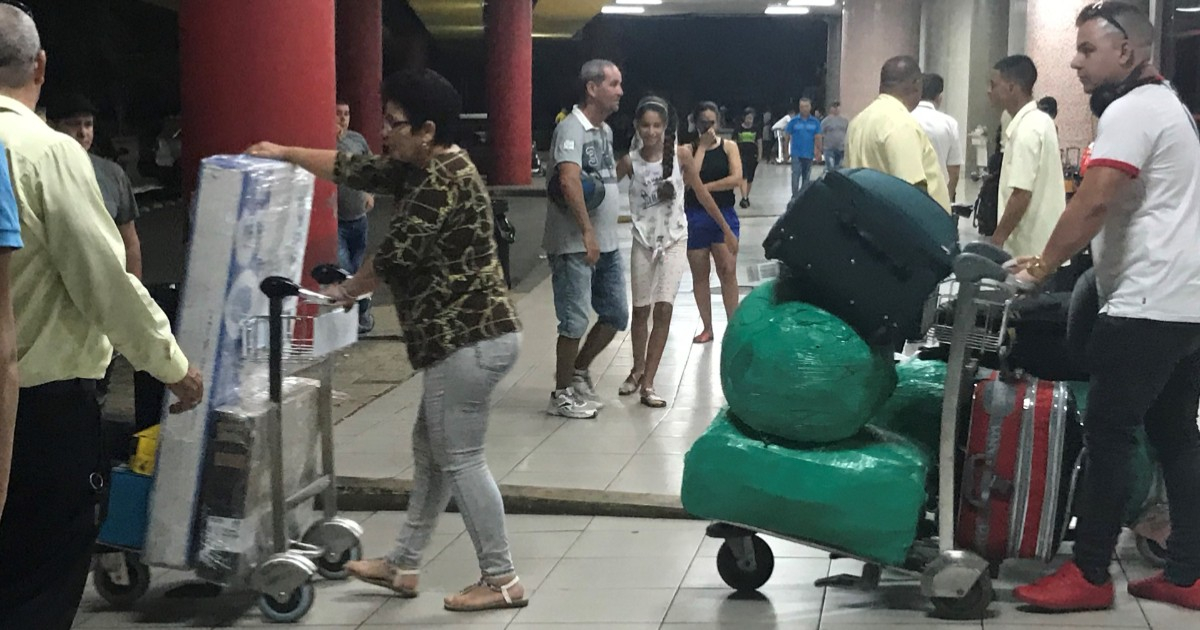
The new rules could significantly affect "mules," travelers who have long transported clothing, food, hygiene items, and other products for sale in Cuba. In September, economist Elías Amor cautioned CiberCuba that the new regulations might displace these workers from the import business while the government expands foreign trade opportunities for micro, small, and medium-sized enterprises (MSMEs) and cooperatives.
Resolution 340/2026 replaces Resolution 175 of 2022 and its subsequent amendments, becoming the guideline from October 12 for determining the commercial nature of goods and processing excesses from travelers and shipments.
FAQs on New Cuban Customs Regulations
What are the key changes in Cuba's new customs regulations?
The new regulations differentiate between non-commercial and commercial imports, set limits on quantities and values of goods, and require USD payment for commercial processing.
When do the new customs regulations take effect in Cuba?
The new customs regulations will be enforced starting October 12, 2026, seven days after their publication in the Official Gazette.
How will these regulations impact travelers known as "mules"?
The regulations may significantly reduce the activities of "mules," who transport goods for sale in Cuba, as they now face stricter limitations and commercial processing requirements.