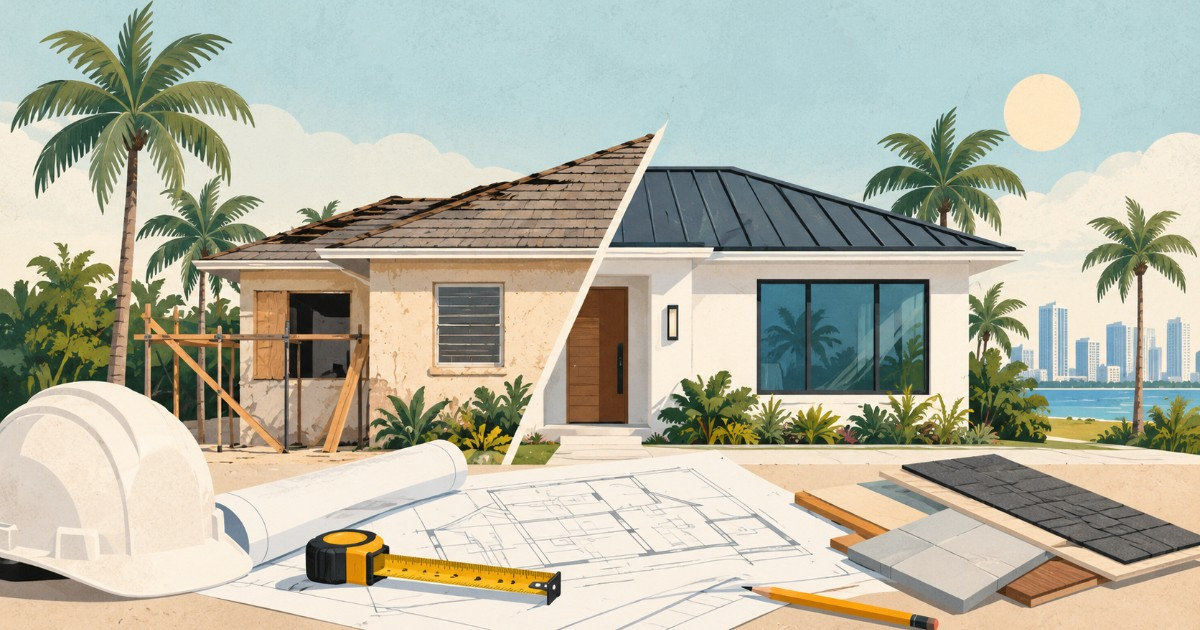
If you're considering renovating a home, replacing a roof, expanding a property, or starting any construction project in Miami-Dade, mark your calendar for December 31, 2026. On this date, the ninth edition of the Florida Building Code will take effect, replacing the current 2023 edition that has been guiding numerous construction permits across the state.
The Miami-Dade Department of Regulatory and Economic Resources has already emphasized that all permit applications and plans submitted from December 31 onwards must comply with this new edition. An important detail for those using the county's electronic portal: any submissions made after 4:00 p.m. on December 30, 2026, will be subject to the 2026 code.
Impact on Home Renovations
This update doesn't imply that all domestic projects need to be redone or that every minor repair will automatically require a new permit. What matters is that projects requiring permits must be designed and processed according to the relevant edition of the code based on the submission date and the governing authority's regulations. This could influence projects such as expansions, significant remodels, structural work, certain window and door replacements, electrical or plumbing installations, and, especially in South Florida, roofing and hurricane protection.
Key Considerations for Miami-Dade Homeowners
Miami-Dade is part of the High Velocity Hurricane Zone (HVHZ), along with Broward, necessitating reinforced requirements for specific building components and systems due to the region's exposure to extreme winds and hurricanes. The county has already issued specific notices related to the ninth edition of the Florida Building Code, including changes affecting roofing underlayments and requirements for testing and securing certain ridge and hip tiles.
It's crucial to note that a new edition's implementation doesn't automatically render current materials obsolete. However, certain products, systems, or installation methods may require new testing, updated documentation, or approvals in line with the new edition's demands. Therefore, if you're planning improvements like roofs or impact windows scheduled for post-December, verify with your contractor whether the selected products remain valid under the applicable regulations.
Understanding the Miami-Dade Permit Process
While the Florida Building Code is a statewide standard, the authority managing a permit may vary depending on the property's location. In unincorporated areas, the Miami-Dade Department of Building handles numerous permits directly. However, if the property lies within a city such as Miami, Hialeah, Doral, Coral Gables, or another municipality, the municipal building department may process the application while still adhering to the Florida Building Code.
The specific rule about the 4:00 p.m. deadline on December 30 pertains to the Miami-Dade portal, so those applying for permits through a city should confirm their procedures and office hours.
Preparing for the Transition
For projects planned near the end of 2026, it's wise to consult the current code rather than rely solely on estimates, guides, or requirement lists prepared months in advance. Before signing a contract for a renovation that will be processed around this transition, consider clarifying several points:
- Whether the project requires a permit.
- Which authority will issue it: Miami-Dade or the respective municipality.
- Which edition of the Florida Building Code will be used for the plans.
- If the planned materials and products have the necessary approvals.
- If any code changes might necessitate design or budget adjustments.
- What inspections will be needed to finalize the permit.
For those still in the planning phase, incorporating the December 31, 2026, date into the project timeline is advisable. While the update doesn't automatically complicate renovations, it does define the set of rules to follow when submitting plans and applying for permits.
FAQs about Florida Building Code Updates and Miami-Dade
What major changes are included in the 2026 Florida Building Code?
The 2026 edition introduces updates affecting roofing systems, hurricane protection, and specific structural requirements, especially in the High Velocity Hurricane Zone.
How does the code change impact ongoing projects?
Projects already in progress that have secured necessary permits under the previous code may continue as planned. New applications will need to comply with the 2026 code from December 31, 2026, onwards.
Are there specific guidelines for Miami-Dade due to its hurricane zone status?
Yes, Miami-Dade has additional requirements for building components and systems to withstand extreme winds and hurricanes, which are included in the county’s adoption of the Florida Building Code.