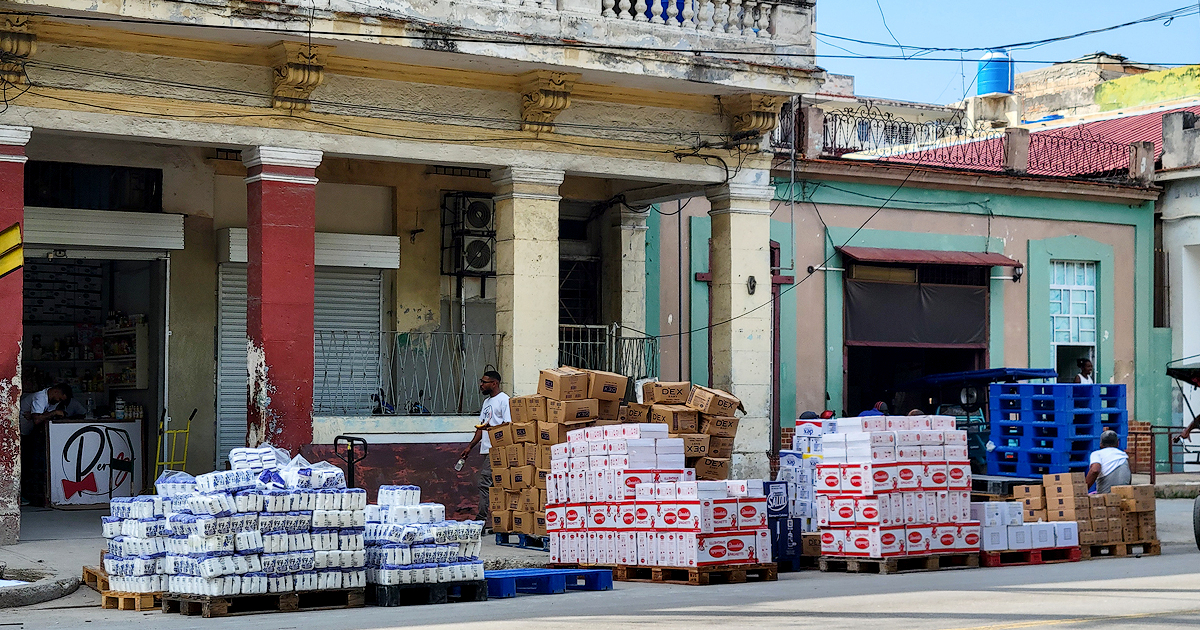
The Cuban regime's swift reaction to the latest measures from the U.S. Office of Foreign Assets Control (OFAC) goes beyond the usual accusations of an "attack on the people." It also reveals an uncomfortable truth for Havana: the private sector, once seen as marginal and politically subdued, has become a crucial component in the power's economic framework.
U.S. Initiatives Paving the Way for Private Enterprises
It's important to note the sequence of events. The U.S. hadn't pursued a straightforward policy of blocking Cuban micro, small, and medium enterprises (MSMEs). In May 2024, under the Biden administration, the Treasury Department amended regulations to expand support for independent private entrepreneurs, allowing them to open and use U.S. bank accounts through online payment platforms and facilitating specific financial operations linked to the private sector.
Even during the Trump administration, the initial approach wasn't to shut down Cuban entrepreneurship entirely. By February 2026, the Department of Commerce's Bureau of Industry and Security updated its guidance to permit U.S. gas and petroleum product exports to eligible Cuban private entities under the "Support for the Cuban People" exception.
Reports indicated that the U.S. had shipped approximately 30,000 barrels of fuel to the Cuban private sector since early February, with numerous vessels unloading imported goods from private companies, primarily at the Mariel port. This marked a significant distinction: resources were directed toward the private sector, not the Cuban state or its military apparatus like GAESA.
The Cuban Model's Dilemma: Private on Paper, State-Controlled in Practice
However, the Cuban reality soon displayed the trap. Even if a MSME made the purchase, operations within Cuba couldn't easily escape state control. Imports had to go through regime-approved intermediaries, with every step—from ports to distribution—under state management. Though MSMEs could import fuel, the regime maintained complete oversight of the process.
The warning signs emerged quickly. By March 4, 2026, the Commerce Department suspended the "Support for the Cuban People" exception for operations involving foreign fund deposits in Cuban-owned banks, citing unacceptable risks of benefiting the regime or its military and intelligence services.
Havana's Reforms: Expanding Channels but Retaining Control
Meanwhile, the regime accelerated its reforms. In June 2026, it approved 176 economic and social transformations, including private banking, private foreign exchange houses, private remittance operators, opening to foreign investment in the non-state sector, and lifting the 100-worker limit for MSMEs, albeit under state authorization.
This was presented as a sovereign response to the crisis, but the reality was different. With a collapsing state economy, the regime sought to expand private channels without relinquishing control. Even though private activities were increased, the state retained control over licenses, banks, customs, ports, and permits.
President Díaz-Canel once summarized this stance: "The revolution will not hand over the non-state sector to the enemy. The non-state sector is ours."
In September, the Cuban Central Bank allowed private businesses to receive foreign currency cash deposits directly into foreign currency-denominated bank accounts, formalizing foreign currency within the Cuban banking system under state supervision.
OFAC's Shift Targets Grey Areas
OFAC's shift, effective September 30, 2026, must be viewed in this context. The U.S. removed the authorization for American banks to maintain accounts for independent Cuban private entrepreneurs, ordered blocking affected accounts without specific licenses, eliminated U-Turn financial transactions related to Cuba, and heightened restrictions to prevent both direct and indirect transactions with entities on the Cuba Restricted List.
The key term here is "indirect." OFAC isn't just checking if a transfer mentions GAESA, CUPET, or a military company. It's examining whether, through intermediaries or opaque financial routes, the final benefit could end up within the military, intelligence, or security structures.
Thus, portraying the measure as a simple offensive against entrepreneurship or the populace is misleading. The real discussion isn't whether some MSMEs might be affected—they might, especially those with U.S.-linked accounts or payments. The core issue is why Washington, after opening channels to the private sector, chooses to close some.
The likely answer is that a porous boundary between private and state entities was detected.
The Regime's Response: Framing a Financial Dispute as National Offense
The regime quickly grasped the impact and responded immediately. President Díaz-Canel accused the U.S. of harming the Cuban private sector, claiming the measures aimed to inflict "maximum suffering" on the people.
Foreign Minister Bruno Rodríguez Parrilla also framed the restrictions as part of a policy to block exchanges, private businesses, and economic reforms. "These new blockade measures intend to hinder the ongoing economic transformation process," he claimed.
MINREX officials and pro-regime social media accounts echoed the narrative that Washington targets the entire Cuban economy, not just the regime.
This maneuver is clear: turning a financial and control dispute into a national grievance. The regime tries to equate MSMEs with the people, suggesting any measure to cut potential state exploitation can be branded as collective punishment. Yet, this doesn't hold up against the daily reality in Cuba.
MSMEs Aren't "The People"
For millions of Cubans, MSMEs aren't a widespread solution to their basic needs. They often offer the only place to find products, but at prices far beyond typical wages and pensions.
Reports have shown the cost of essential items, like a pound of chicken at 800 pesos or six eggs at 960, with monthly expenses for a small family in Havana exceeding 200,000 pesos against a minimum wage of 3,210 pesos. Thus, the Cuban populace isn't the primary beneficiary of this circuit, which operates in a costly, de facto dollarized, and privilege-ridden market.
The regime attempts to disguise this gap by presenting any private channel as a popular victory. In reality, much of the population accesses these goods only by sacrificing remittances, selling possessions, or relying on overseas relatives.
No Absolute Control, But No Independence
OFAC's new measures don't prove the Cuban private sector is entirely regime-controlled. It would be unfair to group thousands of small entrepreneurs under the same umbrella—they endure blackouts, inflation, taxes, inspectors, and lack of legal security.
However, they do confirm an increasingly undeniable suspicion: no economic circuit involving currency, fuel, or foreign trade in Cuba operates entirely independently of the state. The "private" label doesn't guarantee independence.
In a system where the regime controls banks, ports, customs, licenses, importers, storage, distribution, and regulation, any significant economic channel can eventually serve as a source of revenue, commissions, supply, or legitimacy for the power itself.
This is the discussion Havana avoids, as it would require answering uncomfortable questions: who truly owns certain companies, what connections they have with officials, military personnel, or power relatives, what commissions the state charges on each import, and how much the state apparatus captures in the name of a supposed private market.
A Correction, Not an Offensive Against Cubans
Washington doesn't seem to have closed these channels because it opposes Cuban entrepreneurs. The logic suggests otherwise: sealing gaps through which the regime could turn the private sector into intermediaries, fronts, collectors, importers, or indirect channels for resources the sanctions intended to deny the state.
"Every time they create a new mechanism to escape the knot, we close it," said Senator Marco Rubio in August. "This won't disappear in the next two and a half years."
The official narrative's falsehood isn't in acknowledging that OFAC's measures might impact some private actors—that's real. The manipulation lies in omitting the full sequence: the 2024 banking openings, licenses and commercial exceptions, fuel authorization, early warnings about Cuban banks, state control over logistics, and Havana's reforms to absorb currency through private channels.
This is why the regime is upset—not because Washington discovered MSMEs, but because it seems to have realized the line between private entrepreneurship and state benefit was too faint. The official reaction, with its automatic appeal to "the people," seeks to obscure this logic. But the full sequence tells another story: first came openings to support the private sector; then came signs of capture, intermediating, and financial risk; finally, the closure of the most vulnerable channels.
What the regime labels as strangulation against Cubans might actually be a course correction against its ability to disguise state-controlled activities as private, maintaining its totalitarian grip on power.
Understanding the Impact of OFAC's Measures on Cuban Private Enterprises
Why did OFAC implement these new measures against Cuban private enterprises?
OFAC's measures aim to close gaps that allow the Cuban regime to exploit the private sector as intermediaries, fronts, or indirect channels for resources that sanctions seek to deny the state.
How do the new OFAC measures affect Cuban MSMEs?
The new measures limit the ability of Cuban MSMEs to maintain U.S.-linked accounts and conduct financial transactions, potentially impacting those with existing ties to U.S. financial systems.
What role does the Cuban regime play in controlling private enterprises?
Despite reforms, the Cuban regime retains significant control over private enterprises through licenses, banks, customs, and other regulatory mechanisms, limiting their independence.