The U.S. Social Security Administration (SSA) has implemented new guidelines as of October 1, 2026, to better document and assess disability for individuals aged 18 to approximately 25 years old.
This shift is particularly significant for families whose children receive Supplemental Security Income (SSI), young adults applying for disability benefits, or those continuing to receive aid post-18.
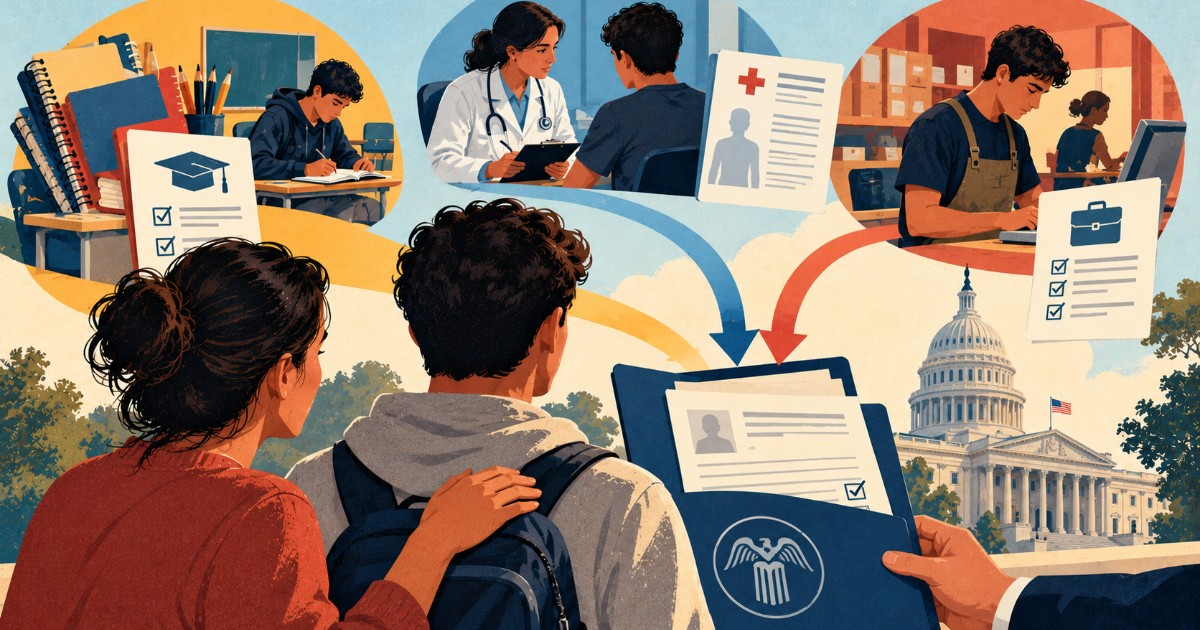
Outlined in the Social Security Ruling 26-2p, these changes replace guidelines that have been in place since 2011. The updated approach aims to enhance the SSA’s evaluation of young adult cases, focusing on aspects such as individualized education plans, school accommodations, family support, work practices, vocational rehabilitation, and the capacity for independent living.
It is important to note that no new benefits have been introduced, nor have the existing criteria for receiving disability benefits been automatically eased.
Who Does the New Rule Impact?
The SSA defines young adults, for this directive, as those between 18 and about 25 years old. This new policy could affect various scenarios:
- Young adults filing new disability benefit applications.
- SSI child beneficiaries reaching 18 who must undergo a new evaluation under adult criteria.
- Youth undergoing a Continuing Disability Review (CDR).
- Adults applying for benefits based on a parent's Social Security record, where the disability began before age 22.
The SSA will apply SSR 26-2p to new applications submitted from October 1 onward and to pending cases with decisions issued from that date.
Turning 18 Can Change Everything
One of the most impacted groups includes young adults who received SSI for disabilities as children. Upon reaching 18, the SSA must re-evaluate their disability status using adult criteria.
Federal regulations clarify that the agency may determine that an individual no longer meets the requirements, even if they were previously deemed disabled as a minor. This review differs from a standard medical review for adult beneficiaries.
During the 18-year redetermination, the SSA does not need to prove health improvement. Instead, the case is reassessed under the adult disability definition, which means a childhood diagnosis that qualified for SSI does not ensure continued benefits after turning 18.
Definition of Disability Remains Unchanged
While the new rule adjusts how evidence is developed and assessed, it does not alter the legal definition of disability. For adults, the SSA continues to evaluate whether there is a medically determinable physical or mental condition that prevents substantial work activity, has lasted or is expected to last at least 12 months, or could result in death.
The agency uses a sequential process to assess the severity of conditions, their alignment or equivalence to listed impairments, the individual's residual functional capacity, and the ability to perform past or other work.
The Importance of School Records
The SSR 26-2p places a strong emphasis on school documentation, which can be crucial for young adults with intellectual, developmental, learning disabilities, autism, or other conditions. School records often reveal limitations not fully captured in medical evaluations.
Relevant documentation may include:
- Individualized Education Plans (IEP).
- Transition plans to adulthood.
- Section 504 plans.
- School psychologist evaluations.
- Intelligence or adaptive function tests.
- Special education reports.
- Attendance records linked to medical issues.
- Information about additional help or supervision needed.
The SSA may also consider pre-18 educational documents that are relevant to assessing the current functioning of the young adult.
Achieving School Goals Doesn’t Equate to Work Readiness
The new rule highlights a critical point: meeting an IEP goal does not automatically mean a young adult can engage in work activities without limitations. The SSA must examine whether they achieved the goal due to:
- Extra supervision.
- Individualized instruction.
- A highly structured environment.
- Family or professional support.
- Extended time for tasks.
- Assistive devices or technology.
Similarly, failing to meet a school goal doesn’t inherently prove a disability that prevents working. The SSA must evaluate the totality of evidence.
Supports and Accommodations Matter
SSR 26-2p emphasizes assessing what a person can do independently, without extraordinary support. A young adult might manage well in school with constant help, but such support might not be present in a typical workplace.
The SSA will consider:
- The level of supervision required.
- Whether frequent reminders are necessary.
- Assistance needed to maintain focus.
- Special schedules or additional breaks.
- Use of communication or assistive devices.
- Ability to complete activities independently and consistently.
Successfully functioning in a protected or structured environment does not necessarily indicate the same capability in a regular job setting.
Work Experiences Also Count
A young adult’s work history, even outside traditional employment, can play a role in evaluating their capabilities. The SSA may consider:
- School-organized work practices.
- On-the-job training.
- Working with a job coach.
- Protected or supervised employment.
- Paid or unpaid work experiences.
- Vocational rehabilitation programs.
Repeatedly leaving work practices due to difficulties like maintaining attention or following instructions can highlight limitations. Conversely, completing a practice might demonstrate certain capabilities, though the SSA will assess whether special assistance was necessary.
Employment Doesn’t Guarantee Sustained Work Capability
The SSA also notes that some young adults work under special conditions. Wages might be subsidized, jobs may be part of a protected program, or employers may provide assistance not typically needed by other workers.
Thus, the agency considers not just earnings but the actual value of work performed and the conditions under which it is completed.
Comprehensive Medical History is Essential
The new rule outlines the evidence collection period required by the SSA. Before concluding that a young adult is not disabled, the agency will make reasonable efforts to gather a complete medical history covering at least the previous 12 months.
This criterion applies, with various benchmarks, to:
- New applications.
- Redeterminations at age 18.
- Periodic disability reviews.
For conditions with fluctuating symptoms, like some mental disorders or epilepsy, the agency might review even longer periods.
Beyond Medical Sources
Objective medical evidence from an SSA-accepted source is needed to establish a medically determinable condition. Once established, however, the agency can consider evidence from other sources to understand the condition's real-life impact.
This could include input from:
- Teachers and school staff.
- Family and caregivers.
- Job coaches.
- Social workers.
- Community programs.
- Vocational rehabilitation agencies.
What Documentation Should Families Keep?
The new policy strongly suggests keeping documentation that shows not only the medical diagnosis but also how the condition affects daily functioning.
Useful documents might include:
- Recent and past medical reports.
- Treatment and medication history.
- IEP and school transition plans.
- 504 Plan, if applicable.
- Psychological and educational evaluations.
- Adaptive functioning tests.
- Absence records related to the condition.
- Work practice reports.
- Vocational rehabilitation documentation.
- Information on necessary supports and assistance at home, school, or work.
What if a Young Adult Loses SSI at 18?
There is a lesser-known protection for families. In certain cases, a young adult who no longer meets the disability definition can continue receiving payments temporarily if they are involved in an approved educational, vocational rehabilitation, or employment program.
This protection is known as Section 301. The SSA states that payments may continue under Section 301 if the individual was already participating in an appropriate program and the agency believes ongoing participation will increase the likelihood of independence without disability benefits later.
Programs that may qualify include:
- An IEP for young adults aged 18 to 21.
- State vocational rehabilitation programs.
- Ticket to Work.
- Individualized employment plans.
- Plan to Achieve Self-Support (PASS).
Special Protection for Students Aged 18 to 21 with IEPs
SSR 26-2p specifies that when a young adult aged 18 to 21 participates in a valid IEP under federal special education law, the SSA considers that completing or continuing the program may enhance their chances of leaving disability benefits permanently.
In such cases, payments may continue while the IEP is completed or until the individual stops participating, provided other Section 301 requirements are met.
Implications for Adults with Disabilities from Before Age 22
The new rule also applies to adults whose disability began before age 22. In some situations, they may receive benefits based on a parent’s Social Security record when the parent is retired, disabled, or deceased.
The SSA refers to these payments as benefits for an adult child with a disability. The individual must meet, among other criteria, the adult disability definition and prove the condition began before age 22.
The SSR 26-2p addresses how the SSA documents and evaluates disability cases, without altering SSI or SSDI payment amounts. Benefit amounts are determined by other rules related to income, work history, and Social Security’s annual adjustments.
The new rule took effect on October 1, 2026, replacing SSR 11-2p, which governed such cases since 2011. The SSA clarifies that while the new ruling maintains much of the previous substantive content, it updates legal references, reorganizes procedures, incorporates new examples, and gives more attention to specific issues of young adults.
For families with children nearing 18, the practical takeaway is clear: evaluations should not be limited to medical reports. School records, accommodations, supports, independent task performance, and any work or vocational experiences should be central elements of the assessment.
Frequently Asked Questions About SSA's New Disability Evaluation Guidelines
What changes has the SSA made regarding disability evaluation for young adults?
The SSA has introduced new guidelines to better document and assess disability for individuals aged 18 to 25, focusing on educational plans, school accommodations, and the capacity for independent living.
How will the new rules affect SSI recipients turning 18?
SSI recipients turning 18 will undergo a re-evaluation under adult criteria, which may result in changes to their eligibility for benefits.
Does the new SSA ruling change the definition of disability?
No, the definition of disability remains unchanged. The ruling updates how evidence is developed and assessed but not the legal criteria for disability.
What documentation is important for families to keep?
Families should keep records such as medical reports, educational plans, psychological evaluations, and any relevant information on the young adult's daily functioning and supports needed.