The Supreme Court embarks on its 2026-27 term this Monday, diving into two pivotal cases for Cuban immigrants: deportations to third countries and detention without automatic bail.
These cases are among the most significant immigration issues the nation's highest court will tackle during this session, as reported by CBS News.
The first case, DHS v. D.V.D., is scheduled for debate on December 9, 2026. Meanwhile, the second case, Rhoney v. Barbosa da Cunha, docket number 26-104, was accepted by the Court on October 1 and has yet to be scheduled for oral arguments.
Final decisions are anticipated before the Court's summer recess, likely by late June 2027.
Deportations to Unrelated Countries
In DHS v. D.V.D., stemming from a class-action lawsuit initiated in 2025 by D.V.D. — a Cuban immigrant using a court-authorized pseudonym — and three others, the focus is on preventing deportation to countries not listed in their removal orders without a chance to argue the risks they might face there. The court must review the Trump administration's policy allowing deportations to third countries, even when immigrants have no ties to the chosen destination.
A key issue is determining what protections an immigrant should receive before being relocated, specifically whether they should be notified in advance and allowed to contest the potential dangers such as persecution or torture in the receiving country.
This matter holds particular significance for Cubans, given the long-standing challenges the U.S. has faced in executing certain deportation orders to Cuba.
A Human Rights Watch report highlighted that 4,353 Cubans were deported to Mexico between January 2025 and March 2026, marking them as the largest group of foreign nationals sent to Mexico by the United States despite their non-Mexican status.
Cases like that of Arístides Fernández García, deported to the Central African Republic in July, and Yasmany Moreno de Armas, who arrived in Florida by raft in 2016 before being sent to the same country, illustrate the severe impacts of such relocations on individuals without familial or social connections in the destination country.
"Life here is incredibly harsh and sad, with all the work and hunger we endure," Moreno de Armas stated in a video released in September.
On September 29, the Supreme Court temporarily halted a lower court ruling that had added extra safeguards before deportations to third countries.
This decision allows these deportations to proceed while the Court examines the case's merits, but it does not mean the policy has been deemed legal.
Since Trump's return to the White House, over 25,000 individuals have been deported to third countries, primarily Mexico, but also to nations in Africa, Latin America, and other regions.
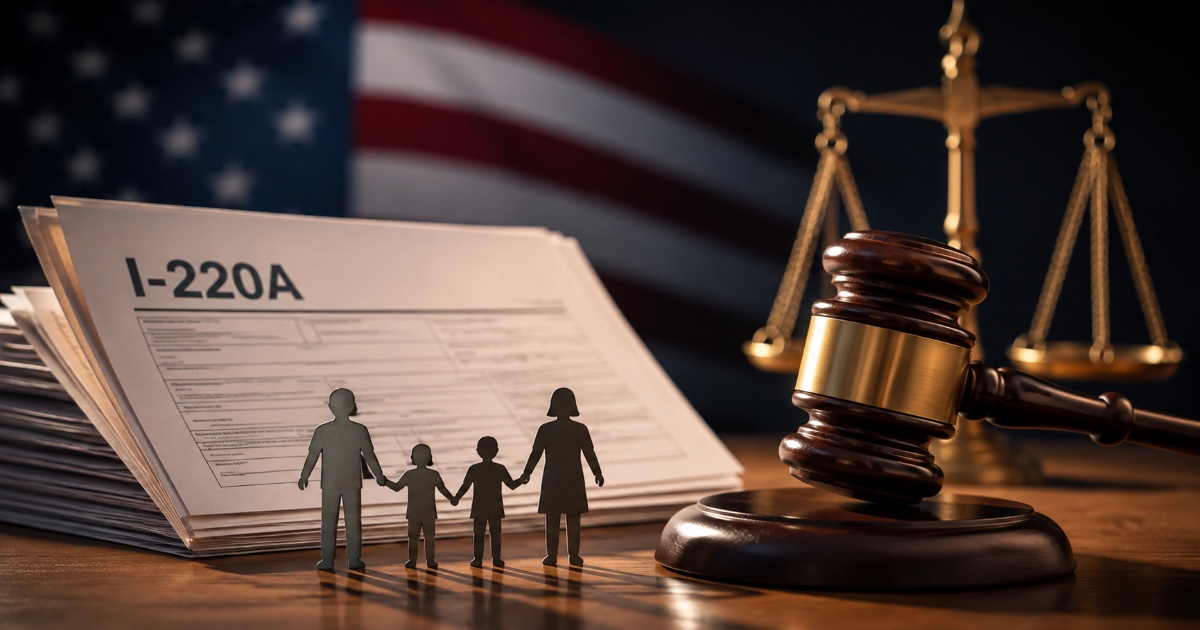
Detention Without Bail: A Critical Issue for Cubans with I-220A
The second case, Rhoney v. Barbosa da Cunha, tackles another crucial issue: whether certain immigrants who entered the U.S. without formal admission can be mandatorily detained during their deportation proceedings without the opportunity to request bail from an immigration judge.
This case arose after the Trump administration altered its interpretation of immigration law in 2025, labeling those who entered without inspection as "applicants for admission," even if they had lived in the country for years.
Under this interpretation, these individuals could be subject to mandatory detention during immigration proceedings.
The ACLU, representing Brazilian immigrant Ricardo Aparecido Barbosa da Cunha, argues that this interpretation could impact millions residing in the U.S. without formal admission.
This case may have significant implications for certain Cubans who entered without formal admission and ended up in ICE custody, including some with documents like the I-220A.
According to a Cato Institute analysis, the detention of Cuban nationals by the immigration agency surged by 463% between October 2024 and January 2026.
In May, the 11th Circuit Court of Appeals, covering Florida, Georgia, and Alabama, rejected the government's interpretation in two consolidated cases, ruling that non-admitted immigrants arrested after being in the U.S. are generally allowed to request bail, except those subject to other mandatory detention rules.
This precedent is particularly important for Florida, home to one of the country's largest Cuban immigrant communities, and could be affirmed or altered by the Supreme Court's upcoming decision.
Other federal courts have also dismissed the administration's new interpretation, while the Fifth and Eighth Circuits have sided with the government's stance, creating a division the Supreme Court must resolve.
The decision will essentially determine whether someone who has lived in the U.S. for years without formal admission must remain detained during their immigration process or can seek a judge's approval for release on bail.
For thousands of Cubans facing deportation proceedings, this could mean the difference between months in ICE custody or the chance to continue their immigration case while free.
These Supreme Court cases could redefine the deportation and detention rules for thousands of migrants. Stay updated with all the developments in our U.S. Immigration section.
Key Immigration Cases and Their Impact
What are the main issues in DHS v. D.V.D.?
The primary issues are whether immigrants can be deported to third countries without ties and what protections they should receive before such deportations, including notification and the opportunity to argue potential dangers.
How could Rhoney v. Barbosa da Cunha impact Cuban immigrants?
This case could affect Cuban immigrants detained without formal admission by determining whether they must remain in custody during deportation proceedings or can request release on bail.
What is the significance of the 11th Circuit Court of Appeals' ruling?
The 11th Circuit's ruling allows non-admitted immigrants arrested in the U.S. to generally seek bail, challenging the government's mandatory detention interpretation and impacting states like Florida with large Cuban communities.