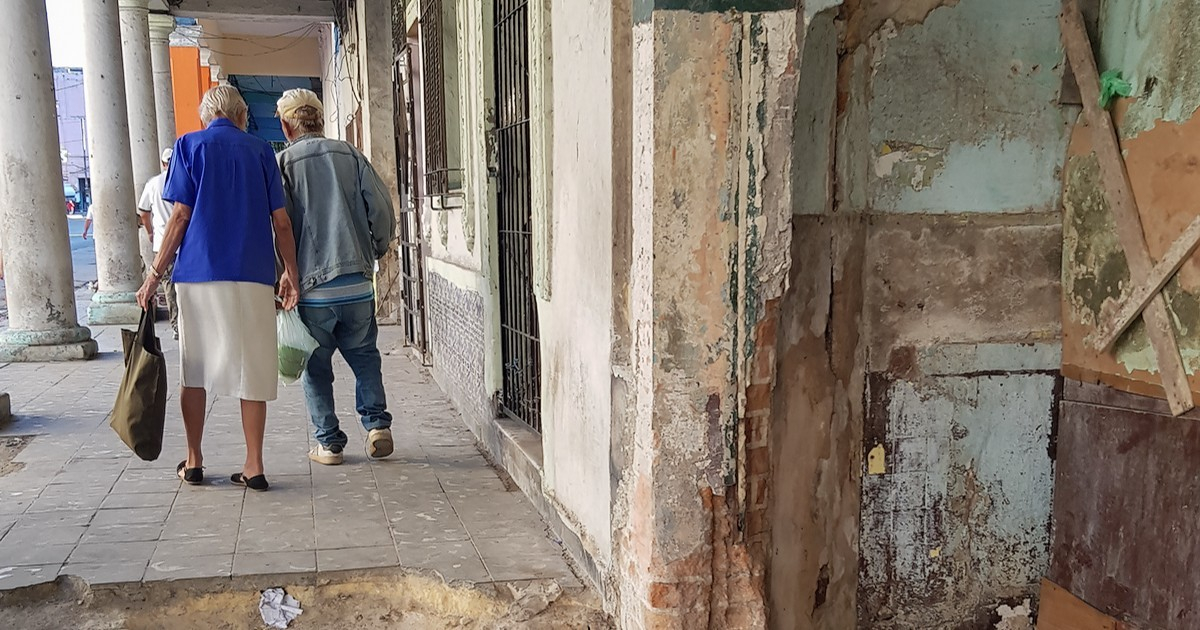
Jon Lee Anderson, a renowned journalist from The New Yorker and biographer of Che Guevara, depicted the current state of Cuba as "one of the most severe crises, perhaps even surpassing that of the 1990s." His statement came during a discussion at the Internazionale Festival of Journalism in Ferrara, Italy, where he was interviewed by journalist Camilla Desideri.
Anderson's assessment is particularly significant given his background. Unlike a conventional critic of Castro's communist regime, Anderson has had unique access to the inner workings of the Cuban government, allowing him to write a detailed biography of Che. His longstanding coverage of the island from a more empathetic perspective makes his candid remarks at the progressive European audience of the Internazionale Festival—now in its 20th year—particularly noteworthy.
Mass Exodus: A Staggering Statistic
The most striking revelation from his talk involved the exodus of the Cuban population: "Twenty percent of the population has left. Many are young, educated individuals like surgeons who have relocated to Miami," Anderson stated. He had previously highlighted this issue in his March 2026 article "Is Cuba Next?" for The New Yorker, where he described Havana as "nearly deserted," and noted that about one in five Cubans have fled the island since 2021.
These numbers are supported by available data: between 2021 and 2024, approximately 1.79 million Cubans departed, according to demographer Juan Carlos Albizu-Campos. Alarmingly, half of those leaving are young people.
Rising Crime and an Uncertain Future
Anderson also warned of a looming threat the regime refuses to acknowledge: Cuba, traditionally "the safest country in the Western Hemisphere alongside Canada," could spiral into organized crime and mafioso activities. This is not a mere conjecture; the Cuban Citizen Audit Observatory documented a 115% spike in confirmed crimes in 2025, including nearly 200 reported drug trafficking incidents in the first half of that year.
External and Internal Factors Behind the Crisis
While Anderson identified Washington as the primary external factor exacerbating the crisis, stating, "The greatest external factor pushing the island into crisis is the United States. Trump sought to replicate his Venezuela policy with Cuba. Cubans are trapped in a geopolitical corner without the allies they had during Fidel Castro's era." He noted that the capture of Nicolás Maduro on January 3, 2026, halted the flow of Venezuelan oil to Cuba, deepening an already chronic energy crisis.
Nevertheless, this perspective overlooks the internal issues created by the regime itself: GAESA's control over the economy, inadequate investment in electrical infrastructure, and a cumulative GDP drop of about 23% since 2019, factors unrelated to the U.S. embargo.
Repression and Future Prospects
Anderson also referenced the oppressive response by Miguel Díaz-Canel to the July 11, 2021, protests: "Covid slashed tourism by 50%. In 2021, sixty Cuban cities rebelled, with protests demanding regime change, met with harsh repression and lengthy prison sentences." Over 1,400 people were detained; by November 2024, the Justice 11J organization estimated 554 remained imprisoned.
Looking ahead, Anderson emphasized the significance of the U.S. midterm elections on November 3: "Post-elections, it will be clear whether the MAGA faction maintains its majority or if the more reasonable Democrats can enact change." He noted that Cuban-American Secretary of State Marco Rubio "seems open to a more moderate stance" regarding Cuba, despite facing criticism from Florida's far-right factions.
Anderson concluded by highlighting a generational divide: while older Cubans "still believe Cuba was and can be an idyllic place, the younger generation does not share this view." With one in five citizens having already left, this generational gap may prove to be irreversible.
Insights into Cuba's Current Crisis
What is the current state of the Cuban population?
As of the latest reports, about 20% of Cuba's population has left the country, with many being young and educated individuals.
How has Cuba's safety status changed recently?
Cuba, once considered one of the safest countries in the Western Hemisphere, is now at risk of increasing organized crime and mafia activities.
What are the main causes of Cuba's current crisis?
The crisis is driven by both external factors, such as U.S. policies, and internal issues, including economic mismanagement and inadequate infrastructure investment.