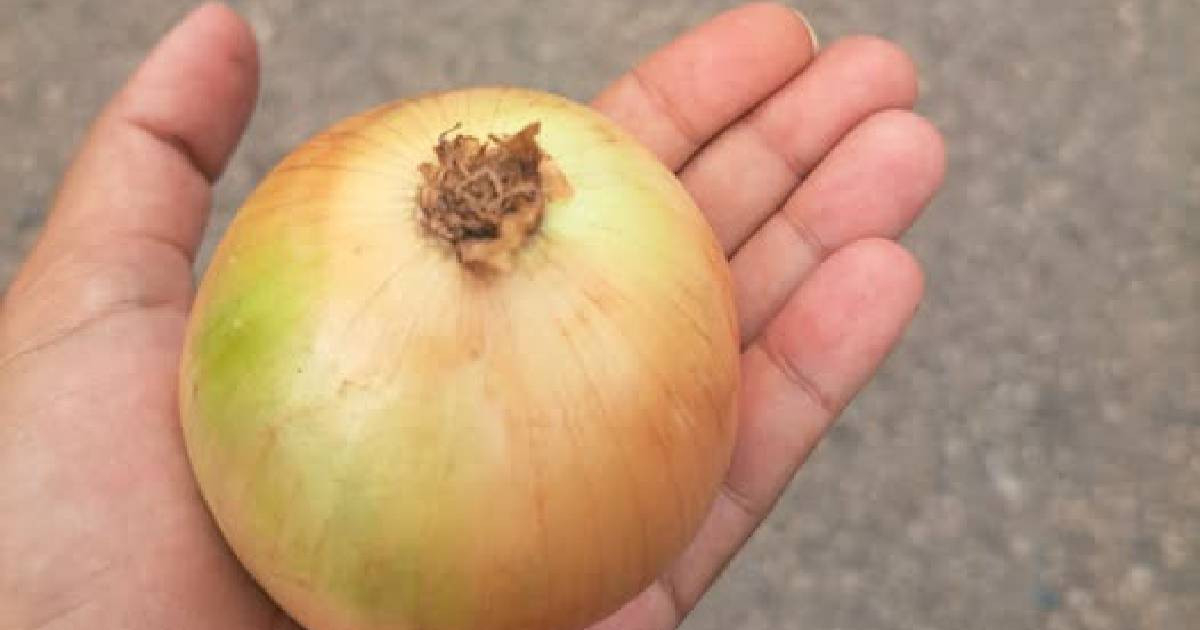
An onion small enough to fit in the palm of a hand has become a stark symbol of Cuba's soaring food prices, after a woman from Havana shared its staggering price of 610 pesos (CUP) on social media, humorously questioning what the Tooth Fairy might think.
The image was posted on Facebook by Yulieta Hernández Díaz, an architect and entrepreneur residing in Havana. Although she didn't specify where she purchased the onion, she noted that the price per pound was 1,700 CUP.
Considering the photographed onion's price, those 610 CUP represent nearly 19% of the monthly minimum wage, which stands at 3,210 CUP as of July.
This comparison highlights the significant impact of everyday food items on monthly incomes, as even basic staples like onions can consume a substantial portion of earnings.
The Growing Burden of Basic Groceries
Comments from other posts reveal a wide variation in prices across different markets, indicating that onions are no longer a minor expense in daily budgets. One individual mentioned seeing "the largest purple onions in my life" at a market bordering the Marianao and Boyeros municipalities, priced at 1,800 CUP per pound. These onions were so large that two of them wouldn't fit in one hand.
Even higher prices were reported, with some users claiming a pound of onions costs 2,000 CUP in Holguín. These figures are shared by social media users and not part of any official pricing.
Public Outrage and Government Inaction
This case is not isolated; similar complaints flood social media. In September, musician Dagoberto Pedraja reported that a vendor at the Línea y L agricultural fair demanded 910 CUP for a single onion, despite the official price set by Havana's Provincial Agriculture Delegation being 180 CUP per pound.
Pedraja, nearing 70, expressed his frustration online, highlighting the disparity between official and market prices.
In the same month, a viral photo of an onion in hand, accompanied by the question "Did this come from the earth or Saturn?" sparked outrage among hundreds of Cubans. The post, shared in the Cuba Denuncia Now Facebook group, garnered numerous reactions and comments criticizing agricultural collapse and government ineptitude in price control.
A commenter questioned how domestically grown onions could fetch such high prices and held the government accountable for failing to regulate the market. Another linked the crisis to longstanding agricultural sector issues, criticizing post-Revolutionary policies and the spread of invasive marabú plants, which have reduced productive land.
Economic Challenges and the Agricultural Sector
The agricultural sector in Cuba faces severe limitations. Between 1.1 and 1.7 million hectares of previously productive land are now covered with marabú, while Cuba imports 70% to 80% of its food, costing nearly 2 billion dollars annually. In 2024, the agricultural sector received only 10% of the fuel it required.
The Cuban Economy Report from the University of Havana's Center for Cuban Economic Studies (CEEC), covering the first half of 2026, describes the spiraling prices as a devastating feature of the ongoing crisis.
Food and non-alcoholic beverages have driven the price surge, with an interannual increase of 36.01% in August and accounting for 63.18% of the overall consumer price index rise in July.
Economists estimate a Cuban family needs about 96,000 CUP monthly for basic expenses, with over 70,000 CUP going towards food alone. This amount far exceeds the current minimum wage, explaining why a 610 CUP onion can provoke indignation, mockery, and resignation.
Understanding Cuba's Economic Crisis: FAQs
Why is the price of onions in Cuba so high?
Onion prices in Cuba are high due to a combination of agricultural sector challenges, including land overrun by marabú, dependency on food imports, and insufficient government regulation.
What percentage of food does Cuba import?
Cuba imports between 70% and 80% of its food, which significantly impacts local prices and the overall economy.
How does the current economic situation affect Cuban families?
Cuban families face tremendous financial strain as basic expenses far exceed the minimum wage, with food costs alone accounting for a large portion of monthly income.