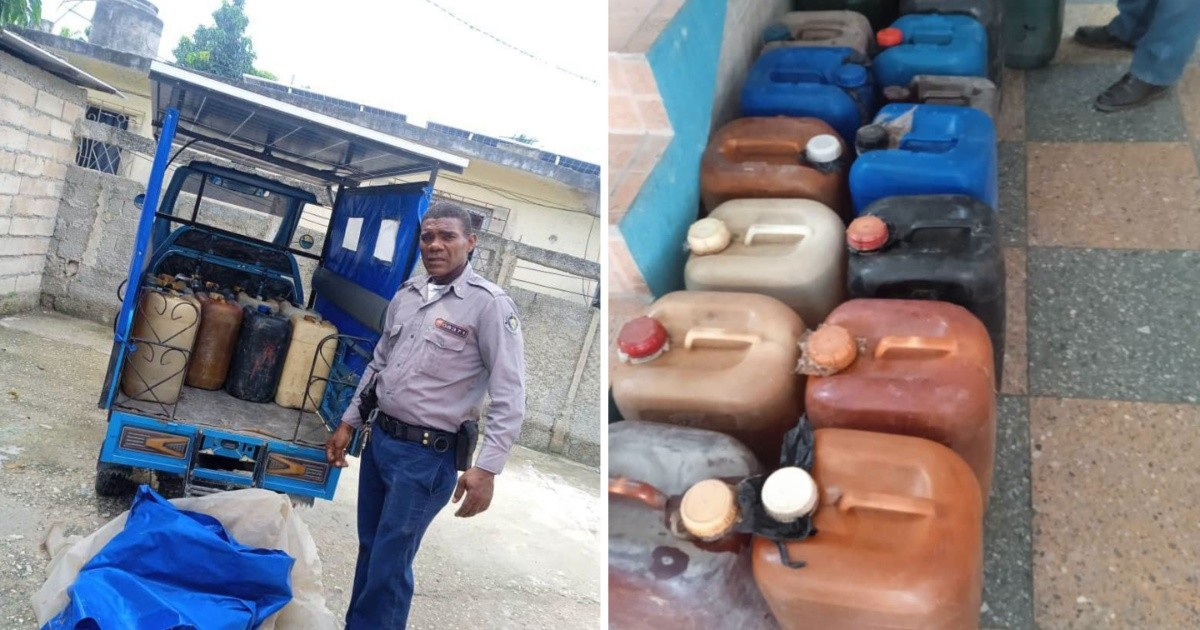
Authorities in Regla, a district to the east of Havana, confiscated 680 liters of gasoline packed into 28 containers, each holding 25 liters. This seizure was part of an operation aimed at combating fuel theft, as reported by the Ministry of the Interior (MININT) on their Facebook page, "Héroes de Azul en Cuba."
The official statement indicated that the case was "resolved, with the perpetrators apprehended and facing legal proceedings." Photographs accompanying the report showed a uniformed officer—badge number 08371—beside a blue motorbike, laden with plastic jugs of various sizes and colors, and dozens of containers lined up against a wall.
MININT emphasized that local residents provided crucial information and witnessed the operation, highlighting community engagement as a key factor in the police's success.
Fuel Crisis Deepens in Cuba
The report did not disclose the number of arrests made or the identities of those involved. This crackdown occurs amid Cuba's most severe fuel crisis in decades.
Since the end of 2025, the island has been grappling with a dire shortage of fuel, exacerbated by the cessation of Venezuelan oil shipments and the halting of Mexican supplies on January 9, 2026.
In response to the scarcity, the Cuban government stopped selling gasoline in Cuban pesos as of February 2026, leaving only a dollar-based channel with a limit of 20 liters per person and wait times stretching up to 26 hours in line.
Legal and Economic Repercussions
The official gasoline price was set at $2.60 per liter from May 15, while in the informal market, prices range from six to eight dollars per liter. This price discrepancy has led to a surge in illegal siphoning and resale of fuel throughout the country. In February, a police operation in Santiago de Cuba uncovered gasoline containers in private homes.
In March, law enforcement arrested 16 individuals at Cupet service stations in the Havana municipalities of Playa and Plaza de la Revolución for illicitly selling queue spots and hoarding fuel.
Prime Minister Manuel Marrero Cruz demanded a "tough stance" against fuel theft in April, insisting on zero tolerance for these offenses and related corruption.
Cuban law, under the Penal Code (Law 151 of 2022) and Decree 475 from the Supreme People's Court, categorizes the theft of state fuel as sabotage, punishable by up to 12 years in prison.
A notable case underscoring the harsh penalties involved a worker in Santiago de Cuba sentenced to 12 years for stealing over 5,700 liters of diesel intended for hospital generators.
Risks and Dangers in Regla
Regla, a port and industrial area traditionally associated with fuel storage and distribution, has become a particularly vulnerable spot for such crimes.
In addition to legal risks, there are physical dangers: Cuban firefighters warned on Wednesday about the fire hazards linked to storing fuel in non-certified plastic containers, a practice that has become widespread due to the crisis.
Understanding Fuel Theft and Its Consequences in Cuba
What led to the current fuel crisis in Cuba?
The crisis was triggered by the halt of Venezuelan oil shipments and the cessation of Mexican supplies, creating a severe shortage on the island.
How has the Cuban government responded to the fuel scarcity?
The government has eliminated the sale of gasoline in Cuban pesos, restricting sales to a dollar-based system with strict limits on quantity per person.
What are the penalties for fuel theft in Cuba?
Fuel theft is considered sabotage under Cuban law, with potential penalties of up to 12 years in prison.