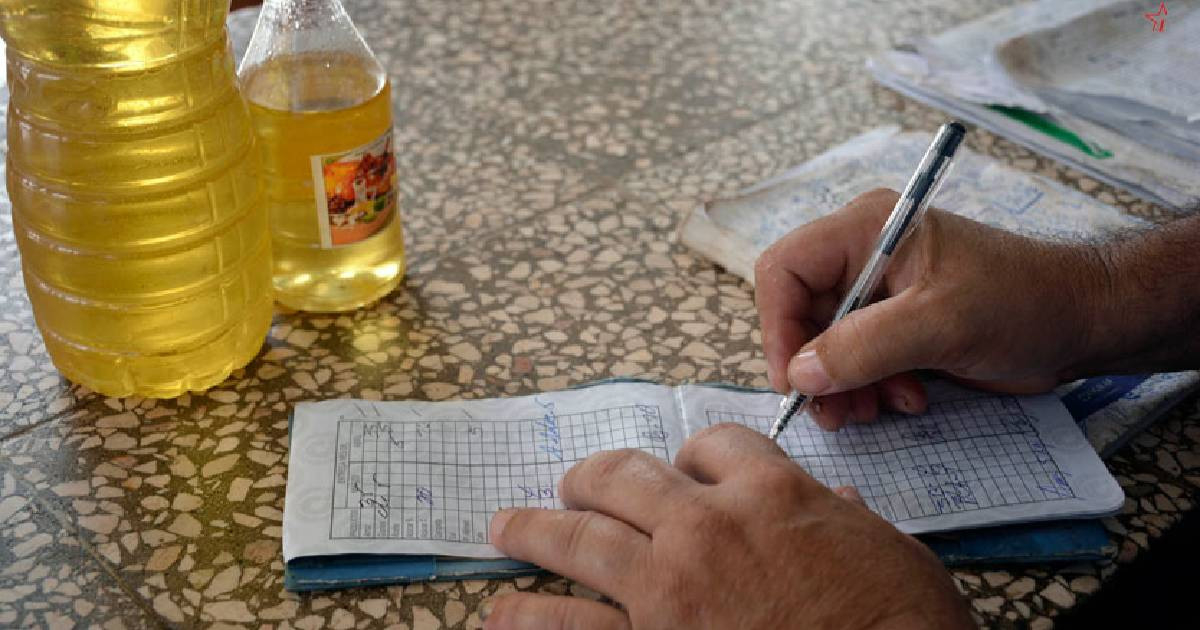
An elderly man in Camagüey reportedly missed out on purchasing cooking oil designated for vulnerable individuals because his ration card lists a grandson with overseas relatives. This incident was highlighted by journalist José L. Tan Estrada on his Facebook profile this Saturday.
The family clarified that the grandson does not financially support the elderly man, yet the mere mention of his foreign connections was enough to deny the grandfather access to the product at the Montecarlo supermarket.
According to the account shared, the supermarket's criterion demands that individuals appear alone on their ration card without any foreign-based relatives recorded. Nonetheless, this stipulation is not found in any officially published guidelines.
Widespread Concerns Over Exclusion Criteria
The rule has sparked questions among other locals. "I don't understand why having relatives abroad on the ration card affects access," commented a resident, questioning the fairness of such a restriction on goods aimed at vulnerable populations.
The cooking oil is priced at 2,150 Cuban pesos. For a retiree earning a monthly pension of 3,165 pesos, this cost constitutes a significant portion of their income. "That price is outrageous; if I buy oil, what's left for the rest of the month?" one woman expressed.
Comments accompanying the complaint also highlighted other cases of elderly individuals being excluded. A 68-year-old woman living alone reported being left out of the beneficiary list, while another feared exclusion due to having a son listed on her ration card.
Broader Implications of the Policy
Instances of individuals over 70 without overseas family connections also being omitted have surfaced, raising further questions about the selection criteria for product access.
Tan Estrada posed a critical question at the heart of the issue: "Does having a family member outside Cuba automatically disqualify someone vulnerable from receiving subsidized products or those intended for such groups?"
This situation emerges against the backdrop of a new social protection model approved by the National Assembly in June, part of 176 economic measures replacing universal subsidies with targeted aid for those monthly classified as "vulnerable" by local councils.
In Santiago de Cuba, authorities have already redefined the eligibility profiles for this aid. Specialist Diamaris Perdomo Hechavarría emphasized that "not everyone is vulnerable" and stressed "the importance of family responsibility."
The Cuban Human Rights Observatory estimated that extreme poverty affects 94% of Cubans, a nine-point increase from the previous year.
Prime Minister Manuel Marrero Cruz officially acknowledged 876,522 individuals as highly vulnerable nationwide, a number critics argue underrepresents the reality. In Holguín, officials admitted that one in ten residents faces this condition.
Historian Ivette García González bluntly stated in September: "The vulnerable in Cuba are no longer a segment, not a minority. They are the majority, the ordinary citizen."
Understanding Vulnerability and Access to Resources in Cuba
What criteria determine access to subsidized goods for vulnerable people in Cuba?
Access to subsidized goods is intended for those classified as "vulnerable" by local councils. However, the criteria seem to exclude individuals with foreign relatives listed on their ration cards, despite no official guidelines supporting this condition.
How does the pricing of essential goods affect retirees in Cuba?
With essential goods like cooking oil priced at 2,150 pesos, retirees with a monthly income of 3,165 pesos face significant financial strain, as such prices consume a large portion of their limited income.
What are the implications of the new social protection model in Cuba?
The new social protection model replaces universal subsidies with targeted assistance for those identified as vulnerable. However, this has led to controversy over the criteria used to determine eligibility, potentially excluding many who need aid.