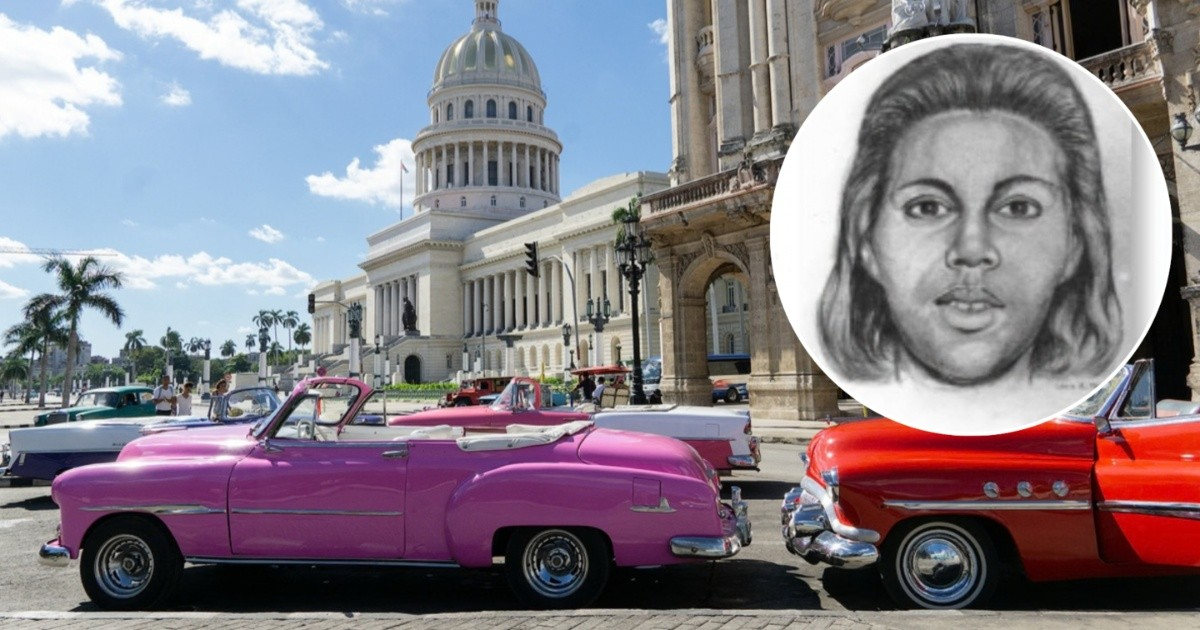
A specialized forensic genetic genealogy center in New Jersey is seeking assistance to identify a young woman whose remains were discovered 46 years ago. DNA tests indicate possible ties to Cuba and the Canary Islands.
The Ramapo College Investigative Genetic Genealogy Center (IGG Center) at Ramapo College of New Jersey has reached out to our publication to spread awareness of the case within the Cuban community. They hope someone might recognize the young woman or provide information to help identify her.
The remains of the woman, temporarily referred to as Montague Jane Doe—a term used in the U.S. for unidentified females—were found on June 24, 1980, near High Point State Park in Montague, Sussex County, New Jersey.
It is believed she was between 15 and 20 years old at the time of her death, stood about 1.55 meters tall, and had straight dark brown hair with some blonde highlights.
Advanced DNA analysis conducted by the IGG Center, in collaboration with the New Jersey State Police Cold Case Unit and Astrea Forensics Laboratory, uncovered that the young woman had Spanish heritage, with ancestral links to Cuba and the Canary Islands, particularly La Palma.
Julian Rebelo, an investigative genetic genealogist at the IGG Center, communicated that "the matches in the DNA databases are not yet close enough to determine her identity at this time."
The investigator further stated, "If someone in the community sees the poster, we hope they will come forward to identify her."
The IGG Center requests anyone who may be a genetic relative of the young woman to upload their DNA sample to one of three accessible databases: GEDmatch, FamilyTreeDNA, or DNA Justice.
The campaign gained momentum during Hispanic Heritage Month, celebrated in the United States from September 15 to October 15.
The genetic link to Cuba and La Palma is not coincidental: there has been a longstanding history of migration between the Canary Islands and Cuba since the 17th century. Consequently, many Cuban families have Canarian ancestors, particularly from that region.
This connection often means that DNA profiles of Cuban-origin individuals can show Canarian markers and vice versa, which guides—but also complicates—the genealogical search.
Described as the first of its kind globally, the IGG Center was founded in December 2022, combining DNA testing with traditional genealogical research to identify human remains and generate leads in unsolved cases.
By 2026, the center had resolved at least 43 cases nationwide, although the case of Montague Jane Doe remains unresolved.
Anyone with information or willing to contribute their DNA can contact the IGG Center at 201-684-6616.
Any Cuban or Canary descendant suspecting a familial link to this young woman could be crucial in solving a mystery that has persisted for nearly half a century.
Frequently Asked Questions about the Montague Jane Doe Case
What is the significance of the DNA link to Cuba and the Canary Islands?
The DNA link suggests a historical migration pattern between the Canary Islands and Cuba, where many Cuban families have ancestral roots in the Canaries, particularly La Palma. This connection complicates the genealogical search but also provides a vital clue in identifying the young woman.
How can individuals help in identifying Montague Jane Doe?
Individuals can assist by uploading their DNA samples to databases like GEDmatch, FamilyTreeDNA, or DNA Justice. Additionally, sharing any information or recognizing the young woman from community posters could provide leads.
What is the role of the IGG Center in this case?
The IGG Center is spearheading the effort to identify Montague Jane Doe by combining forensic DNA testing with traditional genealogical research, aiming to generate leads in unsolved cases like this one.