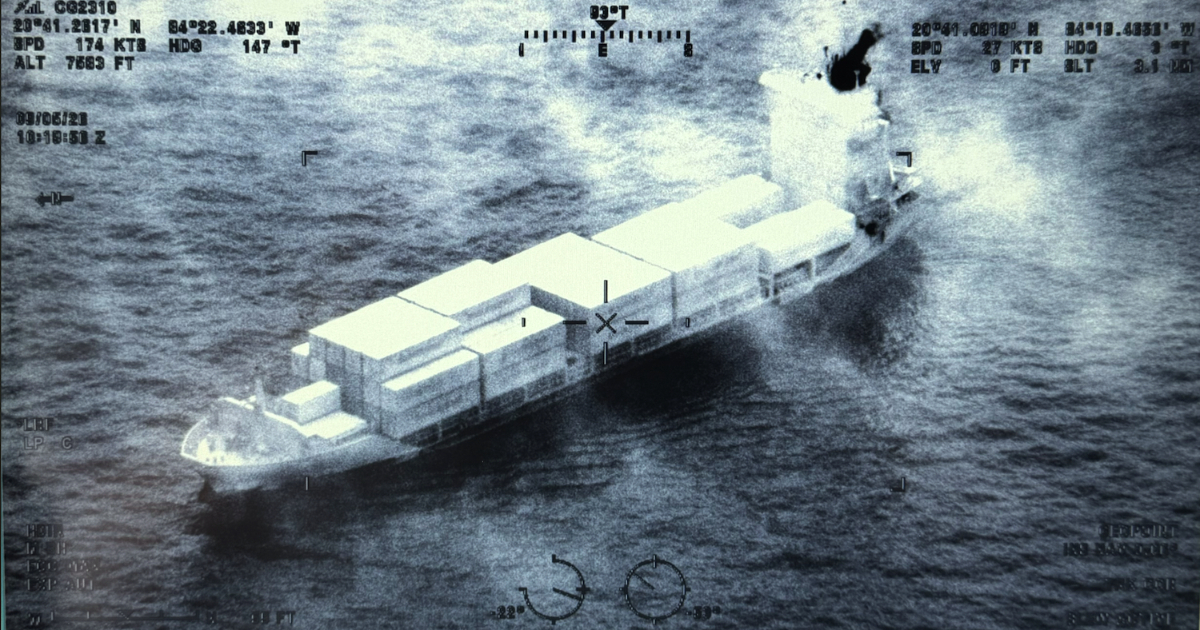
The vessel known as M/V Grace was intercepted by the U.S. Coast Guard in September as it attempted to deliver hidden fuel to Cuba. Analysis of maritime tracking data by the Miami Herald suggests that the fuel was loaded onto the ship in Panama.
This revelation sheds light on the origins of the cargo and the ship's previous movements. The interception, initially reported by CiberCuba, occurred earlier this week.
While the Coast Guard has not publicly disclosed where the fuel was loaded, the quantity, or its specific type, VesselFinder, a specialized tracking portal, shows that the Grace departed Panama fully loaded on August 31st.
Energy expert Jorge Piñón from the University of Texas at Austin, who tracks oil shipments to Cuba, examined the ship's draft—a measure of how deep the hull sits in the water, indicating whether it is full or empty—and concluded that the vessel left Panama with cargo.
Grace's Previous Fuel Deliveries to Mariel
According to journalist Nora Gámez of the Miami Herald, the Grace was intercepted by the U.S. Coast Guard on September 5th, while sailing between Cuba and Mexico. This was not the ship's first journey carrying fuel to Cuba.
On July 18th, the Grace arrived at the Port of Mariel, just west of Havana near a significant power plant. Piñón's analysis suggests that, prior to this, the ship had departed Panama loaded and offloaded its cargo in Cuba.
The vessel then left Mariel on July 22nd, reaching the Mexican port of Progreso empty by August 10th. It subsequently returned to Panama and set sail again, fully loaded, on August 31st, just days before being intercepted by U.S. authorities.
Implications of the Interception
The Miami Herald's investigation indicates that this initial voyage to Mariel may have caught the attention of U.S. authorities. Maritime tracking data also uncovered that in May, the Grace departed Mariel en route to Venezuela.
The Grace sails under the Comorian flag and is owned by Arkos Capital, a company based in Riga, Latvia. According to reports, it is the sole vessel owned by this company.
Following its interception, the Coast Guard escorted the ship to Progreso, Mexico, where Mexican Navy inspections confirmed large quantities of fuel stored in its ballast tanks—compartments meant for water to maintain stability, not for carrying hydrocarbons. Several containers, likely containing fuel, were also discovered.
The practices observed on the Grace are linked to those of the "dark fleet," a term for ships that use strategies to conceal their ownership, movements, or the nature of their cargoes.
The Grace is the second vessel this year caught by the U.S. Coast Guard while transporting fuel to Cuba. The earlier case involved the Jaira Provider, which was intercepted over the summer with around 220,000 gallons of diesel, having also passed through Panama before being stopped.
Cuba's Energy Crisis Intensifies
These interceptions come at a time when Cuba is experiencing its most severe energy crisis in decades. The Cuban regime acknowledged that the island ceased receiving oil in January after Nicolás Maduro was captured by U.S. forces.
The situation worsened when former President Trump signed an executive order threatening tariffs on countries supplying crude to Cuba, prompting Mexico to halt shipments from its state-owned oil company, Pemex.
In May, Cuba's Energy and Mines Minister, Vicente de la O Levy, admitted the country had run out of diesel and fuel oil. The government implemented austerity measures, including cuts to public transportation, a four-day workweek for state employees, reduced school hours, and the suspension of non-urgent surgeries.
Paradoxically, while the regime struggles to obtain oil, Cuba's private sector is permitted to import fuel from the United States under an exception authorized by the Trump administration in February. According to the U.S.-Cuba Trade and Economic Council, American companies exported $157 million worth of fuel to Cuban private entities between January and July this year, making Washington the island's top fuel supplier.
Key Questions About the Interception and Cuba's Fuel Supply
Why was the M/V Grace intercepted by the U.S. Coast Guard?
The M/V Grace was intercepted by the U.S. Coast Guard because it was transporting hidden fuel to Cuba, which is part of the broader U.S. efforts to monitor and control the shipment of oil and fuel to the island following sanctions and executive orders targeting such activities.
How did the U.S. determine that the fuel was loaded in Panama?
The determination was made through maritime tracking data analyzed by the Miami Herald, which indicated that the Grace departed Panama fully loaded on August 31st.
What impact do these fuel interceptions have on Cuba?
These interceptions exacerbate Cuba's existing energy crisis, as the island is already experiencing significant shortages in oil and fuel supplies, leading to widespread austerity measures affecting daily life and essential services.