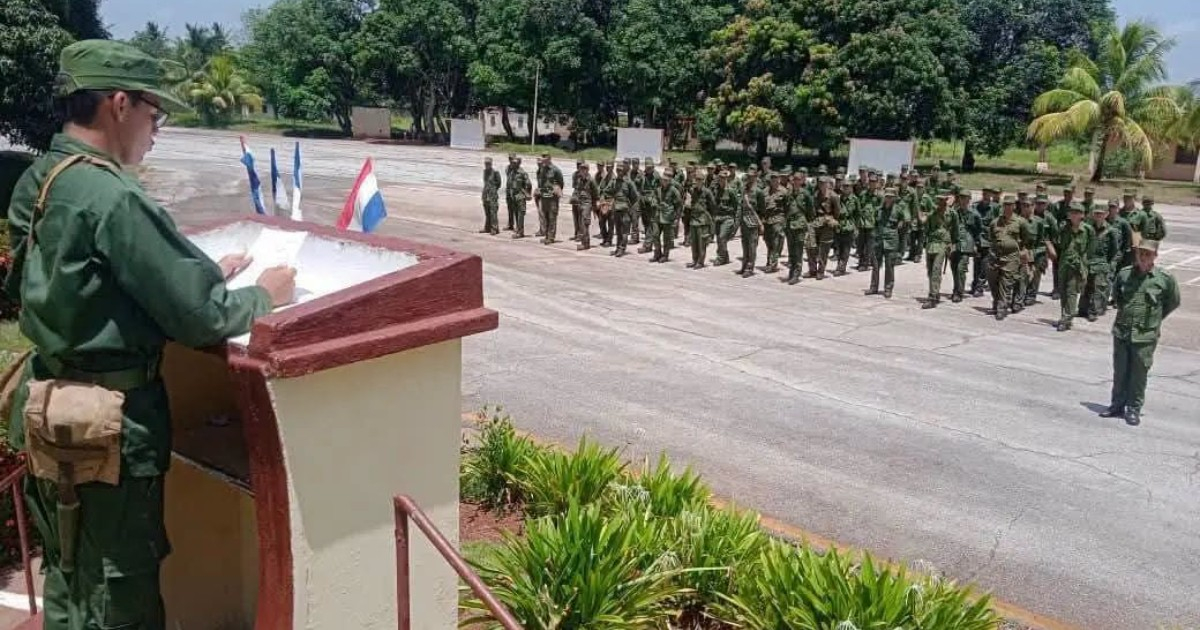
Cuban researcher and journalist, José Manuel González Rubines, released an analysis on September 30, indicating that Cuba's Mandatory Military Service (SMO) acts as a social sorting mechanism, disproportionately affecting the nation's poorest and most vulnerable young people. Meanwhile, the offspring of the elite often avoid service or fulfill it under significantly different circumstances.
The analysis, shared on the CubaxCuba platform, begins with two tragic incidents occurring within a single week. On September 20, in Manzanillo, Granma, Yandiel Jurado Lastre, known as "Ricky," was fatally shot in the forehead by a fellow recruit handling a rifle while on a call with his girlfriend. Just two days later, Leordanis Ramón Ricardo Batista, or "Leo," took his own life at a Youth Labor Army unit in Nipe, Holguín, merely two months after his enlistment despite his family's warnings about his ongoing psychological treatment since the age of nine. With these deaths, González Rubines' documented list of such tragedies reached 100 names.
The researcher bases his conclusions on the report "Morir en uniforme" by journalist Marleidy Muñoz, published by elTOQUE in late September. This report details 89 deaths among Cuban recruits from 2017 to 2026. At least 23 of these cases involved young men transferred far from their home provinces, mainly from central or eastern regions to units in La Habana, Mayabeque, Matanzas, and Artemisa, where family visitation was difficult.
"The Cuban military service systematically targets the most vulnerable sectors of society: children from rural, low-income families without overseas family networks or resources to avoid recruitment or improve conditions within the barracks," writes González Rubines. He notes that the children of the nomenclature, retired officers, or families receiving remittances or with administrative ties often do not join the SMO, or if they do, they serve near home, in administrative roles with frequent leave.
The Social Sorting Filters of Military Service
González Rubines identifies two simultaneous social sorting filters within the military service system. The first decides who is recruited and where they are stationed; the second is the pervasive corruption within units. "Corruption isn't a secondary flaw in this system; it's one of its operating modes," he asserts. Underpaid officers with nearly absolute power over recruits sell leave passes and accept lenient medical reports in exchange for material goods, such as goats, lawnmowers, or refrigeration units, as eyewitness accounts in the report reveal.
The outcome of these filters is evident in the data: "Many youngsters in the databases are from farming backgrounds, working-class families, or single-parent homes in small towns. They form a humble layer consumed by the institution without remorse to sustain a structure that no longer defends anything but itself."
Political Denial and Repercussions for Families
What sets Cuba apart from other countries with conscription, according to González Rubines, is not the existence of these mechanisms but "their integration with a political regime that denies the problem's existence, criminalizes complaining families, shelves investigations, and maintains to international bodies that the Service is 'voluntary' and that 'children are not recruited'." This claim contradicts the laws in place since 1963, which mandate that males aged 17 to 28 fulfill the SMO under threat of legal action.
Families seeking justice face systematic retaliation. Of 46 families consulted by elTOQUE, only eight reported any official investigation, and none resulted in accountability. The father of Orlando Lago Vega, a recruit shot while sleeping in June 2020, was sentenced in 2023 to one year and six months in prison for pressing for an investigation.
elTOQUE's report captures a poignant quote from Mirna Quiala, mother of Osmel Manresa—who died during SMO in 2018—that González Rubines uses to encapsulate the phenomenon: "In this country, mothers give birth to children, and they are governed by them." The researcher adds, "and they bury them, too."
FAQ on Cuban Military Service and Social Impact
What is the Cuban Mandatory Military Service (SMO)?
The Cuban Mandatory Military Service (SMO) is a conscription policy requiring Cuban males aged 17 to 28 to serve in the military, with penalties for non-compliance.
How does the SMO affect different social groups in Cuba?
The SMO disproportionately affects underprivileged youth from rural and low-income families, while the children of elites often avoid service or have preferential conditions.
What are the consequences of speaking out against the SMO in Cuba?
Families who protest against the SMO often face systematic reprisals, including legal repercussions and lack of accountability for their grievances.