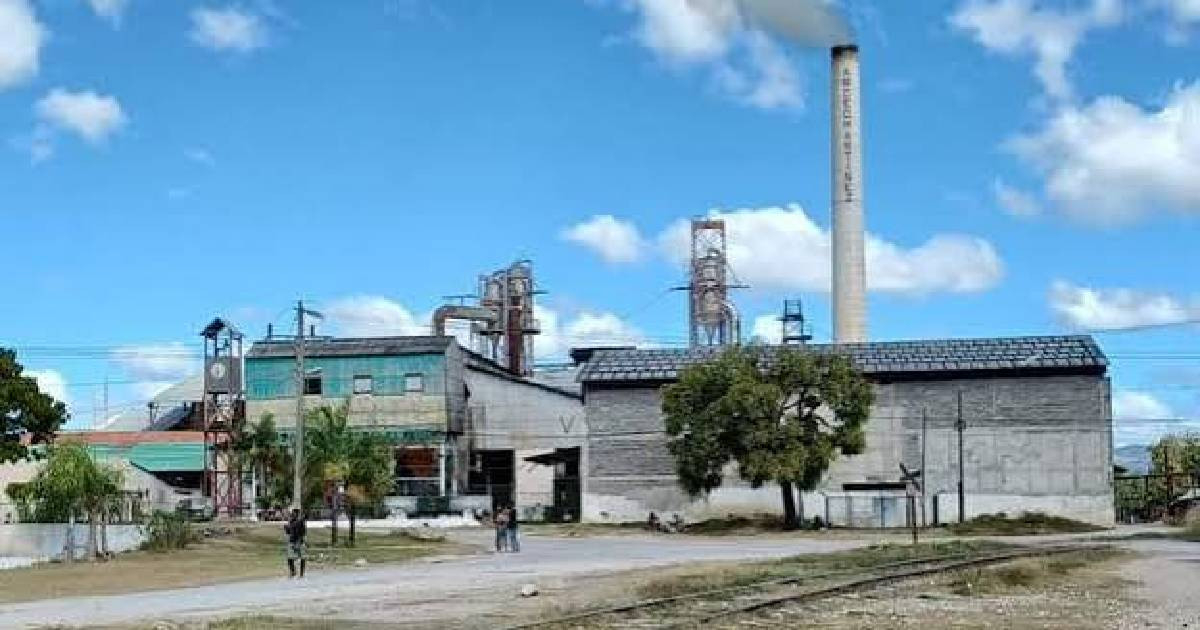
The Argeo Martínez sugar mill, the only operational plant in Guantánamo, is set to commence the 2026-2027 harvest season with a two-phase approach. Initially, the focus will be on alcohol production, transitioning later to raw sugar manufacturing for local markets.
This plan was reported on Wednesday by the official newspaper Venceremos following a review of preparations led by Yoel Pérez García, the first secretary of the Communist Party in the eastern province.
From October to December, the mill will process 17,000 tons of sugarcane to produce molasses aimed at alcohol production. This initial phase is expected to last 36 days, involving 510 macheteros, as well as the use of combine harvesters, trucks with trailers, loaders, and collection centers. The goal is to yield 2,300 hectoliters of alcohol.
Partnership for Fuel Supply
The operation involves an agreement with Cuba Ron S.A., which will ensure the supply of necessary fuel in exchange for receiving cane alcohol as a raw material for its production processes.
Juan Carlos Martínez Azahares, director of the Guantánamo Sugar Agroindustrial Company, described this mechanism as part of the "new role of the socialist state enterprise," offering greater autonomy within the business system.
Transition to Sugar Production
Following the alcohol production phase, the Argeo Martínez mill will allocate 65,200 tons of sugarcane for raw sugar production from January to February, aiming to exceed 3,000 tons for the provincial market.
This campaign structure indicates that the mill will initially divert some of the available cane for an alternative production to sugar, with fuel for operations secured through a barter arrangement with another state entity.
The 2024-2025 harvest in Guantánamo concluded with only 2,900 tons of sugar, a mere 38% of the planned 7,632 tons, marking a 26% decline compared to the previous campaign, according to provincial harvest records.
National Sugar Production Crisis
Nationally, Cuba now produces less sugar than it did in 1899, with the 2024-2025 campaign failing to reach 150,000 metric tons.
The subsequent 2025-2026 season proved even more challenging. The Melanio Hernández mill in Sancti Spíritus ceased operations just 22 days after starting due to fuel shortages. This crisis also impacted alcohol production and other sugarcane-related industries.
The practice of producing molasses and alcohol before sugar isn't entirely new. The Paquito Rosales mill in San Luis, Santiago de Cuba, employed this strategy during the 2024-2025 harvest, successfully meeting its molasses target with over 1,860 tons.
What sets the Argeo Martínez case apart is the explicit petroleum-for-alcohol contract with Cuba Ron S.A., which the government touts as a step forward in enterprise autonomy but actually highlights the state's failure to provide fuel for its own industries.
Understanding Guantánamo's Sugar Industry Strategy
What is the initial focus of the Argeo Martínez mill for the 2026-2027 season?
The initial focus is on producing alcohol from sugarcane, before transitioning to raw sugar production.
How is fuel being secured for the Argeo Martínez mill's operations?
Fuel is being secured through a barter agreement with Cuba Ron S.A., exchanging cane alcohol for the necessary fuel supplies.
How did the 2024-2025 sugar harvest in Guantánamo perform?
The 2024-2025 harvest resulted in only 2,900 tons of sugar, achieving just 38% of the planned target and reflecting a 26% decrease from the previous campaign.